Episode Transcript
[00:00:03] Speaker A: Is Woodstock considered super iconic over there, Marco?
[00:00:08] Speaker B: Oh, Christ.
I suppose. I mean, the. Yeah, you know, it's. It. You know, people know what you mean when you talk about it. People know what you mean when you say it.
[00:00:19] Speaker A: Right. Okay, that's. That's fair. You know, it's hard for me to tell because for one thing, like, in the 90s, we had Woodstock 94 and Woodstock 99, which were each, I don't know, iconic for very different reasons. They both tried to recapture the magic of the original 1969 event. And in 94, aside from the mud, it went pretty well. But in 1999, it was an absolute disaster about which there are multiple documentaries. And it seemed to showcase that there was something very, very wrong with not only capitalism, but American men at the turn of the century.
[00:00:54] Speaker B: Yeah, I mean, I'm. I. I say, you know, people know what you're talking about when you mention it. I say people. I mean, people my age.
[00:01:04] Speaker A: Sure. Right. Like, I don't. I don't expect kids necessarily to know what Woodstock is.
[00:01:08] Speaker B: Maybe they do. I wouldn't have said anyone under 30 would have a clue what you were talking about.
[00:01:12] Speaker A: Will you just, like, text Pete right now and just be like, do you know what Woodstock is? Because now I kind of want to know if it's like, got any footprint for a young person at all.
[00:01:21] Speaker B: Yeah, yeah, I'll do it. As we're talking here.
[00:01:24] Speaker A: It's always an interesting thing for me because, you know, we had, like, monoculture when we were growing up. And so, like, even if something wasn't from our time, we knew what it was because it was like we all got our stuff from the same place.
So I'm very curious, like, what cultural things break through with.
[00:01:43] Speaker B: Both of the Woodstocks delivered iconic moments in and of themselves, though. Both of the. Of the future Woodstocks. What was it? Did you say 99?
[00:01:50] Speaker A: 99 and 94. Yeah.
[00:01:52] Speaker B: 94 was the.
Just the single greatest concert footage I think I've ever seen in my life is when Nin versus the mud. Just utterly unreal and iconic.
[00:02:05] Speaker A: I was a huge Green Day fan as a kid. So, like, they had Green Day performed at that one in the mud, and all that stuff was like, yeah, yeah, yeah, yeah, yeah.
[00:02:14] Speaker B: And in 99, the. The moment where it all went south, probably the heaviest thing that any mortal man will ever witness is that intro to Corn set Corn doing Blind when the world ended. Right on that first breakdown. So, so heavy. The heaviest thing I have ever seen is that in DRO to Blind from Khorne with a K, right, in a
[00:02:39] Speaker A: backwards R
[00:02:43] Speaker B: as they open this set at woodstock99.
Everybody listening to this has seen and experienced that piece of footage, Right?
If you haven't, fucking hell, change your life today.
Change your life right now. In fact, fuck this episode off entirely, because you won't be capable. You won't be capable of listening to it after, you know this. Anyway. The heaviest thing you have ever fucking seen and experience is waiting for you right now on YouTube.
I remember.
[00:03:10] Speaker A: I'll put it in the show notes as well.
[00:03:12] Speaker B: Afterwards, all you gotta do is search for KORN with a K, Woodstock 99, and just look at the first. First song of their set. That's all you need to know. And nothing will ever, ever, ever be the same for you again, listener.
[00:03:28] Speaker A: Yes.
But, yes, notoriously, there's several documentaries that have been made about it because it was awful.
And not. Not about the corn intro there, but the show, the concert, the festival in general went horribly awry.
[00:03:46] Speaker B: No, I gotta listen to some corn. I gotta tell you, I have no problems with corn at all. Not a single issue.
[00:03:56] Speaker A: I feel like they get a bad rep, like, because they are such, like, a symbol of a moment. It's like the way they spelled their name, what they looked like the kind of doing the boom thing that everybody started doing.
[00:04:09] Speaker B: Yeah.
[00:04:09] Speaker A: Getting the, you know, white man dreads the. You know, the whole thing was like, you know, and it kind of got wrapped up into that, like, transition into nu metal and whatnot. And so it's like they became, well, in their name sounds like corny. So it's, like, built in. And then the one guy left and became a Christian. And, like, that was a whole deal. And it's like they just kind of embodied something that was.
[00:04:32] Speaker B: Brian Welch.
[00:04:33] Speaker A: Yeah. They embodied a moment that was, like, really easy to make fun of, but, like, when you.
[00:04:38] Speaker B: They might have done in that moment. Right. But 30 fucking years later and they're still releasing bangers. They've had a fantastic run of albums that you can unironically listen to. Right. And for that moment that they came to symbolize, they were fucking everything. I worked in a factory the summer that the first Corn album came out.
I was in the middle of summer, in the height of summer. I was making Christmas crackers in a factory. Right.
[00:05:07] Speaker A: This is good Mark lore.
[00:05:08] Speaker B: You don't know about this?
[00:05:09] Speaker A: Yeah, you may have mentioned it, but I don't remember this. No.
[00:05:12] Speaker B: It was possibly my first job, or definitely one of. One of my first jobs. I would. You'd Clock in. You'd sit down on the production line and you would roll Christmas crackers all goddamn day long. And that was my summer holiday.
Yes. And they would weigh them in the box, and if they were a tiny bit over.
[00:05:31] Speaker A: I don't know how familiar the American audience is with Christmas crackers. You just quickly say what that is, Christmas crackers, in a sentence. We do not have them. It's not.
[00:05:40] Speaker B: Shut up. You do have seen them on all the films.
[00:05:42] Speaker A: Home Alone, famously, You know, Kevin lays out his macaroni and then he opens the Christmas cracker. No, we don't have that here.
So everyone probably thinks you're talking about crackers that you eat.
[00:05:56] Speaker B: No, certainly not.
You don't. Oh, I've frozen. I've frozen them so far.
[00:06:00] Speaker A: You were so startled. You've frozen.
[00:06:02] Speaker B: As a result, my video has stalled. So astounded am I that America's. You could buy a gun in fucking asda, but you can't get a Christmas cracker.
[00:06:10] Speaker A: Christmas cracker? No.
[00:06:12] Speaker B: So what are Christmas crackers? Pete, by the way, has texted simply nope.
[00:06:16] Speaker A: Nice. Okay, well, so Dane does not know what Woodstock is. Okay.
[00:06:21] Speaker B: Christmas crackers. So if I were to describe. It's just the most ridiculous thing to describe. If I were to describe a long paper tube, like thick paper, like craft paper, Right?
[00:06:34] Speaker A: Yeah.
[00:06:35] Speaker B: And the edges are tied off. So you've got a. Like a. It just is shaped like a Christmas cracker. I don't know what to tell you.
[00:06:42] Speaker A: It's like if you wrapped a present that was.
[00:06:44] Speaker B: Let's say, you wrapped up a bottle of wine.
[00:06:46] Speaker A: Yeah. There you go.
[00:06:47] Speaker B: Right.
And at the one end you had a little crinkly tuft of paper, and on the other end you had a crinkly tuft of paper. But the tube is hollow, right? Yes.
And inside the void of this tube, inside the hollow, you have a number of items. Traditionally a gift.
Right.
A paper crown, little paper hat, which,
[00:07:11] Speaker A: if you've watched British Christmas movies and you're like, everyone's ready. Are they wearing those? Comes from the Christmas cracker.
[00:07:18] Speaker B: It's just occurred to me that you've got no context for that.
[00:07:21] Speaker A: None of it. None of it at all.
[00:07:22] Speaker B: It's been so long since we've had some organic cocoa.
[00:07:24] Speaker A: Oh, like real cultural exchange.
[00:07:27] Speaker B: Hell, you think you know someone through doing six years of a podcast with them.
[00:07:31] Speaker A: I mean, I do know what this is, that we. We did all this in New Zealand. So, you know, I am familiar. But
[00:07:38] Speaker B: a brightly colored paper crown. A gift. And the gift think low end. Novelty item. Right. Think like a tiny little deck of
[00:07:46] Speaker A: cards, like a crackerjack box type gift, if you will.
[00:07:50] Speaker B: I don't know what that is. Think like a really flimsy screwdriver or a bottle opener, you know, or just. They're so obtuse, some of these gifts, like a hair comb or.
And there's a very distinct set of gifts that you associate with coming out of a Christmas cracker.
Maybe like a pocket nail file. Hello.
[00:08:14] Speaker A: Sure.
[00:08:14] Speaker B: Get out of a Christmas cracker. So you'd get a gift, you'd get your pointy hat, your crown, your Christmas crown. You would get a joke. So each Christmas cracker will have a joke in there, in paper joke, you
[00:08:26] Speaker A: know, like on a lollipop genre.
[00:08:29] Speaker B: Yeah.
[00:08:30] Speaker A: Or a popsicle stick.
[00:08:30] Speaker B: I mean, and often on the same piece of paper, a motto, like a fortune cookie esque slogan of wisdom. Right.
And you buy these, depending on where you buy them from, they are more or less expensive or. Or, you know, premium.
But even the very best ones, it's a novelty item during your Christmas dinner and then it's gone.
And I did the summer making these things.
[00:08:55] Speaker A: What part of the process, like, did you put all of the things? Did you pick it? Was everyone different or. It's like, oh, you're at the nail file station.
[00:09:04] Speaker B: So the cracker would get down the line via a conveyor belt and the guy next to me would put in, like. We would do an after eight mints. Christmas crackers.
[00:09:15] Speaker A: I love after eight minutes.
[00:09:17] Speaker B: Oh, I ate enough of them that time.
[00:09:19] Speaker A: Let me tell you, you were living the dream.
[00:09:23] Speaker B: Guy next to me would put the after 8 in. It would come to me. I would roll them up and tuck the tabs in so it was a tube and then pass it on. Person next to me would wrap some ribbon around the edge and make it curly by running a scissors down it. They'd go in the box. Six to a box. The box would go on the weighing scales. Honk. Carry on.
[00:09:44] Speaker A: I bet this is not done in Wales now.
[00:09:48] Speaker B: Oh, it might be. It might still be. The factory. Certainly still there. Sorry. Over the weekend.
[00:09:51] Speaker A: Oh, that's nice.
And what did this have to do with corn?
[00:09:55] Speaker B: I was listening to corn all the time during that time.
[00:10:00] Speaker A: This is my fault that this was
[00:10:03] Speaker B: huge at the time, right?
[00:10:05] Speaker A: Yes.
[00:10:06] Speaker B: Like, all of the things that you just said there came to, you know, become corny.
This was the first time we'd seen any of this. And we were like, corner the. Like, holy.
[00:10:17] Speaker A: They are the reason there's Hot Topic. Hot Topic. It's not, you know, not the other way around. They didn't dress like Hot Topic. Hot Topic is based on corn.
[00:10:27] Speaker B: Completely so completely out of left field. Was this band.
[00:10:30] Speaker A: Yes.
[00:10:31] Speaker B: Just a completely different.
Whoa.
These guys are making me sit up and take notice here. What the.
Me and a couple of the other guys who I was on the Cracker Line with.
I mean, if there's not a better way of summing up, the Cracker Line
[00:10:46] Speaker A: is what I call. You and your friends gonna go visit the Cracker Line.
[00:10:52] Speaker B: Just me and the Cracker Line on the cracker Line.
The Cracker Line.
[00:11:01] Speaker A: Amazing.
I hope you all enjoyed that little
[00:11:06] Speaker B: recorded.
God, it was like I was there. It was like I was back there.
[00:11:13] Speaker A: Anyways, Woodstock, the.
[00:11:17] Speaker B: Because the Crackers, we. It was. It was there. It was the weight that determined whether or not they made it out of the building. Right?
[00:11:24] Speaker A: Oh, okay.
[00:11:26] Speaker B: Some of the Cracker Line would. With the Crackers, man. Not me, because that's. Chris, that's somebody's Christmas you're messing with. You know, it's true.
But I. I certainly remember somebody chucking like a fly, a dead fly, into a cracker.
[00:11:38] Speaker A: Oh, come on.
[00:11:40] Speaker B: Really, really rough. Really rough business. No, but that's the Cracker Line. That's the cracker line.
[00:11:45] Speaker A: What are you gonna do? Hard knock life.
[00:11:46] Speaker B: You know, I don't make.
[00:11:49] Speaker A: I would not abide that. I famously didn't talk to Ben for, like, three days because he smashed a pumpkin. And I was like that probably bel. Someone's child. See, I cannot abide this.
[00:12:00] Speaker B: The people that we become.
Look at the people we were.
And sometimes all we can do is shake our heads.
[00:12:08] Speaker A: It's true.
[00:12:08] Speaker B: It's very true. But we grow, Corrigan. We grow. We go again.
[00:12:12] Speaker A: Exactly. Ben would never smash a pumpkin now, for the record.
[00:12:15] Speaker B: And I would never.
[00:12:17] Speaker A: Oh, no.
[00:12:18] Speaker B: Sit by and watch someone else put a dead fly in somebody else's Christmas cracker. I'd never do it.
[00:12:23] Speaker A: That's a good point.
[00:12:24] Speaker B: Or by inaction, allow it to occur like it.
[00:12:28] Speaker A: That is growth.
Want to talk about hippies now?
[00:12:33] Speaker B: Yes.
[00:12:34] Speaker A: Okay.
So a lot of folks consider the Man.
Oh, my God.
[00:12:41] Speaker B: I think I could have straightened out Woodstock 99. I think I could have got everybody to chill.
[00:12:46] Speaker A: Oh, you think so?
[00:12:47] Speaker B: I just need. I could have got in front of the mosh pit, got between corn and the rest of the festival. Go right, chill the out now, lads. And I think it would have been all right.
[00:12:56] Speaker A: Well, as we'll discuss today, that doesn't work, unfortunately, when people get all riled up.
[00:13:04] Speaker B: When you listen to that intro, is was never going to go any other way. When they drop something that heavy on that crowd, what were they expecting? Corn should have been a reason.
[00:13:16] Speaker A: It's clear, though, this was not the issue.
[00:13:19] Speaker B: It was corn being too heavy was
[00:13:22] Speaker A: not what made Woodstock 19.
[00:13:24] Speaker B: Woodstock was not ready for disaster. And it went south immediately after that coincidence.
[00:13:30] Speaker A: Well, we'll leave that up to you, dear listener, or we'll visit it in a future episode.
[00:13:37] Speaker B: I want to be watching that video right now.
[00:13:41] Speaker A: You can't. You need to wait till this is over.
[00:13:43] Speaker B: Okay, sorry. I'm gonna stop with your business.
[00:13:48] Speaker A: So a lot of folks consider the Manson family to have ended the hippie movement once and for all.
Yeah, we've gone astray here, but it's almost a sort of perfect bookend situation. It's August of 1969. A murder spree that turns hippies into more than just a bunch of wayward kids. Now they're potential murderers.
What would happen if you turn. What would happen if you turned on tuned in and dropped out as Timothy Leary advised? Well, you might terrorize a bunch of innocents and attempt to start a race war. It's very terrifying for the normies of America at the time.
But for others, they would say the Manson family wasn't the final nail in the coffin.
If you ask a lot of folks who were there. No, the end of the hippies was a great big free concert that was trying to emulate the vibe of Woodstock in Northern California that went horribly awry.
The Rolling Stones headlined Altamont free concert.
Oh, yes.
As a side note, it is kind of funny to be talking about this and deep diving into it now because I remember that in high school, Ben and I were like driving through Livermore, where this is. Ben was my boyfriend at the time, dear friend of mine now.
But he was like, did you know
[00:15:09] Speaker B: there was a wild pumpkin smasher, erstwhile
[00:15:12] Speaker A: pumpkin smasher Benjamin Helms.
But he was like, you know, there was a Rolling Stones concert there where the Hell's Angels were hired as security. And it went really badly. And I was like, huh, yeah, cool banners. It's just like did not think anything more about it. Like, didn't engage the story in any way. Not that he probably knew much more about it than I than that. Like, it's not like we were like deep diving things on the Internet in 2002 or whatever.
But I think it was his mom who told him about it, who is a fount of interesting 60s cultural knowledge. And to that end, as a companion to this here episode, I've got a little special something something on the KO Fi because I actually asked Ben if he'd send me an episode of his old podcast, Best Album Ever that he did with his mom about Woodstock. And I have got it set to post to KO Fi this evening for everyone, for everyone, and I highly recommend giving it a listen. She is incredible. She was born in 1947. She was a part of the counterculture movement. She was a hippie.
And she has a ton of really fascinating insights about the world at the time of Woodstock and like the anti war movement and you know, what it was like to have friends die in Vietnam and civil rights and like, you know, the. The. All the people who were killed at that time and whatnot. And I love this episode of this podcast so much and it is now available to all of you to listen to as perhaps a palate cleanser after this one.
[00:16:50] Speaker B: Phenomenal. I am glad you brought up Vietnam because that is your one unfulfilled promise to me is to give me an episode on Vietnam.
[00:16:57] Speaker A: That's true. Yes. That is true. We. I still owe you the Vietnam episode because I'm they.
[00:17:04] Speaker B: I'm certain they'll cover it in the Rest is History, but that's no fucking good because I never hear more than 15 minutes of it.
[00:17:10] Speaker A: That's true. And in this case, you have to listen to me talk.
[00:17:14] Speaker B: I am fucking bound.
Stay awake during these episodes.
[00:17:19] Speaker A: This is true. I think that, like, you know, I was going to do it and then we had like, there was a reason that I didn't for a couple weeks, and then I was like, I don't know if he's interested in it anymore, but I will happily come back.
[00:17:29] Speaker B: I certainly am. I would certainly, certainly love to learn a lot more.
[00:17:32] Speaker A: I wasn't sure if it was like a, you know, momentary fixation or whatever, but yes, we can do in your Vietnam era.
So anyway, to understand what happened at Altamont Raceway on December 6, 1969, we first need to understand a key element moment.
The Hell's Angels.
You familiar with the Hell's Angels, Marco?
[00:17:56] Speaker B: In concept and iconography? Certainly.
[00:17:59] Speaker A: Yes, definitely. Right. If you want to talk about, like, you know, badass motorcycle guys or whatever, it's like, oh, you know, he's a Hell's angel, right?
[00:18:08] Speaker B: Yeah. I mean, I. I guess there's no one answer to this, but are they. Are they baddies? I don't know.
[00:18:15] Speaker A: Yes. Very nice.
[00:18:17] Speaker B: Oh, okay. Right, Right, right, right, right.
[00:18:19] Speaker A: The club started in post world post World War II years in Northern California around 1948.
And they were known for being trouble pretty much right out the gate. They called themselves 1 percenters, which was based off the adage that 99% of motorcycle riders are law abiding citizens.
[00:18:40] Speaker B: I see.
[00:18:41] Speaker A: They proudly proclaim themselves to be in the 1% that made the other 99 look better.
[00:18:47] Speaker B: I see. I see.
Why would you be happy with that? That's terrible thing to be proud of.
[00:18:53] Speaker A: It's antisocial, isn't it? Yeah, it is. Yep.
[00:18:57] Speaker B: Why not?
[00:18:58] Speaker A: I don't. I can't pretend to understand why people choose, like, paths like that.
[00:19:04] Speaker B: Do something that your future self will be proud of you for.
[00:19:07] Speaker A: Right.
But I guess, you know, if you've convinced yourself that this is cool, you know, they're early edgelords, right? Like doing the wrong thing is cool, man. And then when you get a posse of them egging each other on, well, it just escalates. Beyond that, the stuff that would just make you sort of the outcast in high school suddenly. Yeah, you're the popular kid. Hey.
[00:19:30] Speaker B: Hey, Tyler. What do you want to do after school? You want to come. Come over, ride our bikes and drink a beer? That's the Hell's Angels. That is it.
[00:19:38] Speaker A: This is where.
[00:19:39] Speaker B: No, my dad says I can't ride on our bicycles while I've had a beer.
Your dad's a nerd, man.
Oh, okay.
It's pretty cool, huh? That's the House Angels, mate. Origin story.
[00:19:58] Speaker A: Oh, my gosh. I'm losing it.
I really enjoyed that. Thank you.
But when the 1960s drug culture came around, their general hooliganism would take a much darker turn.
[00:20:12] Speaker B: Some British word there.
[00:20:14] Speaker A: Thank you. Thank you. Earlier today, the word I used. The word dodgy.
[00:20:22] Speaker B: Beautiful.
[00:20:23] Speaker A: Where did that come from?
[00:20:25] Speaker B: What?
[00:20:26] Speaker A: British ghost has just inhabited me just now.
But yes, shifting the. It shifted the organization from a social club to a full on criminal organization specializing in the drug trade.
And as is the case with all organized crime, you end up with turf wars. And with that comes a whole shit ton of violence.
Led by one Sonny Barger, the Hells Angels went from a ragtag group of motorcycle enthusiasts who dabbled in selling drugs to an army with structure, rules, chapters, geographic limits.
Barger envisioned the Hells Angels controlling the drug trade in the whole country and went about making this a reality by setting up these chapters absolutely everywhere, often stepping on the toes of other biker gangs that already existed.
[00:21:16] Speaker B: I see.
[00:21:17] Speaker A: Yes. One such case was their rivalry with the Outlaws, which were based out of Florida and The Midwest and outlaws. Outlaws, much like the corn thing, it's like this sounds too on the nose, but at the time they were the ones who made it up, so it was cool. They're like channeling this like western iconography type situation, you know.
[00:21:44] Speaker B: What should we call ourselves?
[00:21:47] Speaker A: Yeah, we're outlaws, man.
Yes.
I mean the amount of just alcohol fueling every decision.
[00:21:56] Speaker B: Yeah.
[00:21:57] Speaker A: In with these guys is truly incredible. If a Hell's angel has a liver, you know, 10 years after joining, then it's just by the grace of God done it wrong. Yeah, they've done it wrong.
But yes, the Outlaws also wanted to spread their outfit all over the US to be the dominant faces of the drug trade.
And this particular clash of ambitions started violent so called biker wars that have actually been going on for over 50 years now.
Although again, like other forms of organized crime, they obviously don't have nearly the power that they did in the 1960s and 70s.
[00:22:34] Speaker B: Place me contextually, historically. Where are we here again? 67.
[00:22:38] Speaker A: 1969.
[00:22:39] Speaker B: 69, okay.
[00:22:40] Speaker A: At least that's where we're yeah. Headed.
And yes, in those days, in the 60s, the crew was involved in drug and gun running across the U. S. Canada border and was in constant turf wars with the Outlaws and their allied crew, Satan's Choice.
And they were just.
[00:22:57] Speaker B: That one's pretty awesome.
[00:22:58] Speaker A: That one is beautiful. Pretty good, right?
[00:23:01] Speaker B: Because you see, if Satan had a choice in anything, he would obviously pick the most evil, wouldn't he?
[00:23:06] Speaker A: Right, obviously.
So, you know, if you're picking a team, there you go.
But yeah, they were just dudes you didn't want to with. They prided themselves on antisocial behavior. That was their whole bag.
But for some reason, that's not how Jerry Garcia saw them. Famously the front man for the Grateful Dead in Gimme Shelter. You see him talking about the Hells Angels in San Francisco and how they're actually like super chill. They were at like all their shows and they would come to us.
[00:23:38] Speaker B: This is, this is why I asked if they were the baddies or not. Because there's, you know, there's the image of the, you know, cigarette smoking, Jack Daniels, swigging, leather clad, greasy biker dude with a heart of gold, you know, who, yeah. Accompanies the little girl to school when, when her dad's drunk and, and they.
[00:24:00] Speaker A: Yeah, that's not really the Hells Angels. No, there are other biker clubs that are like that, that kind of embrace that, like, I look rough, but I'm actually a teddy bear kind of thing. But the hells Angels did not want that image. They wanted to be looked at as the bad guys. You were supposed to be scared of them. You know, it's like the Mafia, right? Like, you know, they may. You may have like, a good relationship or whatever, but at the end of the day, you're supposed to. Supposed to be scared of them or how are they going to run your block?
[00:24:26] Speaker B: Yes.
[00:24:26] Speaker A: Right.
That's the idea here.
But, you know, Jerry Garcia was like, they're chill, man. They're at all our shows. Like, everything's great. We like them.
You know, he was famously on a lot of drugs at that point. So I don't know, his judgment may have been a little clouded when he suggested that they would make good security staff.
What the Stones wanted was a Good Vibes free show in the Good Vibes hippie mecca.
[00:24:55] Speaker B: Yep.
[00:24:56] Speaker A: San Francisco, which is not what it. And what ended up happening, but we'll. We'll get there.
Not only was this supposed to be sort of the Stones answer to Woodstock and the Monterey Pop Festival, it was also a big PR move.
If you watch interviews with the bands like the ones in the documentary Gimme Shelter, you see that they're constantly complaining of not having enough money.
And because it's not super important to the story, I didn't delve deep into why they weren't getting paid. I know that there was issues of, like, they had done several failed, like, film projects at that point. There were, like, three movies, two of which flopped, and one was banned from ever being released.
And so, like, those endeavors had failed. I don't know if they had management issues, stuff like that. But for whatever reason, they were like, we are not getting paid right now.
But the salient point is that to try to get that bag. The Stones tour that year was exorbitantly expensive, and they were getting a shitty reputation as a result. Fans were pissed off that they were being gouged for the price of the tickets for this tour.
As such, they were like, we need to put on some free concerts to earn some goodwill back.
Which, you know, seems a good enough idea if a little cynical. Right?
[00:26:17] Speaker B: Yeah. Yeah.
[00:26:18] Speaker A: And the first of these was set for Hyde park in London, and it went off without a hitch, except for the fact that founding member Brian Jones drowned literally two days before the show, a month after being fired from the band because of mounting drug and alcohol problems.
Yep. Rather than cancel the show, they framed it as a tribute.
And while it's fairly well acknowledged that the band played, like, having been rusty and out of practice, it was A great time. The crowd did not seem to care that the Rolling Stones weren't on their game. They just enjoyed the vibes.
[00:26:53] Speaker B: Yep.
[00:26:54] Speaker A: So on they went to try it out in America, this time with the help of the Grateful Dead, who, as I mentioned, made what would end up being a truly, just incredibly tragic suggestion.
Hire the Hell's Angels to do security
[00:27:14] Speaker B: as kind of a staffing decision for your tour goes. It's got vision, you know, it's got.
It's brave.
[00:27:24] Speaker A: It's one way of putting it. It's a real fine line between bravery and stupidity.
[00:27:30] Speaker B: Well, you don't hear kind of moonshot ideas like that in bands making major decisions about the safety of thousands of their paying fans, do you? You don't really get.
[00:27:43] Speaker A: Yeah, not so much.
No. We don't live in that world anymore.
[00:27:48] Speaker B: In fact, you know what? I doubt?
I doubt bands have the agency right now to say to the fucking, you know, State Farm arena, right? Yeah, I want this local biker guy, right?
[00:28:02] Speaker A: No, absolutely not. I think. I can't remember what the topic was, but a couple weeks ago I talked about something that I was saying. A lot of the regulations of today are built off of stupid shit people did in the 60s that you otherwise wouldn't have thought you needed a regulation for. Like, it's just the 60s were a whole bunch of people testing boundaries that no one ever thought someone would be stupid enough to test.
[00:28:26] Speaker B: Listen, not my saying, but the safety books are written in blood.
[00:28:32] Speaker A: That's right. That is true.
So Rolling Stone magazine pointed out 10 ways in which the concert had been set up for doom. From the outset, the fatal decisions included, number one, promise a free concert by a popular rock group which rarely appears in this country. Announce the site only four days in advance.
Two, change the location 20 hours before the concert.
Three, the new concert site should be as close as possible to a giant freeway.
Four, make sure the grounds are barren, treeless, desolate.
Five, don't warn neighboring landowners that hundreds of thousands of people are expected. Be unaware of their out front hostility towards long hair and rock music.
Six, provide 1/60 the required toilet facilities to ensure that people will use nearby fields, the sides of cars, etc.
Seven, the stage should be located in an area likely to be completely surrounded by people and their vehicles.
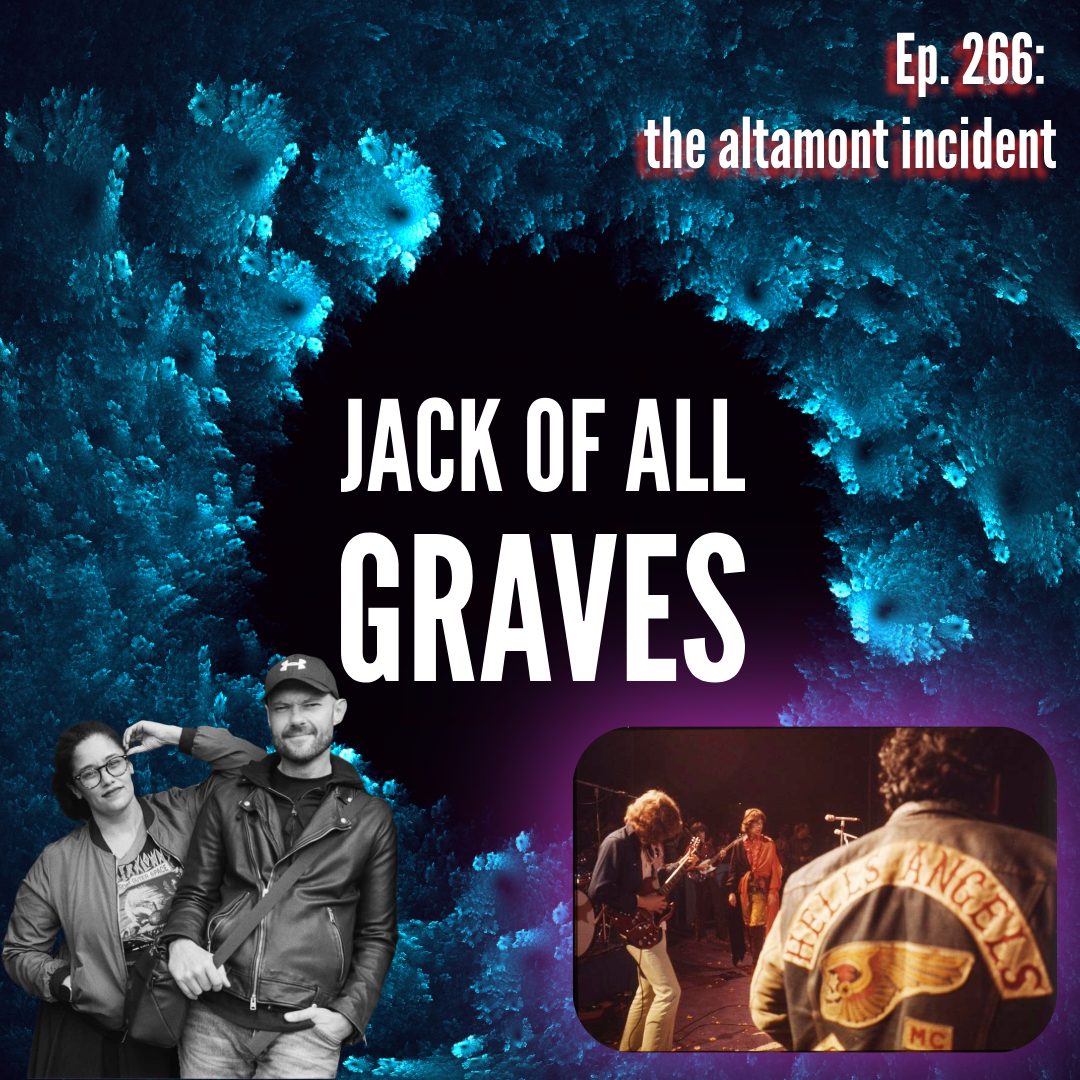
Eight, build the stage low enough to be easily hurdled. Don't secure a clear area between stage and audience. If you like, pull up your phone right now and just Google like a picture of the stage at Altamont. A L T A M O N T. It will give you, like, palpitations. Just looking at it is like, what the fuck were they thinking?
It genuinely, like watching the documentaries about it and stuff, I was like feeling like short of breath. Right, right. You want to describe what you see here.
[00:30:07] Speaker B: Well, what I'm seeing is the Stones.
[00:30:10] Speaker A: Yep.
[00:30:11] Speaker B: And Jagger, you know, and what looks to be like 40, 50,000 people.
But this stood, like, right where the stage ends. It's just right.
[00:30:25] Speaker A: They're just like, almost on it.
It's truly incredible.
Obviously a terrible idea.
Don't look at anything more because I don't want you to spoil.
[00:30:36] Speaker B: But it does feel to me, though, if there is. If there are. If there is a group of people who could handle that
[00:30:44] Speaker A: or.
[00:30:44] Speaker B: Yeah, if I wasn't available, I couldn't do a Woodstock 99 and. Whoa now, guys, let's take it down a peg. No, we need the Hell's Angels.
[00:30:52] Speaker A: We need the Hell's Angels. Yeah, well, we'll get there. Number nine, provide an unreliable, barely audible, low fidelity sound system.
[00:30:59] Speaker B: Oh, dear.
[00:31:00] Speaker A: And number 10, ask the hell's Angels to act as security guards.
[00:31:04] Speaker B: Okay.
[00:31:05] Speaker A: So indeed, it started with location.
Initially, it was to be held at San Jose State University's practice field, where there had recently been another huge free festival that had lasted three days.
But the city of San Jose was like, nope, we just did this. We don't want another one right now. It's a lot of work. So no dice.
So as you can imagine, the next place they wanted to do the show was in Golden Gate park, essentially the Central park of San Francisco. It was a notorious hippie hang where lots of iconic countercultural events took place.
However, the Stones also didn't want cops involved, and the cops didn't like the Stones or any of the counterculture. And there was no way that the city of San Francisco was going to let this happen. And permits simply were not given.
So plan C was to move it to the Sonoma Raceway in Petaluma, which is about 40 miles north of the city, kind of in the middle of nowhere. When I was in high school, we referred to it as Cowtown, even though there's literally a town called vacaville, like 15 miles away, which literally means cow town. Okay, well, it wasn't the ideal choice. It would do until the owners of the raceway decided that they wanted some 250 grand to put on the free show.
So clearly that was not gonna fly with the cash strapped Stones.
So again, they moved the gig, this time to the Altamont Speedway in Alameda county, which is Even more out of the way and less cow town than just straight up nothing town.
But even if it had been an ideal location, they were a day and a half out from the event and throwing it together was just gonna be haphazard anyway that you sliced it so just not enough time.
[00:33:00] Speaker B: So they, they, they move this to that venue with like a couple of days to spare.
[00:33:08] Speaker A: 20 hours.
[00:33:09] Speaker B: Oh, that's
[00:33:13] Speaker A: right. Like there's.
Yeah, right, exactly. Just. Nope, not so much.
But this, as I said, this was not an ideal location. And its organization was, of course, incompetent.
My college roommates, whose 40th birthday I'm actually going to in Colorado this weekend, are from Livermore, where that speedway is in Alameda County. Alameda County. And apart from the suburbs they've built up there, it's a pretty desolate landscape. Brown as far as the eye can see, treeless. Known mostly for the Altamont Pass wind farm, which is just like all you can see as far as the eye can see is just rolling hills covered in these big white windmills. Yeah, it always gives me the creeps every time I drive through there to get. From when I was like driving to college and back every summer, I had to drive through that to get there. And every time it's just like, I don't like these giant windmills. I have hang ups about windmills. Most people would probably find them delightful.
[00:34:17] Speaker B: I'd love to explore that.
Maybe in the future. I, I am a windmill. Like, I enjoy windmill. I love what they do. I like massive structures, though. I do like giant things.
[00:34:27] Speaker A: Well, my reaction to them is like your reaction to looking down from a massive structure. You know, you're like, I hate that idea.
But it mostly goes back to having a dream once where windmills enslaved humans. And I think it just kind of stuck with me in a weird way. I don't know. It's a chicken and the egg thing. Was I already afraid of windmills and then I had the dream about them enslaving humanity? Or was it the other way around? I don't know. They're too big. They're just too big.
But anyway, the 5 Freeway runs right down the middle, and an aqueduct that carries water through California runs parallel to it. Have you seen an aqueduct? Do you have those in the landscape of, of the uk?
[00:35:10] Speaker B: Could I, could I describe one to you now? Probably not, but I've. I'm sure we've got aqueducts. You know, I don't.
[00:35:16] Speaker A: I mean, largely they. I mean, I guess in a Roman fiction way. Yeah. The Romans were the ones who created it. But it's like if you need to get water from one place to another, the UK is pretty wet. I don't know if you have this, this issue the way that, that we do where like Southern California doesn't make its own water, so you need it to come from Northern California.
But anyway, they are huge concrete ditches, the width of a good sized river.
[00:35:45] Speaker B: Yes, yes, yes.
[00:35:46] Speaker A: And while you can't really tell by just looking at them, the water has a pretty swift current and can be quite deep. And the walls are smooth. I mean it's concrete. You can imagine there's no grip on that shit.
So why am I telling you about this aqueduct?
Well, it's because the day's first horror happened in that aqueduct.
From witness accounts, a teenager named Leonard Kryshack flipped off a police officer and then jumped into the aqueduct.
People assumed that what he was trying to do was get to a different part of the speedway, using the water as a shortcut, possibly to get away from the cops.
When it comes down to it, no one knows why he did this, but he was doomed as soon as he went in. And that's why no one could ask him.
Like I said, the water has a strong current, the walls are high and smooth, so there's nothing to hold on to to climb out. And it's cold.
So Krysek pretty quickly drowned in the California Aqueduct and concertgoers watched his lifeless body drift away down the aqueduct, half convinced that they were tripping and hallucinating the whole thing.
Not a great start. Yep.
[00:36:59] Speaker B: No.
[00:37:00] Speaker A: Inside the speedway things were also tense.
Getting there had been a chore. Another thing about this area is that access comes from the 5, the big freeway, and then from a bunch of like two lane country ass roads surrounding it. Like this is farm country, this is where a lot of California's farms are, is in this like central area here.
This part of the California is meant to just be passed through, unless you are in fact a farmer. So it's not set up for huge hordes of people.
The venue had space for 12,000 cars and over 300,000 people showed up.
They'd been stuck in traffic for hours and hours getting there. Held back from entering the main part of the speedway by the Hells angels until about 7am There were hardly any facilities. Once they got inside, people waited a half hour for the bathroom.
Yeah, like I wouldn't make it, that's for sure. I would be one of those people peeing on cars.
The lines for water stretched over 300 yards, and there was very little food to be had anywhere.
[00:38:09] Speaker B: I'd be straight in the aqueduct, mate.
[00:38:12] Speaker A: Right.
[00:38:12] Speaker B: Like, that would be me.
[00:38:13] Speaker A: You know what? I'm done.
[00:38:14] Speaker B: I'm out the car. Take a look at this. This. I'm out, you copper. Splash.
[00:38:19] Speaker A: Yeah, right. Suddenly he's making more sense.
But this is obviously in like, stark contrast from those nice clips you see from Woodstock of, like, people passing around free food to each other and looking happy and fed. And everything is so nice.
[00:38:37] Speaker B: Like a great laugh.
[00:38:38] Speaker A: Yeah. It's like this is like the utopia that, you know, the hippies wanted for themselves. You know, everybody getting along, everybody helping each other, everybody feeding each other all of that stuff.
That is not what is happening here.
Instead, you've got a whole bunch of people from a whole bunch of different subcultures, from hippies to Black Panthers to bikers, most of whom are high as kites. And everyone is hungry, thirsty and has to pee.
Not ideal.
Meanwhile, while accounts vary as to just how much security the Hell's Angels were supposed to be doing, from actual policing to just sitting on the edge of the stage, making sure no one with the gear, what doesn't seem to be disputed is that they were paid about $500 in beer to do whatever they were there to do.
[00:39:30] Speaker B: Incredible.
[00:39:31] Speaker A: Which, in today's money is about 4, $4,000 worth of beer. So that's a lot of alcohol to be pumping into these guys.
And I don't know, maybe I'm a prude, but it feels like you don't want your security wasted.
I don't.
[00:39:46] Speaker B: No, no, no, no, no.
Before the music Opposite, in fact.
[00:39:50] Speaker A: Yeah. Before the music even started, most of the biker gang was drunk off their asses and also on lsd.
So nobody was in a great state of mind here.
And then, like I said, you had the issue of the stage itself. The angle of the grounds made it so that it was basically built to be swarmed by people at every angle.
[00:40:11] Speaker B: Yeah. And based on what I can see in the pictures here, just impossible to see.
[00:40:15] Speaker A: Right.
[00:40:16] Speaker B: If you had two or three people back, you're seeing fuck all. You're seeing nothing.
[00:40:20] Speaker A: Right. And one of the things that's really interesting about this story is that a lot of shit is going to happen over the course of these sets. And everyone who is in the front has horror stories of it. And everybody who was in the back had no idea anything happened. They're like, we couldn't hear the music. We couldn't see anything. We had no clue what was Going on like they were just all back there doing their drugs, hanging out, nothing. Because, yeah, the front of the stage was its own world and then beyond that, you are barely a part of this concert, essentially.
[00:40:56] Speaker B: Pictures are fantastic.
[00:40:58] Speaker A: Yeah. Don't keep looking through them too much. Sorry, spoil.
[00:41:01] Speaker B: I will not.
[00:41:02] Speaker A: What I'm going to tell you here,
[00:41:04] Speaker B: I've seen nothing good.
[00:41:06] Speaker A: All right, so this is why, like the placement of the stage is why the Angels were supposed to be sitting on the edge of the stage to keep people from rushing it or taking or breaking the gear.
Now, we've all been to concerts, right? We've seen what security generally does. Someone crowd surfs towards the stage and when they get there, the security guy impassively sort of pulls them over the barrier and guides them back into the crowd. When things get too hot, they're meant to lower the temperature and keep shit from getting out of hand.
[00:41:37] Speaker B: Pettiest fucking security guards I've ever known in my life. Right, Brace yourself at fucking Tool.
[00:41:45] Speaker A: Right, okay, yeah, that adds up
[00:41:50] Speaker B: because the band had, you know, had notices sellotaped up around the building.
No photography at all. Do not take any photos of Tool.
You've come to see Tool. Be in the moment. No photos. So whenever we would, like pull out our phone for a sneaky photo, the security guys would see and they'd fucking shine a torch right into your camera just to stop you taking photos. Fuck off, boys.
[00:42:20] Speaker A: That's what they do at Broadway shows before they take you out. They just flashlight straight to your camera.
[00:42:25] Speaker B: Grow up. Like, I want a photo, Tul.
[00:42:30] Speaker A: You can't have a photo of Tool.
Those are the rules.
[00:42:34] Speaker B: Paid 40 quid to see Tool here tonight in Cardiff, right?
And I want a photo. I enjoy lateralists a great deal and I would like a picture to remember this by. No, no. Shine my stupid little fucking torch at your phone.
Pricks.
[00:42:49] Speaker A: Well, they're gonna sound like your besties after I talk to you about what happened with these guys, that's for sure. That's gonna seem extremely reasonable that they're just flashlighting your camera.
But yeah, the idea behind the security is like generally like you always. They're like straight faced, like, they don't like, they don't yell at you or anything like that. They literally just kind of like try to like very quickly and easily deal with things. They don't want anything to escalate and become worse.
That's not what the Hell's Angels did, Mark. Yeah, no, they armed themselves with heavy lead tipped pool cues which they deployed upon Anyone in the crowd the cut of whose jib they disliked.
[00:43:35] Speaker B: Oh, that's awful.
[00:43:36] Speaker A: And they weren't just like, giving a poke and telling them to behave. They were slamming people over the heads and face with these things.
A photographer capturing the mayhem caught one of the pool cues to the skull himself and required stitches for the giant gash that they left behind.
And this is just during the opening act. Santana.
This is.
[00:43:59] Speaker B: This kind of action is happening during Santana.
[00:44:02] Speaker A: I mean, this. This whole thing is such a crazy juxtaposition because, like, obviously the Rolling Stones are a rock and roll band or whatever, but they're certainly, by our modern standards, nothing heavy.
[00:44:16] Speaker B: They're not Corn. First album corn, Right? Absolutely.
[00:44:20] Speaker A: When their music starts playing, you don't go, whoa, buddy, that's too heavy. Everyone's gonna go crazy. Right? And your. Your bands here are all people who, like, now we would think of as like, grandma music, you know, like, this is the stuff that you go over to your grandmother's house and she's listening to and telling you how much she liked Mick Jagger and his tight pants and, you know, all that stuff right
[00:44:42] Speaker B: here on the radio. One of them's died, right?
[00:44:45] Speaker A: Exactly.
So, you know, yes, Santana is the opening act here where things are already going awry. And Carlos Santana was appalled by the violence he was seeing in the crowd. By the way, he's a Marinite and everybody in Marin sees him around. He sang Michelle, My Bell to my mother wants the camera store.
[00:45:04] Speaker B: I thought he died. It was him that was in my mother.
Somebody has died from Santana and Carlos
[00:45:10] Speaker A: Santana who did not die.
I don't. I would not be able to name anyone else who is in that band anyways.
Like many of the folks who performed that night, he would recall that the vibes were off from the beginning.
He remembered seeing a guy from the stage who had a knife and was just looking around for someone to stab.
He said, quote, there were kids being stabbed and heads cracking the whole time.
Oh, I hate that during Santana.
[00:45:40] Speaker B: I hate that.
[00:45:41] Speaker A: Yeah, awful. And like, a lot of these people are like kids, right? Like, these are young people who are having this happen to them by grown ass Hell's Angels who were in their, like, 30s and 40s.
So the Jefferson Airplane was up next, and things were only getting worse in the crowd.
One black man trying to escape the Hells Angels because the Hell's Angels were extremely racist, jumped onto the stage, only to be subdued and beaten with the cues before being thrown off stage where more angels continued beating him.
The band's singer Marty Balin hopped into the audience and tried to break up the fight and was promptly knocked unconscious by one of the bikers, who smashed him in the face with a cue.
This began a verbal back and forth between the band and the Angels, where one of the Hell's Angels came up on stage because the band was clearly upset that they just popped their singer, and the Angels were enraged that they
[00:46:38] Speaker B: were being challenged about it.
[00:46:42] Speaker A: So the vibes were tanking.
By the way, just for the record, the documentary that I keep bringing up, Give Me Shelter, one of the most famous rock documentaries ever made, is on YouTube, and I linked it in the show notes. So, you know, you can watch all of this happening in this documentary.
But as all of this is happening, the Stones arrived in a helicopter and were dropped off on a hill behind the stage, surrounded by screaming fans. Suddenly, one audience member started shouting, I hate you, I hate you. At Mick Jagger and punched him in the face out of nowhere, which would
[00:47:16] Speaker B: have been very easy to do.
[00:47:18] Speaker A: Yeah, I mean, because they were right there, man. Just clocked him one.
Which I'm sure is pretty ominous for you as performer, when you arrive at your show, especially when followed by being told what happened to Marty Ballin a few minutes earlier, it was abundantly clear to them that everything was wrong and was going to get worse.
But they didn't pull the plug.
The Flying Burrito Brothers were able to perform with minimal drama, but when Crosby, Stills, Nash and Young had their turn, the Hells Angels busted into the crowd, causing absolute chaos.
The band fucked right off out of there, hopped straight into a helicopter and left.
They're like, we're not doing this. Absolutely not. And the Grateful Dead refused to play once they saw what was going on at all, which is funny, considering it was Jerry Garcia's idea to have the Hell's Angels there. He saw what was going on. There's this, like, great clip of, like, them all talking in the hippie accent, you know, Jerry Garcia. And to the other members of the band, like, oh, man, Marty Balin got beat up. Marty Balin. They're beating up the musicians. Yeah, man. Whoa. That's weird. Like, they're just having this little, like, dumbass conversation about what's going on. And then they just got in the chopper and were like, nope, we're good.
So meanwhile, the few medical tents were absolutely overrun with injuries, and with bad trips and the supply of Thorazine meant to counteract the ladder was drying up. At this point, failing to read the room or the writing on the walls, the Stones treated This like a normal show, keeping the audience waiting to build up the anticipation and the excitement.
But as the crowd waited, hungry and cold and having the shit beat out of them, things just got more and more dire.
The Angels decided to drive their bikes through the crowd, causing people to have to jump out of the way to avoid getting run over.
[00:49:25] Speaker B: Pete's here. Hello, Peter.
[00:49:27] Speaker A: Hello.
[00:49:27] Speaker B: Peter Corrigan says hello. No. So you've got no association with that word, Woodstock? I don't know what that means. There's a place in Oxfordshire. It is a place in Oxfordshire. Yes, you're right.
Yeah. It was a festival in 1969. And ah. Looked it up.
[00:49:45] Speaker A: He looked it up. Okay. Nice.
Very nice.
[00:49:49] Speaker B: Driving their bikes through the crowd. Gone.
[00:49:50] Speaker A: Drove their bikes for the crowd and then they parked them right in front of the stage when the lights came up. After an hour and a half of the crowd waiting for them, the stage was surrounded by bikers and reporters.
As soon as the band started playing Jumpin Jack Flash, the Angels started swinging.
In the rush of excitement, a concert goer accidentally knocked over one of the motorcycles.
As Sonny Barger put it later, ain't nobody gonna kick my motorcycle and get away with it.
[00:50:20] Speaker B: Yeah.
[00:50:21] Speaker A: The response was absolutely disproportionate, retaliatory violence.
A teen boy climbed up on stage and right away had his jaw broken by a kick from an angel.
Some folks got naked because hippies and tried to get on stage. They too were beaten.
Jagger kept telling the crowd to calm down and stop pushing, but didn't stop the show.
One naked and clearly stoned woman got on stage and held on to one of their amps. If you like, watch this in the.
The documentary. It's like, this poor woman is, like. Looks like she's, like, on the verge of gonna, like, think throw up or die. She's just, like, trying to climb over people, like, needing help, clearly, before she does this. So, like, the correct thing to do would have been to, like, get a medic, put her in the recovery position, right? Exactly.
[00:51:17] Speaker B: Administer heavy Thorazine.
[00:51:19] Speaker A: Precisely not what happened.
The five of the Hell's Angels surrounded her, to which Mick Jagger responded, I'm sure it doesn't take all of you to take care of this. Surely one of you can handle her.
And though his intentions were likely to get them to check themselves and cool off, what ended up happening was that four of them backed off while the last one clubbed her with a pool cue and shoved her off stage.
[00:51:45] Speaker B: That's the second treatment pathway, if the first.
[00:51:48] Speaker A: Right, you're out of Thorazine. Next thing, club with a pool cue.
Bewildered by everything happening, Jagger looked out into the crowd and pleaded to know why everyone was fighting.
Keith then took the mic and said they were gonna stop playing if everyone didn't cool it.
But a Hell's angel walked up to him on stage, grabbed the mic and started screaming, you into it. While Mick uselessly sputtered, you know, we're all one. Let's show we're all one.
And they kept playing.
[00:52:16] Speaker B: Oh, that is weak.
[00:52:18] Speaker A: Yeah, everything that, like, there. His little, like, furtive attempts at, like, calming the crowd are just so pathetic. The whole time, you're like, very, buddy, buddy. Grow a pair. Are you serious right now? Like, he's just, like, uselessly the whole time being like, hey, guys, don't fight. Why can't we be friends? Like, shut up, dude.
Anyways, it was during the song Under My Thumb that things truly hit the fan. Although the lore is that it was sympathy for the Devil because everyone wants it to be something satanic.
And I'll come back to it, but, like, there's a BBC article that really tries to frame the whole thing as, like, the devil was there.
[00:53:00] Speaker B: Yeah, yeah.
[00:53:01] Speaker A: And it's from, like, 1999. It's not from the 60s.
I was, like, reading this, just like, Jesus Christ. But anyway, so under the Under My Thumb is playing. And if you read a lot of accounts of what happened, the basic gist of what those things will say is that a black man rushed the stage pointing a gun at a gun at Mick Jagger, and the Hell's Angels went after him.
But the account given at the time by a witness in Rolling Stone magazine doesn't sound like that at all. So I'm going to read to you what this person said then. You know, we were both watching Mick Jagger, meaning he and this black man. We were both watching Mick Jagger and a Hell's angel, the fat one. I don't know his name or anything. He reached over. He didn't like us being so close or something. You know, we were seeing Mick Jagger, too. Well, or something.
He was just being uptight. He reached over and grabbed the guy beside me by the ear and hair and yanked on it, thinking it was funny, you know, kind of laughing.
And so this guy shook loose. Yanked away from him. He shook loose and then the Hells angel hit him in the mouth and he fell back into the crowd and he jumped off stage and he jumped at him, and he tried to scramble, you know, through the crowd to run from the Hell's angel. And then Four other Hells Angels jumped on him. They started mugging him. And. And here the interviewer interjects and says, this is when they claim he had the gun. And the witness responds, no, no, he didn't pull out the gun yet. See? And they started. They were mugging him and then he started running. And he was running straight into the crowd, you know, pushing people away, you know, to run from the Hell's Angels.
As the witness explained, while the guy had done drugs, like most people there, he hadn't seemed especially out of it. He described him as really pretty straight.
He was only reacting this way because the Angels were already messing with him and then beating him for reacting.
The Angels chased him through the crowd and then one stabbed him in the back.
It was then that the black man pulled out a gun and held it in the air as he ran.
One of the Angels stabbed him in the head and they kept stabbing.
More Angels came and kicked and beat him. He was smashed over the head with a trash can, absolutely brutalized. Until lastly, one of the Angels stood on his head for almost two minutes straight.
Finally, the man rolled over and moaned his last words. I wasn't going to shoot you.
That man was 18 year old Meredith Hunter, and the extent of his injuries were such that there was literally nothing that could have been done to save him.
His wounds were described as the kind that if they occurred in the lobby of a hospital, they still likely wouldn't have been able to get surgery in time to do anything about it.
Audience members raised hands covered in Hunter's blood to try to indicate to Jagger how seriously he'd been hurt.
And Jagger called out to the crowd to part and let a doctor get through to him. And eventually one was able to. But like I said, there was absolutely nothing they could do for this guy.
The witness in the article said he refused to testify because he didn't want to get killed, obviously.
And that's probably why the narrative around this is pretty fucked up. Now, most sources you read, including that absurd one from the BBC that basically uses this whole event to talk about why counterculture is bad, frame this as a drugged up black man rushing the stage and the Angels having a disproportionate reaction to a real threat.
Yeah, the BBC article even posits that Hunter might have actually been trying to assassinate Mick Jagger.
This certainly explains why the angel who stabbed Hunter was acquitted on grounds of self defense, but it was absolutely not self defense if we believe the person who was there, watched it all unfold, unfold, and tried to help as Hunter was left on the ground like trash by the men who had murdered him.
And it's honestly wild that, like, we have this written account right there, you know, like, this is not hard to find. Google, Rolling Stone, Altamont Pass. This article from, you know, three weeks after this happened is right there with this guy explaining what happened.
And yet everything repeats the bullshit narrative that was constructed to absolve everyone involved from guilt.
Black man with a gun must have been trying to do a murder. Case closed.
And eyewitnesses wouldn't point the finger at the angels for fear of what might happen to them. It's just a perfect storm of like, racism. A group of people that is like intimidating. Violent and intimidating. Exactly. Cops that don't want to hear it, they want their job to be easier. You know, a band that doesn't want the finger pointed at them. Why did you hire these people to do this? You know, like, it basically worked out for everyone to paint him as being violent. And, you know, maybe this was disproportionate, but yeah, he deserved it ultimately, right?
So the Stones continued playing after this happened. They didn't know he died, to be fair, but clearly there was a major incident in. In the crowd.
But they finished out the concert before hopping into a helicopter and peacing out in a manner that basically everyone describes as feeling like the last chopper out of Saigon, just leaving this roaring crowd in disarray below them as they take off.
The crowd stumbled out to try to find their cars and leave the place. But there was still one less last tragedy left to unfold.
Mark Feiger and Richard Savlov, both 22 and recent transplants to the bay from New Jersey, were sitting around a campfire with friends when a 1964 Plymouth sedan or saloon. Saloon ran over them and several other people while the other two people, 22 year old Candy Sue Johnson and 21 year old James McDonald, survived. The car had driven over both of the Jersey men's chests and they died of, quote, multiple blunt crushing injuries in the aftermath. The Rolling Stones never contacted Meredith Hunter's family to offer condolences, according to his sister, who said of Meredith, quote, we were sure it was somebody else and nobody knew anything. He was a very highly educated boy. He almost never raised his voice. He talked very quietly. That would make people mad when they wanted to fight. He'd talk very quietly. And he was so educated in the way he spoke. His job just came through, his job at the post office.
She said that he'd never been in any trouble. And while he did own a gun. He only brought it for protection to big events, which isn't crazy for a black man in the 1960s.
[00:59:48] Speaker B: Yeah. It also doesn't, I don't know, get you stabbed in the back of the head, right?
[00:59:53] Speaker A: Yeah. They didn't know he had a gun when they started stabbing him in the head.
[00:59:56] Speaker B: Yeah.
[00:59:57] Speaker A: It's basically coincidence that he happened to have a gun.
And while their reactions over the years have been mixed, amongst the things Keith Richards said was, quote, they were out of control, man. The angel shouldn't have been asked to do the job. People were just asking for it. All those nude fat people just asking for it. They had those victims faces.
Victims faces.
[01:00:21] Speaker B: Don't enjoy that one bit.
[01:00:22] Speaker A: Nope, no, not at all.
And indeed there are many times in Gimme Shelter where they come off as pretty heartless about everything that went down. Four people dead and they didn't seem to be particularly moved on an emotional level. You do see, like Mick Jagger looks like he's really kind of struggling to process anything because they show them the footage in this film, you know, so you kind of see them like in the beginning kind of reliving the concert, being, this is fun. And then when it gets to like, they haven't seen what happened up until this point and now they're like actually getting a look at like how bad things were.
So Mick Jagger does look a little like holy, where the other guys don't necessarily look like they're, you know, that engaged with what is going on here.
But as I said, people tend to look at this in combination with the Manson murders as sort of the end of the counterculture, the end of the hippies.
More clear minded commenters point out that this had nothing to do with the counterculture per se. This was about money.
When we compared to Woodstock, it's night and day. There had been months of preparation. People were taken care of, there was food and water. Much of it fell free. There's a reason people look back on it so fondly and it's such an iconic image of the age.
This was not bad. The Stones put on the show cynically to make up for squeezing their fans with ticket prices. They refused to pay for a venue and did no preparation. They hired a violent gang to do security for alcohol instead of money. They pinched every penny and they only made the most basic efforts to try to get the Hells Angels stop beating the shit out of the audience.
There was no anti war message. There was not even really a peace message to this whole thing. It was the exact Opposite of counterculture, showing zero human care.
Just as Manson adopted a hippie aesthetic that caused people to conflate his cult with the movement, Altamont had the clothes and the drugs of the hippies, but that's where the connection ended.
So regardless of whether these events bore any true connection to the broader counterculture, it was enough to kill the hippie movement in America, turning a bunch of kids who tried to do the right thing for each other in end it for the world into a scary, violent, unpredictable mob who could turn murderous at any minute.
[01:02:42] Speaker B: It's a great story. Learned a lot.
[01:02:45] Speaker A: Lot going on there, huh?
[01:02:46] Speaker B: Learned a lot.
Great deal going on in that story. Very bleak.
[01:02:52] Speaker A: Yes.
[01:02:54] Speaker B: Just first rate Jack of All Graves material, you know.
[01:03:00] Speaker A: Thank you. Thank you. I do what I can.
[01:03:02] Speaker B: Another banger Corrigan.
And I'm. I'm never gonna stop congratulating you after a good opening like I do.
[01:03:09] Speaker A: I really do appreciate it. You know, Gives me a little spring in my step a little bit.
[01:03:15] Speaker B: I think it's important to do it whilst recording and in front of all the listeners. I think it's important to call you out when you deliver a really strong start like you did there.
[01:03:24] Speaker A: You're stuck.
[01:03:25] Speaker B: You know what the course, it was great.
[01:03:27] Speaker A: You got a little bit of that hippie spirit in you. It isn't dead.
[01:03:30] Speaker B: Maybe I do.
Let me quote directly from my notes, if I may.
[01:03:35] Speaker A: Yes, please do.
[01:03:37] Speaker B: Fucking look at these nerds. Oh, mise en scene.
[01:03:40] Speaker A: I don't think anyone has ever said mise en scene in such a horny way before.
[01:03:44] Speaker B: The way I whispered the word sex. Cannibal routine.
[01:03:47] Speaker A: Worst comes to worst, Mark, I'm willing to guillotine you for science.
[01:03:51] Speaker B: Thank you. That's really, really sweet. It's cold outside, but my pancreas is talking to me. I'm fucking. I'm gonna leg it.
[01:03:57] Speaker A: You know how I feel about that, Mark?
[01:03:59] Speaker B: I think you feel great about it.
Right. So I'm hoping that by now, at this point, listener, you've been off and watched Khorne's introduction to woodstock99.
[01:04:11] Speaker A: Yes, naturally. Be crazy if they hadn't by now.
[01:04:14] Speaker B: And I hope that you've come back to us now suitably pumped, amped up for violence, which is what we're all about, isn't it? So, happy New Year, good day to you, and welcome to this week's Jack of All Graves. Corrigan. How are you?
[01:04:31] Speaker A: I tried to type Corn Woodstock into my browser, so I'd remember to, like, put the video up later.
But I'm typing Around my.
My microphone and. Well, yes, but mostly the microphone. And so I wrote Corn Wide Stick, which I kind of like, but. Yes. No, I'm. I'm good, thank you. I'm sweating profusely. I don't know. I don't know if you can tell at this point that I've gotten shinier and shinier over the course of the last 40 minutes or whatever, but.
[01:05:10] Speaker B: Yeah, just one more reason to look forward to summer, you know, I remember it so well. Every episode that we record, pretty much after this week, up until, say, end of October, I will leave a very different man than I was when I joined. I will stand up and it'll just be horrible.
[01:05:29] Speaker A: Just. Yeah, everything.
[01:05:30] Speaker B: Looking at the. Oh, talk about the weather. Fuck it. How riveting is this? We've got another good three or four cool days left to come, and then it's dark times.
[01:05:41] Speaker A: Very jealous. It's like 90 degrees out. It's supposed to stay that way for the rest of the week. I'm not a fan of that situation. So, you know, there's. I just need people to know I'm uncomfortable.
[01:05:53] Speaker B: Hate it. Because the temperature rises, the anxiety rises, the sleep gets worse.
[01:05:57] Speaker A: Yes.
[01:05:58] Speaker B: Everything feels more difficult somehow.
Yeah, Everything feels more like on a hair trigger, you know?
[01:06:06] Speaker A: Right, exactly. Well, I mean, this is a thing that I should cover at some point on here that it's funny that I haven't done, but, like, you know how in the seventies in New York there was, like, those blackouts that happened, and it was like everything, like, went crazy and stuff like that, but it was like. Also, I mean, I guess the reason the blackouts happen is hot as fuck.
And it's like, it makes people insane to be hot. And I think we, like, now with climate change and whatnot, everyone has air conditioning and because it's cheaper than it was back in the day, obviously, but it's like we forget what heat does to you. Like, it genuinely drives people fucking nuts.
[01:06:48] Speaker B: I feel as though I've earned maybe a little downtime from work, maybe a little. Maybe a little bit mental episodes, you
[01:06:59] Speaker A: know, A little time for a little minty B.
[01:07:02] Speaker B: So I'm thinking if it does get super hot over the next couple of weeks, I might just let it all hang out. You know what I mean? Just let it all go and find
[01:07:16] Speaker A: you naked on a street corner somewhere.
[01:07:17] Speaker B: A little bit of downtime.
[01:07:20] Speaker A: Yeah, that's.
That's where we're at. Just as a reminder, in case you forgot from the beginning of the.
This episode, like I said, Special Free for all Kofi episode of Best Album Ever of Ben's mother Glee Helms, talking about her experience in the 1960s, the Woodstock era, all that jazz. And it is a delight. This is. I. I also like normally when I post things on there, and when you post things, we pretty much kind of post what it is.
But you do get a little bit of a blog post from me on this one explaining my connection with Ben's mom, who I spent a lot of time with when I was a teenager.
And so, you know, it's a little blog, a little episode, a lot going on there, and I hope that you enjoy it. K o-fi.com Jack of Allgraves
[01:08:18] Speaker B: I was a big blogger. I used to love blogging.
[01:08:21] Speaker A: Did you really? Did you really? I know you had a Tumblr and you deleted it, but I didn't know, like, what you did with it. Really?
[01:08:28] Speaker B: Yeah, I had a Tumblr. There was a site simply called Blogger, which I used for a while.
[01:08:32] Speaker A: Yeah.
[01:08:33] Speaker B: Several accounts on there.
[01:08:36] Speaker A: Yeah. It's no surprise that I was a blogger. I still blog.
[01:08:40] Speaker B: I still do do it in many ways. You're the last remaining blogger, aren't you?
[01:08:45] Speaker A: There are some out there. I think maybe I'm like, one of the few doing it for the pure love of the game.
[01:08:51] Speaker B: You're like Kevin Costner in the Postman of Bloggers, right?
[01:08:53] Speaker A: Yes.
[01:08:55] Speaker B: That's where you are. You're delivering the blogs.
[01:08:58] Speaker A: That's nice. I feel like, you know, whenever I post something, people are kind of like, it's a little bit of relief for them to just, like, read something that there's, like, no ads on, and it's just someone talking about bullshit. You know, I've done, like, a bunch of recipes online. I tell stories around the recipes, but not in order to, like, not as clickbait, just as like, this here's a blog. And also there's a recipe. You know, I talk about videos that I watched on YouTube, stuff like that. And I think, you know, every now and again, it's nice for some people, for people to, like, slow down and just read some bullshit that someone was thinking.
[01:09:31] Speaker B: Yeah, for me, it was the opposite. When I was. When I was in my blogging era, I much like joag. Frankly, it wasn't written for the reader.
This is. This podcast isn't recorded for the listener.
[01:09:47] Speaker A: Well, yeah, this is.
[01:09:47] Speaker B: This is the process.
That's what this is.
[01:09:51] Speaker A: Well, this is true of all things. I mean, this is why we're the anti AI. It's like none of this is meant to, you know, put out content, whether the blog or the podcast or whatever the case may be. The point is we enjoy doing this.
[01:10:06] Speaker B: That's exactly.
[01:10:06] Speaker A: You know, and that's. That's why we're here. It's crazy that people do this for other reasons, because. Just here. Because we like it.
[01:10:16] Speaker B: Yeah. It's really as simple as that.
[01:10:18] Speaker A: Yep. You. You went to Wales this. This weekend, correct?
[01:10:24] Speaker B: A little bit of a recap for me there. Yes, I did. I took my genetic duplicate boy, Owen, to go and see monster trucks. Right?
[01:10:33] Speaker A: Yeah, tell me about it. I haven't seen monster trucks in, like 15 years.
[01:10:38] Speaker B: Oh, it was great. It was way bigger and more of a big deal than either of us had prepared for. Right. They closed.
[01:10:45] Speaker A: So you've never gone before. This is both of you first experience.
[01:10:48] Speaker B: Yeah. They closed all the roads to this. In. Into the. Into the center of the city. So it was a pain in the ass to park. And all because of the monster trucks. All because of monster trucks. Yeah.
[01:10:57] Speaker A: Was it like in the streets or was it like stadium?
[01:11:02] Speaker B: It was a stadium in the rugby stadium, the principality stadium. And the place was packed.
The place was absolutely packed. And both Owen and I were like, who knew? Well, well, well. It was like the WrestleMania of monster trucks, apparently. And we had no idea.
[01:11:16] Speaker A: That's so funny. Like, oh, let's just go see this local bit of color.
[01:11:20] Speaker B: Yeah, sure. Nope.
So that was fantastic. That was. That was great.
And I learned. Or did I learn? I'll tell you something I learned for next time we go to monster trucks.
When we got there and the stadium started filling up, I looked around.
Seems pretty autistic in here. Lots of young men in ear protectors.
[01:11:43] Speaker A: Right, Right.
[01:11:45] Speaker B: And I was like, all right, fair enough. Trucks.
[01:11:48] Speaker A: Yeah, sure.
[01:11:49] Speaker B: That could be special interest cars. Categories of a category. Right, I get that. Fine. It's a. It's a. It's an autism magnet.
[01:11:55] Speaker A: Cool. Yep.
[01:11:56] Speaker B: But then it started, and I realized that it is just, in fact, actually load as fuck.
So I dare say there were some autists.
[01:12:05] Speaker A: Sure. Yeah. But this was not the indication of that.
[01:12:09] Speaker B: We're just practicing good hearing discipline.
[01:12:11] Speaker A: Do you.
Do you keep earplugs, Andy?
[01:12:16] Speaker B: No.
[01:12:16] Speaker A: You don't keep earplugs?
[01:12:18] Speaker B: No, I don't. And I know I should.
[01:12:21] Speaker A: Yeah.
Like, for multiple reasons for your hearing, and because once you have them, you realize how overstimulated you are all the time. It's like one of those things where it's like you don't know, and then
[01:12:32] Speaker B: you know, without them, I realize that without ever having worn earplugs.
[01:12:36] Speaker A: Yeah.
[01:12:37] Speaker B: I'm on a knife edge all the time.
[01:12:39] Speaker A: Yeah, right. You put them on and suddenly you're like, wow, everything is so much nicer.
[01:12:46] Speaker B: It's one of those things where so many people have told me that I should do something.
[01:12:49] Speaker A: I'm like, now you're. Now you're getting a little bit of that oppositional defiance disorder. Go.
[01:12:54] Speaker B: I'm not doing that. Why? Because you've told me to.
[01:12:56] Speaker A: No, I was like that in. In high school because my friend Andrew, who is a musician, he was, like, always trying to get me to wear earplugs at a show. And it was like, then I was kind of not doing it to annoy him more than anything else. But then for, like, three days, my ears would just be, like, ringing after shows.
And now I don't know how I didn't wear them because now I, like, wear them on a bus or a train. I wear them in the movie theater because the movie theater speakers are too loud. Like, everywhere because the world is too noisy.
[01:13:30] Speaker B: My watch tells me I'm gonna go deaf, like, most days.
Like, the second up, it was like, oh, buddy, you are going to go deaf. Leave this area at once or you will be deaf.
[01:13:43] Speaker A: Wild. That it was loud enough to trigger the decibel meter on the watch, and
[01:13:49] Speaker B: it then continued going off every 10 minutes. My watch would tell me I was watching death.
[01:13:52] Speaker A: Yeah, yeah, you gotta. You gotta invest in some loops or something like that. It'll change your life. Let me tell you.
[01:13:59] Speaker B: The best way of getting me to do something is to make me think it was my idea. Well, if you can, somehow.
[01:14:05] Speaker A: Somehow I have to trick you.
Well, here's the thing is you already did make it your idea. You were like, yes, I noticed that I'm overstimulated all the time. Like, that is your. That's your own observation.
It has nothing to do with. With me pushing the. The loops on you. You. You have identified a problem for which, you know there is a solution.
[01:14:26] Speaker B: That's correct.
[01:14:30] Speaker A: But, yes, if you, dear listener, maybe notice that you're overstimulated sometimes by, you know, someone chewing gum too closely or the movie theater speakers or things like that, you know, get some. Get some earplugs.
It's a great choice.
[01:14:48] Speaker B: Yeah. It was good, though. It was. It was fantastic.
[01:14:50] Speaker A: Have a good time. Did. Was this.
Was there a. Was there crushing or were they just like. Like, what did they do?
[01:14:56] Speaker B: There wasn't crushing.
[01:14:58] Speaker A: Demolition derby? No, no crushing.
[01:14:59] Speaker B: Racing up and down the place. So driving up and down the place and around. Yeah, and stunts.
[01:15:06] Speaker A: Oh, stunts, you know. Yep.
[01:15:08] Speaker B: A couple of them got what looked. They looked pretty fucked up. Like they had to take them apart and repair them in the middle.
[01:15:15] Speaker A: Nice.
[01:15:17] Speaker B: And I don't know, I. I left it with a lot of questions, I guess. You know, they.
They make their living off of those trucks, you know, I mean, those trucks are their livelihoods.
[01:15:26] Speaker A: Oh, yeah. And, like, the trucks are famous. Like, if you're into monster trucks, then, like, you know, trucks by name.
[01:15:33] Speaker B: There were some famous ones there, I'm led to believe.
[01:15:37] Speaker A: Yes.
[01:15:39] Speaker B: So, yeah, good laugh, good time.
[01:15:41] Speaker A: Love it. That's delightful. Owen gave it the thumbs up.
[01:15:44] Speaker B: Oh. And yes, he did indeed give the thumbs up. And I am led to then consider the lovely visit we had with my mother the next day.
[01:15:53] Speaker A: Oh, very nice.
[01:15:54] Speaker B: And I wonder what her podcast would be like.
[01:15:57] Speaker A: Oh, man, I. I see. I see a snack in the making. I just like the Mother Son podcast. Or like, just like one of her lady friends, you know, just be like, set them in front. In front of a microphone, let them chat, see what they see, what they come up with.
Maybe I think it'd be fun. Maybe I want to get, like, all of your family podcasting. But see, the thing is, with that episode that I was talking about with Ben, it's like, yeah, it's just like his mom, but she's just, like, super insightful. She gets on there and it sounds like she has hosted a podcast her entire life.
Just powering through. It's natural. A natural, yes. If she wasn't an old Christian lady, you know, she would host a great podcast, I think, in another.
[01:16:49] Speaker B: In another lifetime, in another timeline.
[01:16:52] Speaker A: Indeed. But shout out to Glee for being bomb.
This is just a sort of chill. Well, as chill as an episode can be after I've just talked about, like, the deaths of four people, I suppose.
[01:17:07] Speaker B: But even the most chill episode we've ever done has been littered with bodies and horrific tragedies. So you're off to, I want to say, Denver next week, is that right?
[01:17:19] Speaker A: Yes, off to Denver next week. So we will be skipping this coming week because I am off to party with my friends who I mentioned early on, who are turning 40, and they're doing a little cabin getaway thing in Colorado. So heading out there this weekend, which should be fun. I've got, like.
I've got a problem right now because I've got a very busy week. You know, lots of shit going on and then going away and Then come back, and then I, like, have, like, four days here, and then I go to your homeland.
Well, not your homeland, but your country next week.
And I need to see Obsession, and I don't know when I'm gonna do it.
[01:18:04] Speaker B: Well, on that, I cannot help you.
I can. There are plenty of options should you choose to watch Lee Cronin's the Mummy,
[01:18:14] Speaker A: which is no streaming, which is now streaming. No, but have you been hearing about Obsession?
[01:18:18] Speaker B: Yes, I have. Apparently, it's a banger.
[01:18:20] Speaker A: Yes.
[01:18:21] Speaker B: What I am.
What I am more interested in is what. I wonder if it was Lee Cronin's idea to differentiate his brave take on the Mummy against the backdrop of other mummies by referring to it only as Lee Cronin's the Mummy.
[01:18:40] Speaker A: I think he came in, he was like, it's Lee Cronin's the Mummy or I walk.
[01:18:46] Speaker B: Well, I just. I enjoy it. I enjoy the. The fact that, right, we can't have them thinking it's the Tom Cruise mummy. We can't have them thinking it's the
[01:18:54] Speaker A: Brendan Fraser moment, which is the one everyone thinks is the Tom Cruise one.
[01:18:58] Speaker B: There's nobody. There's nobody in the cast who we could pin it on. Gotta be you, Lee. Ah, fucking hell.
Sorry, mate. Or you've lost the gig.
But I like it. And I think had Lee Cronin had a little bit more balls, he would have insisted on calling it, like, the best Mummy.
Real Ghostbusters,
[01:19:23] Speaker A: the world's one and only important mummy.
[01:19:27] Speaker B: The new Mummy. Or maybe something like that. Just something a bit more. With a bit more flair, with a bit more.
[01:19:32] Speaker A: Yeah, you know, like, really some fucking
[01:19:36] Speaker B: call it the best Mummy. The original OG Mummy.
[01:19:41] Speaker A: Those clowns. This is the Mummy? Yes, yes. Right.
[01:19:44] Speaker B: Ultimate Mummy.
[01:19:46] Speaker A: Oh, I like Ultimate. I'm into that, actually. I think that's the. That's the choice. Or you can just, like, called it, like, Mummy, Ex Child or whatever, because it's got, like, a kid. Right.
[01:19:59] Speaker B: I didn't know that. I didn't know that. But I can't help you with Obsession, I'm afraid.
[01:20:06] Speaker A: Yeah, no, not yet. Certainly not. And I don't want. I don't want Stolen Obsession. I want to actually go and see it on the big screen because people have been talking about it and, like, every single rating on letterboxd from my friends has been high. I've got people who've already seen it twice and I have not seen it once.
[01:20:27] Speaker B: It is. It is a remake of the.
[01:20:30] Speaker A: I don't think it's a remake of anything, is it not? No, I don't. I don't believe so. This is Curry Barker, the guy who made milk and cereal.
[01:20:40] Speaker B: Yeah. And who is about to make Texas.
[01:20:43] Speaker A: What is he.
[01:20:44] Speaker B: Yeah, I'm pretty sure this is the guy who's got the new Texas Chainsaw Massacre, isn't it?
[01:20:47] Speaker A: Curry Barker?
[01:20:49] Speaker B: Yes.
[01:20:50] Speaker A: Really?
[01:20:51] Speaker B: Yes. I know that I've said that I'm doubt you've gaslit me now, but I'm certain.
[01:20:57] Speaker A: Like, listen, I feel like whoever had it, I was not interested in. Or maybe that was because it was a 24. That I was not. I don't. But I don't.
[01:21:08] Speaker B: Obsession filmmaker Curry Barker wants to make Texas Chainsaw Massacre feel relatable again.
Obsession filmmaker Carrie Barker to direct the Texas Chainsaw massacre. Reimagining at 8. 24. Yes, I thought so.
[01:21:22] Speaker A: Huh. I did not realize that that makes me more interested.
[01:21:25] Speaker B: I just heard you getting interested, didn't I?
[01:21:27] Speaker A: Yeah, yeah, because you know, when it went 824, I was like, she did the. Huh, huh, huh.
Okay.
But I don't think Obsession is a remake of anything.
But I know he made it.
[01:21:43] Speaker B: I've been carrying around this idea that it's a remake of the Sam Neill Obsession.
[01:21:48] Speaker A: Sam, are you thinking Possession?
[01:21:50] Speaker B: Ah, fuck. Yes, I am.
[01:21:52] Speaker A: Okay.
[01:21:53] Speaker B: Son of a bitch.
[01:21:55] Speaker A: Which, you know, I would not be in a rush to go see.
[01:21:58] Speaker B: I've. That's like six months of opinions on that movie that I've just had to bin completely.
Wow.
[01:22:08] Speaker A: Amazing.
No, this is not a remake of Possession, a movie that I famously do not like.
No, this is. This is his thing. And as is his custom as a guy who started making movies on YouTube, super low budget, he made it for under a million dollars and it has made like $17.9 million.
[01:22:28] Speaker B: That's horror. That's the fucking. That's.
[01:22:31] Speaker A: That's beyond. Like, this is. This is the kind of thing that we haven't seen since like Oren Pelly. Right. Like, this is like not common to have that wide of. Of a margin. I mean, obviously Paranormal Activity made more than 17 million or whatever, but like that much of a huge gap. That shoestring of a budget is unheard of. And for everyone to be like, I gotta see it. And thus that word of mouth, keeping it, you know, keeping people going and everything is pretty incredible. So I. Yeah, I gotta figure out some point at which I can go see this movie because I'm just. I've got like major FOMO right now.
[01:23:12] Speaker B: Yeah. And I get that it's one of the most fascinating things to me about such strong entry points into horror over the past decade for young directors is seeing which direction the career goes in when they inevitably take big money to make something big.
[01:23:37] Speaker A: Yeah, what's the big.
[01:23:38] Speaker B: How is that gonna fucking work out? Do you become Lee Cronin's the Mummy?
You know what I mean? Do you stay as monkey's paw?
[01:23:51] Speaker A: Right.
Oz Perkins.
[01:23:53] Speaker B: Oz Perkins. You keep just banging them out because you love it, right?
[01:23:57] Speaker A: Yeah. You pick a big problem, you pick the franchise, right? Yeah. Do you.
[01:24:01] Speaker B: So.
Or do you keep it? Or do you do.
[01:24:05] Speaker A: Yeah, do you just keep making these?
[01:24:07] Speaker B: Or do you. Or do you take on a absolute behemoth like Texas?
[01:24:11] Speaker A: Right.
[01:24:11] Speaker B: You know what I mean?
So I. I love a strong debut, but I also love what the next step is.
[01:24:18] Speaker A: Yeah, definitely.
[01:24:18] Speaker B: This incredible fucking school of filmmakers that we seem to have in horror right now.
[01:24:24] Speaker A: Yeah, definitely. So I'm. I'm looking forward to that.
[01:24:27] Speaker B: But I'm really interested in Obsession because until I realized it's not, in fact, Obsession, I was ambivalent. But now that I know, yeah, it's
[01:24:37] Speaker A: not, you get to see a brand new thing, which is, yeah, very much in your wheelhouse just in terms of what you like to see. A new horror director creating something small budget, blowing things out of the water, getting people in the seats I'm excited for. I know nothing about it, like, completely blind on what it's about or anything, but I have seen everyone saying that. They're like. I was like, curled up in my seat in anxiety the entire time, so.
[01:25:06] Speaker B: But when are you gonna see it?
[01:25:08] Speaker A: I don't know. I gotta fucking squeeze it in somewhere.
Decisions to be made. It's. I mean, I'm in my own way because of my commitment to going to the gym every day, which really throws off my ability to work around other things.
[01:25:23] Speaker B: Well, long may that continue. Don't jeopardize that. Keep the streak.
[01:25:25] Speaker A: Oh, no, no, no, the streak's gone. Well, the streak is going until the end of the week and then obviously I'm going to Colorado. So next Monday I will not be able to go. But, you know, then we're. And then I will be in Portugal and England and we'll miss some. But then right back in, man. It'll be six weeks straight this Friday.
[01:25:45] Speaker B: Six weeks.
[01:25:47] Speaker A: Going every single day.
[01:25:49] Speaker B: What?
[01:25:50] Speaker A: Six weeks? Yes.
[01:25:51] Speaker B: It's absurd.
[01:25:54] Speaker A: That's right. Look at these, look at these. This is where it's.
Yep, very nice. Showing my guns is what's happening here.
So anyway, what we've watched some things together.
[01:26:08] Speaker B: Well, yeah, because we didn't talk movies last week. So we've got some things to report on. I will firstly just mega quickly talk of tv, if I may.
What does it indicate to you when a TV series in it in like maybe its third or fourth season has to put a little title after the title of the show like True Detective did last.
[01:26:32] Speaker A: Uh huh.
[01:26:33] Speaker B: What was it called? I can't even remember what the title. My Country.
Yeah, there you go. True Detective Night Country. So it's True Detective, but not like the last couple, Right?
[01:26:43] Speaker A: It is entirely unrelated to the last one of these that you watched.
[01:26:47] Speaker B: Yes, well, the Terror is doing that thing, right.
A lot of people seem to have dropped off the Terror during season two, which I did, and I know you did, but season one was fine.
[01:26:58] Speaker A: Well, I also didn't really watch season one either.
I did, I read the book in 2008 and I hated it.
And then I did start the show, but it was just a little, I don't know, slow for me.
You know, I can appreciate it wasn't a bad show. It was just like a little, I get the pace.
[01:27:20] Speaker B: Certainly matched the topic. I mean it was a bit of ship stuck in a glacier, you know,
[01:27:25] Speaker A: and the book is 900 pages long. So that was, that was quite a journey for me getting through that book. This is like, you know how you kind of sunk cost your books and stuff like that and you, and you keep going even if you're not enjoying it. And I did that with the Terror. I was like, I knew by page 300 that I was not in it. I still read another 600 more pages of this book.
[01:27:51] Speaker B: Well, anyway, season three of the Terror is called Nightmare in Silver and it's got our friend, good friend of the podcast, longtime listener. Yes, Dan, we fucking love you, buddy. Dan Stevens.
Give you a shout out.
You'll enjoy that.
And, and while obviously, you know, I'm not all Dan Stevens. Yes, please. I am always delighted to see, obviously.
[01:28:15] Speaker A: I mean, you gotta at least like kind of appreciate the Dan Stevens. Right?
[01:28:18] Speaker B: Listen, it's good seeing him in a role where he will have no doubt had to beat off a lot of American men.
You know, he would have had to beat them off.
[01:28:32] Speaker A: If you've never seen that clip, just look it up.
[01:28:35] Speaker B: When you're finished with Korn at woodstock99, watch Dan Stevens on Good Morning Britain.
[01:28:42] Speaker A: Yeah.
[01:28:43] Speaker B: By Susanna Reid, who I share a birthday with.
[01:28:47] Speaker A: Oh, in all of these times that you've like thirsted over Susanna Reid, I don't think you've ever once said that.
[01:28:54] Speaker B: Well, she's my birthday twin and the queen of breakfast tv mills.
[01:29:05] Speaker A: Anyways, so this show, what's it about now?
[01:29:09] Speaker B: So Dan's. I'm only on episode two myself because it's weekly, which is a pain in the ass.
[01:29:14] Speaker A: It's me and Widow's Bay right now.
[01:29:17] Speaker B: But Dan Stevens is a flaky, adorable, somewhat unreliable kind of man child kind of guy who's obviously in his late 30s, but hasn't peaked in school, you know, as they say, and gets into trouble one night and wakes up in a, in a fucking Kafkaesque shady mental institute that he is not allowed to leave. And there's a story and secrets and gribblies.
[01:29:47] Speaker A: Okay.
[01:29:48] Speaker B: And it's a good laugh. I'm two episodes in. It's perfectly reasonable.
[01:29:56] Speaker A: Okay, well, I will definitely have to check that out if it's, I don't know, is it on fs?
[01:30:01] Speaker B: It is reasonable. It's perfectly reasonable.
[01:30:04] Speaker A: What was the, was the terror on amc? No. No.
I'll have to see what changes.
[01:30:09] Speaker B: Open credits say amc. Shudder. So it's. I think it's a joint.
[01:30:14] Speaker A: Okay, so I should be able to watch that on the television. I'll check it out.
This is. I spent so much time explaining Widow's Bay to you last week and you've completely blanked the entire show. But just FYI, Widows Bay continues to be wonderful.
Matthew Reese is a delight. And it's just like the spooky thing that you want in the world. New England spooky town. Very much like clearly taking its, you know, inspiration from like Stephen King and things like that and then kind of flipping Stephen King tropes in various ways. You know, you have. Your first episode is kind of playing off of like John Carpenter is playing off like the fog. Then you've got a sort of shining slash it kind of episode. You got a Carrie esque episode. But all of them playing these things in a slightly different way than you're expecting.
[01:31:08] Speaker B: I'm glad you've said that because I was just thinking that doesn't seem very appealing to me at all.
[01:31:12] Speaker A: No, yeah, it's. It's one of those things where it's like, because you're like, oh, I know horror stuff, you think you know what's going to happen in these things and then it doesn't happen that way.
And it's just. Yeah, it's a delightful, spooky little show. But like your show, it is weekly, so I just spend my entire week Joining for it. I've genuinely considered just re watching it every single day. Like, every day I'm like, maybe I'll just watch the episodes that have already come out again. Like, this is. I'm just like craving it all the time. And I hope it goes for a million seasons so that I can just watch it a million. Yes.
It has to outlive me to happen here and everyone on it. It just has to be like a show. It's like Doctor who. It's just going to be on until, you know, the world burns up.
[01:32:02] Speaker B: Awesome. You will note that earlier on in this episode, I expressed surprise that Carlos Santana continues to draw breath.
The reason why that met with such surprise was because earlier this month, a lead vocalist of Santana died and Alex Ligurtwood.
[01:32:30] Speaker A: That can't be how you say it.
[01:32:32] Speaker B: Well, it's spelled Ligetwood L I G E R T W double O D. And I'm wondering if that's like Afrikaans. I don't know.
[01:32:38] Speaker A: Huh. Interesting. I don't know. Okay. But yeah, I have never heard of that person.
[01:32:43] Speaker B: Died earlier this month. So I, I.
[01:32:46] Speaker A: You, yeah, you mix it up with the one person we do know from Santana. Yeah, I got you. I'll give you that. I will give you that.
[01:32:54] Speaker B: I got that from SantaNews.com There you go.
[01:32:58] Speaker A: Look at you. Citing your sources.
The only thing I watched that I didn't watch with you this week, I watched for our delightful companion podcast, the Joag Fan Cave with Kristen.
The Blackening was our film this month, and that is for subscribers at all levels. And we just had so much fun with this movie.
And I always get joy when I see, like, you know, people who listen to it, like, log it on letterboxd, and they also had a good time with it. So, like yesterday or the day before, I saw Laura and John Latour had watched it and rated it highly. And I was like, yay. They had.
[01:33:37] Speaker B: It is excellent. It is excellent.
[01:33:39] Speaker A: So much fun. Just really fun. And I had. Kristen was so mad at me for the movie from the month before that. And so I kind of.
[01:33:49] Speaker B: She deserves a little treat.
[01:33:51] Speaker A: I owed her that treat. And as I point out in the podcast, you may be surprised because Kristin Latourell is a very white woman, but her love for black media runs very deep and she has seen a far more black films than I have in my life. And so she is the target audience for the Blackening despite not actually being black.
So if you, you know, want to check that out, it is on the Kofi and You should just watch the movie anyway, either way. But like I said, you'll. I'm not going to talk about it much because I spent an hour talking about it with Kristen.
[01:34:34] Speaker B: Yeah, I agree with both of those things. You should listen to the Fan Cave and watch the Black link. Both great ideas. We did squeeze in quite a bit together, didn't we?
[01:34:42] Speaker A: We did. I think you watched one thing on your own, didn't you?
[01:34:46] Speaker B: I did.
Shall I speak of Buffet Infinity?
[01:34:49] Speaker A: Yeah. Because I am curious. I know someone else had rated it, but something about it. I thought that it was like something older. And then when you watched it too, I was like, oh, no, this is a. This is a recent movie. So what do we got here?
[01:35:01] Speaker B: Okay.
What we have is a movie you will not enjoy.
[01:35:06] Speaker A: Okay.
[01:35:07] Speaker B: What we have is a.
Oh, my goodness, is it even a movie? I don't know.
[01:35:13] Speaker A: It's. Oh, boy. Okay.
[01:35:15] Speaker B: It's not a movie in any conventional sense. It doesn't have characters, doesn't have locations, really. It doesn't have a big a beginning, middle, end. It's very hard. There's no dialogue in it.
What it is, no dialogue.
Zero.
[01:35:32] Speaker A: Okay.
[01:35:32] Speaker B: Between characters. What Buffet Infinity is, is feature length excerpts of local commercials. Local adverts. Right.
That.
The. The. The time span feels like it's like 20 years.
So these commercials start, like feeling like they're from the 80s 90s, and then they go through time. And the commercials tell the story.
If you can pick it. You've got to lock into this movie, man.
If you can pick the story out.
The commercials tell the story of a restaurant, Buffet Infinity, which moves into a strip mall and expands, taking out all the businesses around it. And it's very sinister. And are the ads communicating something otherworldly?
And are there griblies here? And there's a sinkhole in the car park.
And it's very funny. And it's. It's a hell of a fucking labor of love, this movie must have been because it is hours of. Of. Of commercials, especially short commercials, which, yeah,
[01:36:49] Speaker A: you're not just like. It's not one set. It's not one costume. It's, you know, all these different things.
[01:36:55] Speaker B: Yep, yep.
[01:36:56] Speaker A: Heavy editing.
[01:36:57] Speaker B: Very heavy editing.
[01:36:58] Speaker A: Interesting.
[01:36:59] Speaker B: And of course, you know, the commercials are all situated within their own ad break. So either side there's a commercial for something else.
A huge labor of love.
Very, very kind of beautifully crafted.
And that's what I've scored it on.
[01:37:16] Speaker A: Okay.
[01:37:17] Speaker B: Because I will always love a swing. I will always love an idea. I will always Love somebody who. I will always have a team who pulls on the threads of an idea and sees it through to execution.
So as a feat, as an artistic endeavor, Buffet Infinity is easily worth three and a half stars.
[01:37:35] Speaker A: Okay.
[01:37:36] Speaker B: It is profoundly not entertaining, though, to me.
[01:37:42] Speaker A: Okay.
Right.
[01:37:44] Speaker B: You don't throw this on and kick back.
Long day. I know I do.
Because it's a barrage. It's an onslaught.
[01:37:52] Speaker A: Yeah.
[01:37:53] Speaker B: Of information and sound and light and noise and color and tunes. It's commercials. But hang on, was there a little thread of a plot there? And then another restaurant will tell a similar story from their perspective.
Very fun, very impressive.
[01:38:09] Speaker A: This sounds like a thing. Yeah. I won't enjoy, but that I kind of feel like I need to watch just because I'm so interested in the.
[01:38:15] Speaker B: Very impressive. You know, you get the. The effect is of collage, is of found media, But no, no, no, no. No entertainment really there at all in watching a film.
If you put this on, you think, I'm going to watch a really good movie here, you will.
[01:38:35] Speaker A: It's not the right frame of mind
[01:38:37] Speaker B: to go into it, but you will be impressed at the artistic endeavor, so.
[01:38:41] Speaker A: All right. All right. Fair enough.
[01:38:43] Speaker B: That's a mood you're in.
[01:38:45] Speaker A: All right. Maybe one of these days.
[01:38:47] Speaker B: Yep.
[01:38:49] Speaker A: This is when it's too bad that I don't like, you know, do the marijuanas or anything like that, because that feels like, you know, that'd be the kind of thing where you take a gummy and lock in, you know, I possibly.
[01:38:59] Speaker B: Well, I mean, nor do I. And I. And I.
[01:39:01] Speaker A: Well, obviously, yes.
[01:39:03] Speaker B: But I still managed to get something out of it, you know.
[01:39:06] Speaker A: Yes, indeed.
But, yeah, we did watch. We've got four different movies that we've
[01:39:11] Speaker B: watched together, which is beautiful, isn't it? It is beautiful. When I spoke earlier on about how exciting it is to see the step two, step three, Step four for studio horror directors brings us nicely to Vermin or Infested.
[01:39:31] Speaker A: I think it's just Vermin. Not.
[01:39:32] Speaker B: They have mean. Okay, well, I don't know, but I thought I'd have a crack Corrigan and that's the important thing.
[01:39:39] Speaker A: Fair enough. Listen. Yeah, it's the important thing.
I just don't think there was an accent on it.
[01:39:45] Speaker B: Translated to Infested, a movie by Sebastian Vanek, who has Evil Dead Burn coming out in a few short weeks.
[01:39:54] Speaker A: Yes.
[01:39:55] Speaker B: So a lot. Look, you do the work, you gotta. You gotta watch this. Quite highly regarded, critically, quite well received.
Just the kind of thing I like to watch. Not the kind of thing you like to watch. We, you know, let's not fall out about it. Right. This worth arguing over?
[01:40:13] Speaker A: No. Yeah. I think just my thing with it was that, like, I don't think. I don't think serious creature features are my bag. You know, as much as, like, we were making fun of it because I also hate French things throughout this.
But that wasn't really the issue. It wasn't really the Frenchness. It's just that it's like it takes itself very, very seriously. It's not really a fun movie.
And that's. When I watch Creature Things, I like there to be a little bit of levity to it. And I also found, like the sort of messaging a little confusing in this, which I did see. Like, other reviews mentioned this, that it's kind of ostensibly supposed to be a pro immigration, anti cop movie. And the anti cop comes. Comes across.
However, the director has described being like, oh, you know, like, everyone's really scared of these, like, spiders and stuff like that because of how they look. And, you know, they think of them as so invasive. Like, that's fine. But they do kill everybody in this movie.
[01:41:17] Speaker B: Do you?
Growing to unmanageable sizes, killing the cast.
[01:41:21] Speaker A: Yeah, it starts with, like, these. They don't bother translating the, like, Muslims in the beginning who, like, send. Accidentally send these spiders to France. So it's this, like, very, like, faceless, like, scary enemy that, like, has brought these horrifying spiders to France. And I just felt like the messaging was a little confused.
Yep.
[01:41:44] Speaker B: That is certainly an angle.
[01:41:45] Speaker A: But ultimately I think my thing was I wanted it to be more fun.
[01:41:48] Speaker B: Yeah. I didn't even get that far. Right. All I saw was.
All I saw was French urban.
[01:41:59] Speaker A: Yeah.
[01:42:00] Speaker B: Hip hop spiders.
[01:42:04] Speaker A: Yeah. You're like.
[01:42:05] Speaker B: And sorry, I can. That's all I need. Thank you. I've got enough to be going on there.
Thanks. I'll take this again. Another three and a half.
It's, it's, it's lying with spiders, isn't it? Or at least that. That's certainly what it was for the first 40 minutes. Long enough to get me involved.
Thanks very much.
[01:42:26] Speaker A: Yeah, fair enough.
[01:42:28] Speaker B: You know what I mean, for, for the record, I, I would have loved more gore, but that I, I say that watching the news. I say that. I say that, you know, every day at all times.
[01:42:42] Speaker A: It's just your condition.
[01:42:44] Speaker B: Yeah. Sadly.
But it's, it's a super tense way to spend 90 minutes and it has done nothing to dampen my enthusiasm for Evil Dead.
[01:42:57] Speaker A: It's funny, too. Another one that we watched. I think you found a little more, like, fun than I did. Which was Faces of Death, which I didn't hate, you know, but I think, like, you were much more like taken with Faces of Death than I was.
[01:43:13] Speaker B: All right, so Faces of Death, there is a great deal going on in this film. Right. More.
I, I was particularly taken by this because it assumes this is something I love. Right. Faces of Death as a movie deals with some quite niche cultural themes.
Right.
It is, how would you call it? It is an inline sequel of, of sorts to Faces of Death in that, you know, the characters all are aware of Face of Death. Faces of Death exists in this movie, but the, the, the plot is some copycat is making Faces of Death inspired snuff videos and releasing them via social media. Right. That's all you need.
[01:44:03] Speaker A: And that. Well, and the main character works for a content
[01:44:07] Speaker B: moderation.
[01:44:08] Speaker A: Moderation agency. Yes. And so she's discovering this as she's trying to moderate the content.
[01:44:14] Speaker B: Beautiful. Which is a JOAG link already.
[01:44:16] Speaker A: Yes.
Yeah, I really like the frame for this. I think that it's a smart move.
[01:44:22] Speaker B: Very, very clever. But in that frame, Face of Death, like I said, deals with a few kind of quite obscure cultural corners.
Content moderation, 70s video nasties.
Yeah, Just the wider gore video culture online.
Reddit.
[01:44:48] Speaker A: Yeah, yeah, I like that. It uses like the real like brand name thing. It doesn't have an off brand Reddit. It's like, it's actually Reddit and it,
[01:44:58] Speaker B: in dealing with all of those cultural elements. Right, it does. So assuming a baseline level of literacy from the viewer.
[01:45:08] Speaker A: Right.
[01:45:08] Speaker B: It doesn't waste any time explaining a fucking thing.
Yeah, it just assumes, you know what a video nasty was. It assumes you know what Reddit is. It assumes, you know, that there, there are some really nasty things online.
[01:45:23] Speaker A: If, you know, I mean, we wouldn't call them video nasties here, but of
[01:45:26] Speaker B: course, of course, of course.
And it, it goes straight into the vernacular, it goes straight into the terminology and just doesn't catch, doesn't, doesn't waste time catching you up at all. Which a lesser horror movie would have. Oh, my God, what's this?
[01:45:41] Speaker A: Reddit.
[01:45:42] Speaker B: I've never seen this before. Before talk and share information on the Internet, it would have been. Yeah, I know.
Off.
[01:45:51] Speaker A: Even when like, you know, the character doesn't actually know what Faces of Death is. But then she looks it up, which she does infuriatingly look at a list instead of, you know, the Wikipedia for the thing. But then she just goes. And like, instead of it like, spending time on explaining this to us. She quickly reads this thing and then she goes to her, like, horror loving roommate shelf and is like, yeah, there it is.
Great.
[01:46:15] Speaker B: Now, I'll tell you something else that it does really well is what is my golden rule of telling us what a character is? Like, I say it all the time, show me, don't tell me, show me, show me, don't tell me, have. Show me them doing the things you want me to know them for doing. Right, Right. Do that. And this movie does that. I don't know if you spotted it, but it gives you a lot of context clues about the protagonist in a really subtle way.
So she's always, you know, she's got an Rx bottle for her meds, but at various times during the film, she pulls like a plastic bag out of her pocket which is full of pills. And we see her at one point opening a kind of a drug bag that she's got through the post. So she's obviously supplementing a prescription with meds she's buying off the Internet. Very subtly done.
But you've told us so much about that character without telling us a thing. You've shown us so much about that character. Same goes for her roommate, same goes for the killer.
There's loads of really adroit kind of contextual character development in Face of Death, which I think completely belied its budget. It's a movie made by people who know exactly what topic and what subject matter and what people they're dealing with, both on screen and at home. And I thought it was very fucking strong. Very strong.
[01:47:48] Speaker A: I think I don't disagree with you on any of those points. I think there's so much about this. This is smartly done. And maybe that's why, like, it kind of irks me that we get.
The main character becomes one of the, like, a trope in the middle of it where it's like, you know, when things start hitting the fan, she starts just making decisions that no human being would make but in a horror movie you'd make. And you're just sitting there like, okay, you're gonna get people killed. And it becomes predictable on the basis of, like, I know what's gonna happen. Because this character isn't making choices a person would make, they're making choices a person makes to move the plot in a certain direction.
[01:48:28] Speaker B: Yeah. And when it does, when it does want you to know what it's about, it's not at all subtle. Like, you can almost hear the needle scratch on the soundtrack as the MUSIC GRINDS TO A HALT all she do was face the camera and look at us while saying, there are people on the other ends of these videos, people getting hurt.
You know, she's almost. Look. You know.
[01:48:50] Speaker A: All right, yeah, it definitely isn't subtle, but, yeah, I think that's like. Overall, I. I don't disagree with anything that you said about. I think it does so many good, smart things. And, you know, there's a lot of, like, sort of. Even though it's very dark, there's some dark humor and quips and they're funny things about your horrendous villain and stuff like that. It was just the point at which it, like, consciously becomes a movie there and, like, starts being like. It's just to serve the plot. And it's not because this is a thing a person would do. That's when it breaks it for me. So that was really the thing that kind of, like, knocked it down. Otherwise, I think, you know, I was in. I like what it's doing, but it was just that, you know, that element of it that made me frustrated for, like, a good 20 minutes of the movie where instead of being able to, like, sit in it and just keep enjoying it.
[01:49:43] Speaker B: But I'd recommend it, you know, unreservedly to.
To any. To anyone.
To anyone, full stop. But to anyone who is a fucking. Who knows ball, I would recommend facing death again because it's thrilling to see what must have been a young crew and a young director making something as literate as this. About the.
[01:50:04] Speaker A: I don't think he's that young. It's the same guy who cam and has done a couple other things. So. I mean, young as in. I would imagine he's probably in his 40s.
[01:50:14] Speaker B: Right? Fine, fine, fine.
[01:50:16] Speaker A: I could be wrong, but I don't think he is. Yeah, I don't think he's super. Super young, but definitely someone who's. Who's making a movie for horror fans. You know, this isn't. It doesn't have that feeling of something that, like. It's not Blumhouse. Right. It's not made for the broadest possible audience.
[01:50:32] Speaker B: Exactly. It's not a.
Of course it is. All movies are a commercial enterprise. But it doesn't. It's not out of it.
It's got such affection and, like I say, literacy about its topic.
[01:50:45] Speaker A: Right, exactly. So Faces of Death. It's worth your time, I think. You know, this. Be warned. You know, if you're like me and can fixate a little bit on the choices a character makes, it Might frustrate you a little, but I think the journey is worth it.
[01:51:01] Speaker B: A million, million percent.
What did you segue on purpose into it ends with that link there. Because that is perfect.
[01:51:09] Speaker A: Well, I don't even know what I just said, to be honest with you. So no, I did not.
[01:51:13] Speaker B: Something about the journey doesn't end or something like that.
[01:51:17] Speaker A: I did not do that intentionally because I don't remember what I say seconds from.
But yes, this is. It's so funny, our picks because you chose Infested in Face of Death and I chose it ends and Exhibit A.
And I feel like this feels almost reversed because you usually pick headier or like you watch headier stuff than I do. And I tend to like watch more like just like blow shit up and like action and you know, whatever kinds of movies. And I picked two, like very like, cerebral. Yeah, cerebral movies. So one of which was it ends.
Which it's one that like, you know, it's like I don't want to give things away, but it's like it's hard to give things away. It is a movie in which a group of college students are coming home from school and they are driving together and suddenly there stopped being turns on the road anywhere.
[01:52:24] Speaker B: Just interestingly, before, just before you finish the summary, you know how my like months worth of opinions on Obsession have now had to be completely revised because it isn't in fact a remake of Possession.
Ten minutes into starting it ends.
I had to.
[01:52:42] Speaker A: It was something else. Huh?
[01:52:44] Speaker B: I had to completely clear the cachet out the head and start watching it almost from scratch. Because it is not, in fact a sequel to It Follows.
[01:52:52] Speaker A: It's not. Also, why do you keep putting accents on all your French E's today?
[01:52:57] Speaker B: What do you mean?
[01:52:58] Speaker A: What I say in your cash? You had to clear your cachet instead of your cash.
[01:53:02] Speaker B: Did I say cash?
[01:53:03] Speaker A: You said cache.
[01:53:05] Speaker B: Well, that's how I think of it. Cachet.
[01:53:08] Speaker A: I had to clear my cachet of all the Vermi Maze.
[01:53:17] Speaker B: But yeah, I again, I'd seen it ends advertised, thought it was it follows.
[01:53:21] Speaker A: Yeah, I thought it was something else. And that does. Because I think what you kind of said at the end of is just like not what you wanted. It wasn't what you were expecting out of this movie.
Thinking it was something else. Makes sense. These kids get stuck basically on this road forever.
[01:53:42] Speaker B: Yeah. Like thousands of years driving. Millions of miles of driving.
[01:53:45] Speaker A: Yeah, I did add it up. It's not thousands of. It's all. It's. I think we watch like six or Seven years or something like that of them driving. Like, basically they come across a car
[01:53:57] Speaker B: with a million miles on the clock.
[01:53:59] Speaker A: Yeah, I was like a million miles. And they pass a million miles eventually, I think. And I was like. I looked up what that would be. If you were going 60 miles per hour or whatever and know you. You're driving 24 hours a day, then that would be X amount. I think it was like five years or something like that. And they keep. Then they surpass that. So.
Yeah, so. But they. Yeah, they have to keep driving because when they stop, they get attacked by people. So they just have to drive and drive and drive.
[01:54:29] Speaker B: Yeah. Throughout this movie, outside of that very kind of cursory horror bookmarking.
The roads vanish, there's gribblies in the woods. We have to keep driving forever.
[01:54:45] Speaker A: Yeah. That's not really a horror.
[01:54:47] Speaker B: That's where it ends. That's where the horror movie stops and it becomes.
[01:54:53] Speaker A: You know, the situation is horrific.
[01:54:56] Speaker B: You know, the situation is horrific. But.
[01:54:59] Speaker A: But yeah, it's more of a.
[01:55:00] Speaker B: We follow years in this car and around this car as characters learn about one another and converse and pastime and delay inevitability.
Right and deny and deny and accept and deny and accept and deny.
[01:55:14] Speaker A: Their.
[01:55:15] Speaker B: Their situation turn to ever more desperate attempts at, you know, staving off inevitability.
And what you get is. It's. To me, it feels like something more like.
More like something this. Come with me here. Right. Because. Because this might. Something more like Clarks or something more like.
[01:55:39] Speaker A: Like. Can you spell that?
[01:55:41] Speaker B: Clocks. Kevin Smith's clock. C L, E, R, K S. Clark.
[01:55:45] Speaker A: I would know. I thought you were saying C L, O, C, K s or C A, C, L, A, R, K s. I would never in a million of years gotten Clerks out of that.
[01:55:57] Speaker B: Something more like that with.
[01:55:59] Speaker A: Okay.
[01:56:00] Speaker B: Because it, you know, what you've got here is a study of the people in the car rather than.
[01:56:05] Speaker A: Right.
[01:56:05] Speaker B: The horror that's going on around it.
And I'm sure it's perfectly good, but it is not what I wanted.
[01:56:10] Speaker A: Yeah. It was not what you were. You were going for.
I had no thoughts. I didn't think it was a sequel to anything. I knew nothing about it except for what I'd read as the log line of this thing.
And I really. I enjoyed it. I, you know, kind of. It had a very like, kind of companion feel to what's the. The long walk. What's the walking Walk. Is that what it's called?
[01:56:35] Speaker B: Walk? Yes.
[01:56:36] Speaker A: So I was like, there's Sort of a commonality and the philosophies of these things, although the reasoning behind what's going on are, you know, very different in a political sense, but kind of dealing with these inevitabilities and the philosophy of living and what's worth living for, you know, and.
Yeah, I just. I quite enjoyed it ends. I thought that it was not what I was expecting of it, but I felt like at the end of it that I was like, oh, yeah, sit with that for a minute, you know.
[01:57:05] Speaker B: Yes. Look, if. If you've ever struggled with inevitability, with phases of life ending and flowing into one another, this is just. That's where it ends, is it's talking your way through transition and fear, isn't it? Of the future.
[01:57:24] Speaker A: Yeah. Which, you know, obviously college students is a good sort of, you know, place in life to be thinking about that kind of stuff too, so. Yeah, I enjoyed that. And then I also made you watch another big one, Exhibit A.
All right, so go ahead.
[01:57:48] Speaker B: Knew nothing of this movie before you recommended it, Right. Before you suggested it. And then.
[01:57:52] Speaker A: Yeah, let's not say recommend. Yeah, I saw someone else watch it and then I noticed everybody seems to like it a lot and so I said, we should watch that.
[01:58:01] Speaker B: Now, there was a big, big, big clue before we had played as to what I was getting in Exhibit A. Right.
So what this is, is a British found footage movie from, what is it, early 90s, 2006, something like that?
[01:58:15] Speaker A: Yeah, somewhere in that vicinity.
[01:58:17] Speaker B: But the clue was Warp Films.
[01:58:20] Speaker A: Okay, I'm not familiar.
[01:58:23] Speaker B: So Warp are a British record label, but at the turn of the century, they were dabbling a lot more into short films and spoken word comedy releases. They're known for things like Square Pusher and Aphex Twin and all tech room boards of Canada. Like esoteric electronic music is what you would if. If you were to try and sum them up. But they worked with Chris Morris and released a short film of his, which is fantastic.
And this. I don't think war films lasted long, but this is exactly the kind of unsettling.
[01:59:09] Speaker A: Yeah,
[01:59:13] Speaker B: uncanny. Uncomfortable, yet super relatable.
[01:59:19] Speaker A: Yes.
[01:59:20] Speaker B: Finding the awkward and the scary in the familiar and everyday. Finding those weird fucking angles in Mundanity.
[01:59:33] Speaker A: Yeah.
Oh, go ahead.
[01:59:35] Speaker B: No, please.
[01:59:37] Speaker A: This movie, Exhibit A, kind of the framing device on this being, you know, you see at the beginning of this card that tells you that you're looking at the evidence from a murder trial. Hence it's Exhibit A. And you're basically starting this young teenage girl getting gifted a camcorder by her father. And then, you know, throughout this, for various reasons, she's recording things.
But as it goes along, you know, things in this family, this seemingly happy family, start to fall apart in various ways that are being captured on this camera the entire time towards an end that, you know, is horrible.
But I think, yeah, this movie, to me, this is one of the best found footage films of all time. I watch a lot of found footage. In terms of the conventions of found footage on this place, there's a reason all the time for why people are filming things, which is great. The characters act like people and everything about it, like you said, it has this, like, very real, relatable feel to it. You know, I put in my letterbox review of this, like, the triggerest of warnings on this, like, if you grew up with an abusive male figure in your house. Because I was like, this feels like my house when I was growing up with my stepdad. Like, everything in here where that you've got this, like, man who on the one hand can be, like, so, like, nice and life of the party and all that kind of stuff, and then on a dime is like, this vicious monster, you know, and it.
So this. The actor in this who plays the father really captures that, like, for sure. Yeah. That unhinged, sort of, like, unpredictable. Like, oh, we're all having fun and then we're not.
[02:01:24] Speaker B: Yeah, yeah, yeah, yeah.
[02:01:25] Speaker A: Right. You know, there's like, a scene in it where, you know, he's trying to have his son do this prat fall into a hole. And it's like. It starts out, and it's like, you know, everybody's having fun. Oh, we're gonna get this on.
What's the. I don't know if it's a real.
[02:01:38] Speaker B: You've been framed. Yes.
[02:01:40] Speaker A: Okay. Yeah. Because here, like, in America. America's Funniest Home Videos, to be like. So that's the kind of thing that is. He's like, oh, we're gonna get it on this. We're gonna win the money from this. But as the son isn't able to, like, accomplish this, the, you know, dad gets angrier and angrier about this thing. That should be a silly, fun game. And I'm like, that would happen all the time with my stepdad. Like, I remember we were having, like, a water balloon fight once, and the whole block was out. We were all having a fun time. And then he decided that someone had taken, like, one of our water balloons and, like, just blew up and started screaming at everybody and everything. And it just.
That Was that. Was it. That's. That's the end of the night.
And when my brother confronted him about it, they got in a big argument that led to, like, my brother moving out and, you know, just this, like, volatility that comes out of nowhere.
Yeah. Everybody's having a good time, and then all of a sudden, just explosions and so many of, like, my memories are, like, tainted by this kind of thing. And so watching exhibit A felt like, you know, this is.
There's gonna be a lot of people watching this that are just like, you just looked into my house, basically. You know, it's so real throughout this whole movie.
[02:03:00] Speaker B: Yeah, it's kind of a.
A shortcut. A cheat code to me in a movie is depicting a detailed and slow burn. Male unraveling breakdown.
[02:03:17] Speaker A: Unraveling, Right. Yeah.
[02:03:19] Speaker B: Oh, man.
Do that well. And I am eating out of your hand.
[02:03:24] Speaker A: I love it. Yeah. And it certainly absolutely nails it. I think the other characters in it are, you know, so well drawn as well. You know, teenage girl who has a crush on a girl, you know, and is trying to, like, sort that out. And, you know, the. The mother who's, like, you know, holding things together and whatnot, but realizing that things are going bad and trying to, like, reel things in. And the. The brother who's just kind of like, you know, he's off doing teenage boys.
[02:03:52] Speaker B: Just wants to be a normal kid.
[02:03:53] Speaker A: Just wants to be. Yeah, a kid. And, yeah, everything in it is just put together so well, but it is extremely bleak. Like, just, you know, be aware if you're going to watch it, that it is very, very bleak.
You're not going to come out of it like, oh, yay, everybody wins.
[02:04:14] Speaker B: Very bleak. Very naturalistic. Kitchen sink film, this.
It is as British working class as you might like to think it's.
I'm surprised you enjoyed it as much as you did with it being as very, very localized in Britain.
[02:04:36] Speaker A: What's really funny about it, as I was watching it, I was actually thinking, normally when I watch British things like this, they feel a little too British to be relatable and that this felt like much more like any American home in 2007 as well. Which may be fascinating. Part of the fact that, like, that's where we're starting to globalize a little more. Right. Like, there's a little less difference, you know, than Britain at this point than there was leading up to it. Still quite different now. There's so much, like, blend that it's like they're barely different things at all. But at this point, I'm like, maybe it's part of it just sort of turning towards there being more of a globalization here. But I actively thought during this that I was like, wow, this is clearly like set. It tells you where it is and all this stuff and is like local to this area. It did feel very much like it could have been, you know, any sort of suburban family.
[02:05:36] Speaker B: Fascinating. Absolutely fascinating. What I was gonna say when I talked about Warp films.
So this is.
I'm in two minds whether you don't even talk about this because it's super obscure and it's something that only I seem to be wondering.
But in the noughties, maybe late nineties into the noughties, there was a very particular director who became really well known for making some of what I still consider to be some of the great music videos of that era.
[02:06:09] Speaker A: Right, okay.
[02:06:11] Speaker B: Did you know the Bjork video for all is Full of Love where she's an Android?
[02:06:16] Speaker A: I deeply avoid Bjork, so no.
[02:06:19] Speaker B: Fine. But that, that, that video kind of transcended the, the, the track. It became known as something of itself really. Okay, let me see some Apex Twin videos. Some like, almost like a short film for effects twin called Rubber Johnny, which was amazing.
A guy by the name of Chris Cunningham and he was feated as being this absolute up and coming.
Watch this fucking guy because he's gonna make a movie at some point and it's gonna be fucking incredible. And then he just didn't.
Honestly, Chris Cunningham's videos were great. Were absolutely so distinct and so strong visually. Sense of vision, complexity, but beauty.
Scary.
And he's. And he just seems to vanish. And I've had a look and it feels like it's the usual story of prodigiously talented young up and comer goes off the rails, is indulged too much in. You know what I mean? Maybe not. Maybe I'm completely wrong and I've. And I've read the signs wrongly. But I'd love to know why he never realized what he promised.
[02:07:37] Speaker A: Yeah, it's always interesting when someone just disappears off the radar like that. You know, like the guy who made ghost ship and 13 ghosts. Where'd he go? Or yonder Bond.
[02:07:48] Speaker B: Yeah. Oh, I don't know if it's that much of a mystery with Yander Bond. Is it?
[02:07:52] Speaker A: I don't know. Where did he go?
Well, you know where yonder Bond went, right?
[02:08:00] Speaker B: No.
Okay, but I, I don't. I mean, I think we can.
[02:08:06] Speaker A: Two huge mega hits, giant blockbusters and then you just like don't see him anymore. Like, he didn't have something like flopped, you know, like he made Speed and he made Twister.
It's like, where the. Did yonder block go?
Well, yeah. Don't give me that.
[02:08:28] Speaker B: Since you asked, we know he didn't just make Speed and Twister, you know. Holy moly.
[02:08:35] Speaker A: I mean, as a Basic Instinct, right? Like, he's all over the place. Like, up until that point, he's made, obviously, Die Hard, credible films.
[02:08:46] Speaker B: Yeah, obviously.
What if I said Cujo?
[02:08:52] Speaker A: Oh, interesting. I did not know Cujo.
His name pops up when I'm watching things all the time from, like, before.
From 96 and earlier.
He's all over the place.
[02:09:03] Speaker B: Oh, this is incredible. What a fucking filmography. Equilibrium.
[02:09:07] Speaker A: Yeah. I'm telling you.
[02:09:09] Speaker B: And then he just stopped.
[02:09:11] Speaker A: And then he stops.
[02:09:12] Speaker B: Let me just use most recent works
[02:09:18] Speaker A: now. You see what I mean? This is incredible. Someone just like, drops off and you're like, what?
[02:09:22] Speaker B: At least he got him. He got himself.
Strong body of work before, it's true. Seemingly stopping, whereas Chris Cunningham just stopped, seemingly. Whilst writing this absolute, you know, this wave of critical acclaim and optimism.
[02:09:38] Speaker A: Interesting.
[02:09:40] Speaker B: Speed, Twister. Speed two. Cruise Control, the Haunting and Lara Croft, Tomb Raider, the Cradle of Life.
[02:09:47] Speaker A: Oh, interesting. I have never seen a Tomb Raider.
[02:09:52] Speaker B: Nor have I, actually, now I come to mention it.
[02:09:56] Speaker A: Yeah.
[02:09:57] Speaker B: And these other movies I mentioned he was director of photography on. He didn't.
[02:10:01] Speaker A: I was gonna say he was normally cinematographer.
[02:10:03] Speaker B: Yeah, yeah, yeah.
[02:10:05] Speaker A: I think Speed and Twister are the outliers.
[02:10:08] Speaker B: Yep.
So not as impressive a career as I might have initially read, but, yeah. Strange.
[02:10:17] Speaker A: Where'd you go?
[02:10:19] Speaker B: Chris Cunningham, if you're listening, do, please, and I know you are.
Yeah, drop us a line. We'll. We'll, you know, we'll talk about it.
[02:10:30] Speaker A: And friends, we love talking to you.
You know, get on that. Their Discord. Hang out with us. That's in our link tree.
You know, give us your thoughts.
[02:10:40] Speaker B: I think we had someone join in the Discord today, in fact.
[02:10:42] Speaker A: Oh, did we? Very nice. I did not realize that. So we've got some conversations about microplastics and cosmetic surgery and all kinds of things going on at the moment.
[02:10:52] Speaker B: I will take a second to say hello.
Nope, I was wrong.
I just hadn't looked at it for ages, so I saw a few.
[02:11:05] Speaker A: So it was someone else who had already joined. Nice.
But it could be you.
[02:11:10] Speaker B: Could be you. It could be you.
[02:11:11] Speaker A: Could be you.
[02:11:12] Speaker B: You could be the one to get a shout out next week if you join the Discord.
Enjoy Colorado.
[02:11:18] Speaker A: Yeah, it's gonna be a grand old time. Friends, I hope you keep well in the time that we are gone. But remember, you've got two episodes to listen to now. This and Granny Glee over on the Kofi for free for everyone. And then we will be back in action. And then I will be coming to those united kingdoms. Kingdoms of unite you. No. Yeah.
[02:11:43] Speaker B: United Kingdom of Great Britain, Northern Ireland.
[02:11:45] Speaker A: Yes, that. All right. So, friends, until next time. You know what to do.