Episode Transcript
[00:00:00] Speaker A: That's not my notes.
[00:00:02] Speaker B: US Will repair Venezuela's oil sector. It will repair it.
[00:00:09] Speaker A: That sounds like a thing we're gonna do for sure.
[00:00:10] Speaker B: Yeah. Fix it right up.
[00:00:13] Speaker A: Fix it right up. Patch it up like a tooth.
[00:00:15] Speaker B: Like my tooth. Yep.
[00:00:17] Speaker A: There we go.
[00:00:19] Speaker B: I'm. I'm gonna. I'm gonna jump in before you even start. I know it's your opening, but it's 2026, isn't it?
[00:00:26] Speaker A: It is.
[00:00:27] Speaker B: What do you think of that?
[00:00:28] Speaker A: That's crazy.
[00:00:29] Speaker B: What do you think of that? If, as a school girl. Right.
[00:00:35] Speaker A: Mm.
[00:00:36] Speaker B: Someone had come along to you and asked you to describe the world of 2026, what might you have said it would be like? What might you have suggested be like?
[00:00:45] Speaker A: Xenon, girl of the 21st century.
[00:00:48] Speaker B: Help me out.
[00:00:49] Speaker A: It's a. It's a Disney Channel original movie, a dcom movie, if you will, about a girl who lives on, like, a spaceship named Xenon.
[00:00:57] Speaker B: Yeah.
[00:00:58] Speaker A: And everybody wears lots of plasticky shiny outfits and they're all very happy. And there's technology all over the place. Talk to things to get your food and, you know, all that stuff.
Like holograms. Yes, exactly.
[00:01:13] Speaker B: Everything in. You know that the. The fabric of Marty's hat in Back to the Future too. That kind of rainbow, shimmery kind of fabric. Yeah, that.
[00:01:22] Speaker A: Exactly. Where is that?
[00:01:23] Speaker B: Where's that?
[00:01:24] Speaker A: Where's that in my life?
[00:01:25] Speaker B: Well, I think Mattel made it, but then they repressed it because it was dangerous.
[00:01:30] Speaker A: Oh, okay. Well, that. That seems fair. Actually. Probably all of that stuff is like so flammable we shouldn't be wearing it, but some sort of eco friendly PFAS free version of that I thought would be on my body. I thought I would be on a flying skateboard. I would be.
[00:01:46] Speaker B: A lot more flight.
[00:01:47] Speaker A: Gray, hot.
[00:01:48] Speaker B: Yeah. A lot more personal flight.
[00:01:50] Speaker A: Yes, definitely more personal flight.
[00:01:53] Speaker B: Clean.
[00:01:54] Speaker A: Just.
[00:01:54] Speaker B: Just a clean planet.
[00:01:57] Speaker A: Right? Definitely.
[00:01:58] Speaker B: Money, Probably a thing of the past. Money that you.
Money that you just. Just like personal credits. Don't know where they come from because nobody works.
Just communism. A really futuristic communist, fully automated luxury communism. Space communism. Yes. That's what I imagined we'd be facing today. And instead we got this.
[00:02:20] Speaker A: Instead we got this. We got all this. It's crazy.
[00:02:24] Speaker B: I apologize. You were going to jump in. It's your opening. It's your show. Corry.
[00:02:28] Speaker A: Well, listen, it's somewhat related because, Marco, I think it's safe to say.
[00:02:32] Speaker B: Yep.
[00:02:32] Speaker A: Geopolitically speaking, 2026 got off to a bit of a rocky start.
[00:02:37] Speaker B: Yeah.
[00:02:38] Speaker A: You know, but you know that I love the promise that comes with a new year.
[00:02:45] Speaker B: Yeah.
[00:02:46] Speaker A: I'm a big New Year's resolution girl. I vibe with the idea that each year is a fresh start, even though it's obviously not temporally significant in the grand scheme of things. But I like that idea. Much like I need to start things when the minute hand is on a zero or a five.
[00:03:03] Speaker B: Right.
[00:03:04] Speaker A: My brain just craves that kind of demarcation of beginning. You know what I mean?
[00:03:09] Speaker B: I do. I don't. I don't share it, but I understand it.
[00:03:11] Speaker A: Yeah. You understand where I'm coming from on here.
So I don't want to talk about the current horrors facing us at the beginning of this new year.
It's not time for that yet. We're in the. We're in the honeymoon period of 2026. We'll have plenty of time to dive deep and wallow in all of that misery.
[00:03:30] Speaker B: Yeah.
[00:03:31] Speaker A: Instead, I want to tell you an inspirational story from the past that I think we can take a lot from as we go into our uncertain future.
[00:03:41] Speaker B: Well, I am going back to work tomorrow after two weeks off, so I could use a little bit of inspiration. You know, I could use.
[00:03:48] Speaker A: You probably don't want to take this one to work with you, but I think the gassing up is. Is a good thing.
[00:03:53] Speaker B: Maybe I do.
I'm gonna take a little drink here.
[00:03:58] Speaker A: Do it. Take a little. What is that?
[00:04:02] Speaker B: It's a Guinness Zero. It's my new favorite thing. Fucking.
[00:04:05] Speaker A: It looks like it has foam.
[00:04:06] Speaker B: It has a head. Yeah. It's beautiful.
[00:04:08] Speaker A: It does. Yeah. Interesting. Does it taste like Guinness? Mmm. It's been a minute since you've had one, so it's like you're not a real good judge of that.
[00:04:15] Speaker B: This is what people ask now.
[00:04:16] Speaker A: It does for me because I've been.
[00:04:17] Speaker B: I've been drinking alcohol free beverages now for a year and a half. And people go, yeah, but Mark, do they?
[00:04:22] Speaker A: This is what they taste like.
[00:04:23] Speaker B: I have no clue. I don't know anymore.
[00:04:26] Speaker A: Yeah, as soon as I asked it, I was like, I don't. I wouldn't know.
[00:04:30] Speaker B: It's like the idiots who would try your glasses on at school and ask you if you can. If. Can I see the same as it. Fuck off. Sharp idiot question.
[00:04:40] Speaker A: But you're enjoying it, so. Good enough.
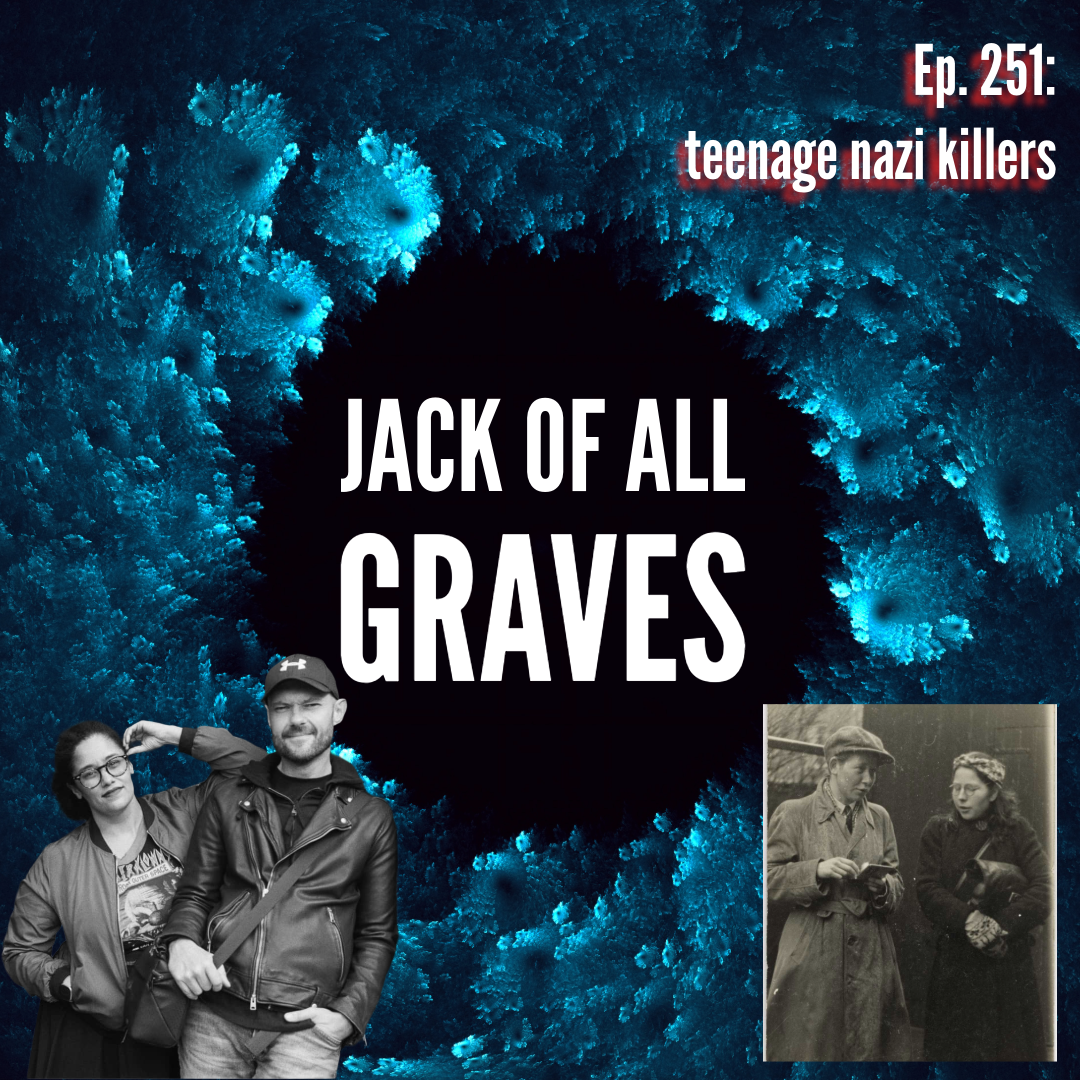
But anyways, today I'm going to tell you about three young girls who joined the Dutch resistance during World War II.
And in doing so, hid and shielded countless Jews, stole important information, and became brutally effective hunters and Killers of Nazis.
[00:05:05] Speaker B: Beautiful. Really, really nice.
[00:05:07] Speaker A: Yes.
Those three girls were sisters, Truus and Frankie Overstache and the infamous girl with red hair, Honey Schaft.
Now, the Oversteche sisters grew up in an industrial area of Amsterdam. Amsterdam known as the Red belt. And her families were members of communist led organizations like Red Aid, which smuggled political refugees and Jew across the Germany and Netherlands borders.
As the amazingly titled book about their lives, Seducing and killing Nazis. Points.
[00:05:44] Speaker B: That's what the book is called.
[00:05:45] Speaker A: That's what the book is called. Seducing and Killing Nazis.
[00:05:49] Speaker B: Real nice.
[00:05:50] Speaker A: I got it from the library.
The Netherlands was pretty wishy washy about resisting the Nazis.
Most folks were really trying to sort of keep calm and carry on the whole thing, hoping they could just go about their normal lives and. And ignore all this shit that was going on around them, which worked. To be fair. If you weren't a Jew or some other persecuted group in the Netherlands at that time, you probably could just go about your day. As long as you didn't give a fuck about what happened to other people.
[00:06:21] Speaker B: Gonna go straight into the little rabbit hole here. Have you. As an Anglophile and as someone who likes British things, have you ever heard of a British sitcom called Aloha?
[00:06:34] Speaker A: I've seen the name. I've never seen it.
[00:06:36] Speaker B: Okay.
[00:06:37] Speaker A: I think it comes up every now and again on some of my panel shows.
[00:06:40] Speaker B: Maybe we'll talk more about that in a snack, a future snack. But it's one of those shows that Time has revealed to be such a fucking strange, strange concept for a show. It follows a cafe owner by the name of Rene during Nazi occupied France.
[00:06:59] Speaker A: Okay.
[00:07:00] Speaker B: And in the lightest, you know, slightly bawdy kind of tone, you know, risque humor, this guy deals with Nazis in his cafe day in, day out, and he's smuggling plans and he's fucking aiding resistance efforts and getting himself.
[00:07:19] Speaker A: Isn't that kind of like what. Like Hogan's Heroes is too, like a sort of goofy show about like, oh, Nazis.
[00:07:29] Speaker B: Not having seen Hogan's Heroes. I don't know, but it sounds like a similar premise. Yeah, but tonally. Alo. Alo is so light.
[00:07:37] Speaker A: Right.
[00:07:37] Speaker B: You know, we're talking like, you know, Saturday evening BBC one primetime family theater.
[00:07:43] Speaker A: Are you being served?
[00:07:44] Speaker B: Yeah, that's it. That is exactly the tone that is Fawlty Towers.
[00:07:47] Speaker A: Perhaps.
[00:07:48] Speaker B: Right, but it's. But with Nazis in Nazi occupied France. Incredible, incredible, incredible stuff. But I'm sorry. Go, go on, please.
[00:07:57] Speaker A: Maybe that'll be one of our snacks. One of these Days we can watch an Ello.
[00:08:01] Speaker B: Ello, yes. Because I did enjoy. I did enjoy House Party a great deal. So, yeah, let's do a few more of those.
[00:08:07] Speaker A: Watch some weird comedies about Nazis from the 80s.
But like I said, the. The Dutch didn't resist. Super. Well. They just were like, we're just going to try to ignore what's going on and we'll be fine.
About 5% of the population of the Netherlands were actually Nazi collaborators. The people who, like, just turned in their neighbors and shit like that.
[00:08:31] Speaker B: 5% of the whole population of the Netherlands.
[00:08:34] Speaker A: Yes. Yeah.
The Netherlands is where Anne Frank was betrayed before being sent to die in a concentration camp. So this is what we're talking about, people tattling on their neighbors or whatever.
[00:08:45] Speaker B: Interestingly, I think earlier on, just today, I think the news landed that I think Anne Frank's last living relative has died.
[00:08:53] Speaker A: Oh, wow.
[00:08:54] Speaker B: Give me a second. I'm certain that that is what has happened.
Do continue. I apologize. Anne Frank's stepsister. Yes. Her stepsister Eva Schloss has died at 96.
[00:09:07] Speaker A: Oh, wild.
But, yeah, so 5% were collaborators. Collaborators and 5% were involved in the Dutch resistance, which is a little disheartening to think about it.
Like I said, I don't want to dwell too much on our current nightmare, but just think about that. People were being snatched off the streets, their businesses were being taken from them, they were being murdered in public and so on. And 90% of Dutch folks were like, not my circus, not my monkeys.
And then an equal amount of the rest of the population chose either to help the Nazis with that, that, and decided to help the people escape the Nazis. Five percent of each, 90% ignored it. Five percent helped the Nazis kill people. Five percent pushed back.
You want to think the proportion would be different.
[00:09:58] Speaker B: You do? Yes. But one also feels that, you know, if I would use Britain as an example, those figures feel pretty close to how they might turn out anyway.
[00:10:08] Speaker A: Exactly. Today it seems like that's probably about right now, too, that, like, you know, we have all of this stuff happening, you know, in America with ice, kidnapping people on the streets and stuff like that. And, you know, there are those people who, when they see it, immediately start yelling and try to collect information from the people being kidnapped so they can tell their families and stuff like that.
But more people are just standing there.
If they whip their phones out, it's just to go, oh, look what I saw. And not to, like, help in any way. So it's. I think probably we have a similar proportion now but it's like, oh, it's unfortunate to see it, you know, be like, ugh.
Anyways, the Oversteche family was active in the resistance even before things got really bad in 1940, which is usually the start point for when we hear people pushing back against German fascism. Like everything kind of like 1940, things start hitting the fan and people start going, oh, we have to fight this. Right? But their parents had started involving them in illegal actions when the Dutch Conservative Party was in power in the 1930s. So before the Nazis came and took over, they were like this conservative regime that we've got in the Netherlands also is.
And we need to get them out of power. So they were already doing this before this happened.
In their early teens, the girls became used to having people hidden in their bedrooms. As Nazi occupation picked up, it was common for the Dutch police to snatch up refugees and just hand them over to the Gestapo. So they were very aware that silence about the political activities going on in their home was of the utmost importance. No writing things down, no whispering things to friends at school, whatever was going on in there, nobody else's business.
But that didn't mean that they were silent about what was going on generally.
In 1940, at the ages of 16 and 14, they started handing out illegal materials like leaflets and newspapers, while also collecting funds to aid refugees.
In 1941, communists and socialists in that industrial red belt called for a general strike, which morphed into a whole ass protest against deportations of Jewish men that had recently happened. The first batch of Jewish men that had been deported.
They were like, we gotta fight this. All of these communists and socialists as part of the action, Truus and Freddy leafleted factories. They went into all these factories where these like grown ass men were working. And they were like, here the communists say, let's push back against all of this stuff.
And as a result, tens of thousands of people walked out of work and participated in the demonstration through grassroots, fucking grassroots recharge. Sending kids into factories and being like, this is wrong and here's why. And all these people joined up. This was unheard of anywhere in Europe that the Nazis were occupying. Nobody else tried something like this.
[00:13:15] Speaker B: To keep trying to draw parallels to 2026, what the fuck would that even look like now?
[00:13:22] Speaker A: Yeah, it's a good question.
[00:13:24] Speaker B: Because anything social, anything social media wise would just get lost amidst the static.
[00:13:31] Speaker A: I mean, that's the thing is like, obviously we have huge protests now. Yeah, like we have regularly protests where 50 million people come out or whatever to protest. What's going on in the government.
I don't know beyond that. Right. Like. And this doesn't go well for them. Clearly, as you can imagine, the Nazis did not react positively.
[00:13:56] Speaker B: No, no.
[00:13:57] Speaker A: To these tens of thousands of people walking out of work and protesting what they were doing.
And to parallel now, I mean.
Yeah, they clamp down, which is what happens to us as well, where they have started making protests illegal. They've done it in your country as well with Palestine actions. Yes, right, yeah. All of this kind of stuff. So instead, the Nazis clamped down on the Jews much harder, forcing them into hiding and pushing them out of any form of public resistance, lest they immediately get deported and find themselves in a camp.
And again, Dutch authorities were very much in on this. They did not push back and in fact, would collect what they called head sums for turning in Jews. They legit got paid every time with a quota.
[00:14:44] Speaker B: Yeah, okay.
[00:14:45] Speaker A: Yep. ACAB is an eternal principle.
[00:14:49] Speaker B: Yeah, it seems to be.
[00:14:51] Speaker A: Yeah.
It was as this was happening that Truce and Freddy were approached by a local militant who asked them to join the partisans, despite the fact that they were still whole teenagers, which is incredible to me. But obviously nobody expects teenagers to be the resistance, you know, so it's a smart move. Like, get these kids on board, nobody's going to be looking at them.
Their posse of eight fighters, commanded by Franz van der Wiel, would end up becoming one of the most famous Dutch resistance groups, according to Jacobin magazine.
And one of the reasons for that was the addition of university student hani shaft in 1943, whose actions would become.
[00:15:32] Speaker B: Where are you on the morals of that approach?
Of what, recruiting kids?
[00:15:41] Speaker A: Well, that's a good question. I mean, it's not what I would want. I do think that, like, the teens are going to be a part of whatever happens. I think that's more the way I look at it. I don't think you necessarily should approach teens and be like, do you want to run dangerous missions or whatever? Like, not necessarily. But I think if any sort of, like, revolutionary action, especially, like, this is gonna happen, like, of course teenagers are going to be involved in it. They always have been, they always will be. Right now, you know, some of the more impactful protests that happen are often like, school walkouts.
[00:16:20] Speaker B: Sure, sure.
[00:16:21] Speaker A: Like, they're a huge part of resistance climate also.
Yeah. Like, for climate change action and gun violence, things like that. Like, teenagers are often at the forefront of this stuff. So I don't know, I think I'm maybe agnostic to the morals of this because on the One hand, like, they're kids, but on the other hand, people are being murdered in the streets.
So I don't know, especially the way that they approach. This is a thing that I would not.
Not want teenagers to be doing. Yeah, that's for sure. Yes, we'll get into that. But, yeah, I.
Very risky that's happening here.
[00:17:00] Speaker B: Very risky shit. But. But with, you know, there. There aren't. There aren't easy answers, are there?
[00:17:07] Speaker A: Right, yeah, exactly. Like, you know, and that's kind of all of this stuff. Right. And I'll get into that a little bit. But when it comes to the actions that people fighting for the resistance did, it's not like they felt good about them. Right. Like, everything they do is sort of a, like, traumatic thing for them, but it's ultimately about, like, what's worse, you know, that I do this horrible thing or that millions of Jews die. Like, that was the way that they looked at this sort of situation. So I think when it comes to this kind of thing, like, you're gonna have a hard time drawing a really clear moral line about anything. You know, even a black and white thinker like me is gonna have a hard time drawing a moral line on these things. But let me talk more about it.
So one of the reasons that they were so famous was the addition of university student hani Schaft in 1943, whose actions have become so well known and legendary that Hitler himself put her on his most wanted list.
The three women using the term loosely because they were teenagers and young. Young adult.
And five men in the group would. To commit acts of sabotage, rescue, hide and transport Jews, and gank Nazis whenever the situations called for it.
[00:18:30] Speaker B: They. Their notoriety was such that they'd made it specifically to Hitler's radar.
[00:18:36] Speaker A: Yes, exactly. Especially Hani.
[00:18:39] Speaker B: Yeah, yeah, yeah.
[00:18:40] Speaker A: Like, he was aware. Like, this bitch is causing me a lot of problems here, and we need to get her. Because when someone like that becomes, like, not only effective. Effective at what they're doing, like killing Nazis and whatnot, but also becomes a symbol, like, that's more of an issue. Yes, right. Like, it's not just that she's doing it. How many people can she kill ultimately? But it's that she's becoming inspirational to people.
You know, so much of what they did involved directly helping Jews by doing things like stealing ID documents for them, hiding them in their homes, helping them cross borders and stuff like that.
Unlike the guy from the movie, they didn't have lists of the folks that they saved. So we don't know how many this little group or the larger Dutch resistance was able to save, but we know it was quite a few. They were, they were doing a lot here in the hundreds, probably more than that.
[00:19:34] Speaker B: Okay, yeah.
[00:19:35] Speaker A: What the sisters were most well known for, however, was their seduction and liquidation of Nazi officers, particularly high ranking ones.
What they would do is they would go to expensive bars and restaurants around Amsterdam where they knew that Nazis hung out.
Freddie would keep watch outside for any problems while Truus would head inside, where it wouldn't take much for these officers to see a 16 year old girl and get all hot and bothered about it.
She would then ask these officers if they'd like to go for a walk in the woods.
Which of course they happily agreed to, thinking they were gonna get a little something something when they got out.
[00:20:15] Speaker B: Incredible.
[00:20:16] Speaker A: I know, right?
Easiest honeypot on the planet right here I'm just, oh, 16 year old girl gonna hit that once. Truce. And her target walked deep enough into the woods, they would bump into another man, a comrade, who would scold Truce that she shouldn't be out there.
She and her companion would apologize and they would turn to leave. At which point the resistance member would shoot him in the head and bury him in a hole that he'd already dug in the forest.
[00:20:47] Speaker B: Incredible.
[00:20:50] Speaker A: And this is like, this is what I mean where I'm like, that's so risky because that going wrong, like say the intermediary doesn't show up or whatever, ends in sexual assault for that girl, you know, like, this is deeply risky stuff to be doing.
[00:21:04] Speaker B: Sexual assault, death. The complete, you know, the exposing of your entire unit, your plan, your resistance movement.
[00:21:13] Speaker A: There's so much that can go wrong here.
But eventually they even cut out the middleman. And rather than having someone intercept them in the woods, Freddy would simply follow behind them with a rifle and take him out herself.
[00:21:25] Speaker B: What a movie this is, right?
[00:21:28] Speaker A: It's so crazy. Like, man, oh man.
But while, say, a Tarantino movie might make this all seem very romantic, the sisters were always clear that this was very much not the case when they initially started out leafleting and whatnot, before the big strike and protest. There was an air of fun and frivolity about it. I mean, imagine being 14 and getting to be a part of super secret clandestine activities like this.
Any kid who grew up playing army or wanting to be Harriet the Spy or playing survival video games can understand, understand how exciting this would be at the time.
[00:22:08] Speaker B: I tend to.
I tend to kind of think of it from another.
Not from that angle, though. Less of it being exciting, but more of it being enraging. Because at that age, you've seen. You've grown up seeing, you know, your friends and family shot. You've grown up seeing people beaten. You've seen people being imprisoned for saying the wrong thing or looking the wrong way.
[00:22:31] Speaker A: Keep in mind, this is what they're seeing is before. This really has, like, hit that point, though. Like, when they're pamphletting this place, like, you know, to start this big strike.
[00:22:41] Speaker B: Yeah.
[00:22:42] Speaker A: They are seeing the persecution of Jews, but they're not seeing, like, the wholesale slaughter of them. Right. They're not. It hasn't gotten to that point. So really it's more like what we see from day to day again. It's more like seeing people kidnapped by ice and things.
[00:22:57] Speaker B: But there's. There's certainly anger here.
[00:23:00] Speaker A: Absolutely. Yeah. And these kids have learned it, right? Their parents are communists and socialists. Like, they've known their whole lives that, like, at the hands of the government, people are getting a raw deal. They've learned that anger and what you do about it, which is to take action. So, yeah, there's definitely that seed of anger. But also, think about, like, you have been angry about this for so long, and finally you're doing something.
You're making it. We have gone out and done this, and now tens of thousands of people have showed up because of what we did. Like, that's huge. And for a moment, you would feel pretty lighthearted about that whole thing.
[00:23:40] Speaker B: Like, empowered, you know?
Empowered to, I guess, use your burgeoning femininity as a weapon, you know?
[00:23:48] Speaker A: Right, exactly. A thing that's used against you most of the time, you're now using against these monsters.
Yeah, there's a lot to it that, you know, is. Would be exciting.
But the consequences became very real. Real people were dying on either side, and it was never a good time.
For instance, on one occasion, an attempt at transporting Jewish children was caught by Nazi searchlights, and the entire group of kids was murdered with machine guns.
Truus also explained that unless you are a fucking monster, killing people never sits right, even when they deserve it and it's fully necessary.
She talked about having the urge to go and help people after she had shot them.
An impulse that makes sense if you're a good person, the kind that risks their life as a teenager to save people who can't fight for themselves. Yeah, you see someone dying. Yeah, you want to help.
But obviously they couldn't.
And further, many of their resistance comrades also died, including Hani Hani Shaft. Like the Oversteche Sisters was also raised in a leftist home.
Born in 1920 to socialist parents in Harlem, she had a sister, but that sister died of diphtheria in 1927, which made her parents a little protective of her. As she was growing up, she was a bit of a loner, in part because she was bullied for her vibrant red hair and freckles. But she was an excellent student.
She was known by peers as a total nerd who dressed weird, including wearing a cardigan even in hot weather because her parents were apparently afraid she'd catch a cold.
Poor, traumatized parents.
Having excelled in school, she decided to study law at the University of Amsterdam, passing exams in Greek and Latin in order to get there.
Real brainiac.
She had her sights on the League of Nations someday, wanted to be a human rights lawyer who changed things in the world.
In the meantime, she joined the Amsterdam Female Students association, where she finally made herself a bunch of friends.
She graduated in 1940 and moved in with friends. But while this should have been a happy time, the Nazis were taking over. And obviously given her upbringing and given what she had decided to focus her life on, she fucking hated them.
In 1943, Germany demanded a vow of loyalty from all Dutch students, which she refused to sign.
Thus her law education came to an end and she moved home to live with her parents, bringing along two of her Jewish peers, Felina Pollock and Sonia Frank, to give them a place to hide.
Soon she got in contact with the rvv, the Dutch Council of Resistance, who very quickly felt they could put their faith in her.
They assigned her to assassinate a Nazi official.
But when she turned up to do the job, she found her gun wouldn't go off and just kept clicking impotently as it was fired.
As it turned out, the man she was firing at was none other than Franz van der Veee, the head of the rvv. And the whole thing had been set up as a test just to make sure she was on the level.
Wow.
Yeah.
Now they knew for sure Hani was 100% down for the cause.
[00:27:10] Speaker B: Fucking hell.
[00:27:10] Speaker A: She's reportedly very mad about it.
[00:27:13] Speaker B: How do you then extract yourself from that situation? How the fuck do you get away from something like that?
[00:27:18] Speaker A: I mean, the way that from all the stories and stuff like that, the usual way she got away from things was hop on her bike and cycle away.
[00:27:24] Speaker B: Okay, okay, okay.
[00:27:26] Speaker A: So I imagine that's probably what she did. Unless he like turned around and was like, haha, it's me.
Which I also thought like, man, what if she'd Brought a backup or something like that. Could have ended really badly, but it didn't. And she got to join the RVV and continue to assassinate people for her assassinations. She'd get all dolled up, putting on lipstick and mascara and styling her hair.
She said that if she died, she died, quote, clean and beautiful.
[00:27:58] Speaker B: I'll say it again, this is such a movie.
[00:28:02] Speaker A: There have been movies made about her. Not recently though, I think like the last one was made in like 1980 or something like that. It's been a minute and I imagine probably the accuracy of them given I. I'll come back to things. But is probably not great.
[00:28:19] Speaker B: Yeah.
[00:28:20] Speaker A: Given her reputation. Suffered during the Cold War. But she also took part in the oversteches seduce and assassinate plots.
She targeted Nazi officials and Dutch collaborators in equal measure. Like one of the stories was about her killing a baker because he just constantly kept turning people into the Gestapo. She's like, enough of that pal, you're done. Yep, yep, they did all of these things, but she and the sisters all agreed that the children of any of these people were off limits. That was where they drew the line. A lot of, you know, people wanted to be like, just take out the kids too. You know. And they were like, no, absolutely not, we're not doing that.
So In November of 1943, she took part in her first major action with the group. An attempt to sabotage the power plant of the electric company.
An electric company which I will not attempt to pronounce because it has so many letters in places that I wouldn't put them, but just trust it's the big power company.
But the mission failed. But it was still a morale booster for people that, you know, they'd gotten as far as they did with the attempt.
She tried another act of sabotage in January of 1944, attempting to blow up a second cinema that regularly showed German propaganda films.
Again, this was thwarted when their bombs were found. Before they could go off, the Germans started carrying out more raids. So Hani moved out of her parents house to be less of a liability to them and moved in with her comrade, who she probably was dating, Jan Bonnekamp.
He was a real gung ho kinda guy, committing a shit ton of assassinations, robberies and attacks and acts of sabotage.
On June 21, the two attempted to assassinate a police captain. I mean they did assassinate a police captain, but it went wrong. Hani shot the man and cycled away. But Jan went back to check that he was dead.
[00:30:18] Speaker B: And by this time she's how old?
[00:30:21] Speaker A: She's 2024.
[00:30:24] Speaker B: With a fucking list of kills.
[00:30:27] Speaker A: Yes, exactly. Again, we don't know how many in total. Like, it's one of those things where it's like, we know at least six. Yeah, but probably more than that, right? Yeah.
So he went back to see that the police captain was dead.
And as he went to give him a, you know, shot in the head, just to make sure, using the. The scream method, the police captain, like a horror villain, managed to get up and shoot one into his stomach.
Yep. And the wounded Resistance fighter was taken into custody.
Before he died, he gave up the names and address of Hani's parents, tricked by a nurse pretending to be in the Resistance.
As a result, her parents were arrested and taken to a concentration camp.
Just for the record, they did get released. So they didn't die in the concentration camp, but they were there for, I think it was like, 40 weeks or something like that.
And Hanni was already well known before her parents were taken away, known simply as the Girl with Red Hair, even though her specific identity wasn't known.
She was a Nazi killing machine and Hitler and his officials wanted her gone.
But knowing this is what she was being called, she simply dyed her hair black as well as wearing fake glasses. There's a picture I should. I don't have it on me, but I should send it to you of her in, like, with the dyed black hair and the glasses.
Looks completely different. It's not a Superman situation.
That does not look like the same person.
[00:32:02] Speaker B: How impressive and how deeply fucking cool is it, right, that amongst the Gestapo, you. You know, you've got a fucking. A legend, a name, Right?
[00:32:11] Speaker A: They're all like, you're a ghost in the night.
[00:32:13] Speaker B: Yeah, exactly.
[00:32:14] Speaker A: Yeah. The specter haunting the Gestapo. Like, yeah, it's pretty fucking cool, dude.
[00:32:20] Speaker B: I love this.
[00:32:21] Speaker A: Yeah. So she was given a new id, calling her Johanna Elderkamp, saying she was born in Zurich, Switzerland.
And she did go through sort of a mourning period, of course, after her probably partner was killed and her parents arrested and she kind of quit for a while. She wanted to get out, but the, you know, the RVV was like, hold out, all right. You know, go. Go and stay with your friends. She went and stayed with the sisters and, like, just chill for a little while, and then we'll get back into things. And sure enough, that's what she did. She got back into it. Continuing her work, providing courier service, the courier services that included everything from newspapers to ammunition. She was just taking stuff you weren't supposed to take from place to place on her Bike all over the place.
But on March 1, 1945, she was caught at a German checkpoint, found with illegal newspapers and a pistol.
In prison they had to wash her, and when they did, her red roots started to show and they realized that they had finally captured the girl with red hair.
At this point, nearing the end of the war, the Germans had actually made a deal with the Dutch resistance to suspend execution of resistance fighters.
But they made a great big exception for 24 year old Hanishaft, whom they stood at the ends of the dunes of overvien on April 17 and shot to death over a mass grave just three weeks before the liberation.
But reportedly the first shot at least missed and only grazed her ear.
So her last words before they actually aimed one into her head are said to have been, I shoot better.
Right, this girl.
Eventually the resistance was more or less taken over by the conservative and former Nazi sympathizing Prince Bernhardt.
This meant that the leftist and communist influence was basically pushed aside. And according to the Sisters, Bernhardt would give communists the most life threatening missions that not only endangered them, but often turned out to be smuggling missions meant to snag goodies for the higher ups in this new national resistance.
The commanders were basically sending the leftists on suicide missions that would make them richer. If those leftists did manage to make it back alive. Just real fucked up shit.
Any hope for Europe to come back? More leftists after the war was dying before their eyes. And when World War II pretty much immediately slid into the Cold War, the nationalists basically tried to write the leftist resistance out of the story altogether.
And they did a pretty good job of it. For example, when the Communist Party tried to Commemorate Renishaft in 1952, the government not only banned the demonstration, but sent tanks in to chase away the crowd, which is absolutely nuts.
The Sisters were not given recognition for what they'd done by the Dutch state until 2014.
And even still, as the Jacobin article argues, there's a bittersweetness to that because yes, they deserve recognition, but giving it to them is also part of a larger project to depoliticize resistance.
It's kind of like how in America we don't learn that Martin Luther King was a leftist or that he didn't condemn riots, or that he saw nonviolence as sort of a last ditch effort before shit turned straight up civil war.
We don't learn that Rosa Parks was part of an organized movement. We learn that she just spontaneously decided not to give up her seat on the bus one day.
We don't Learn about how all the labor movements that were so important to the Progressive Era and bringing reforms to the Gilded Age were headed up by communists, socialists and anarchists.
It all gets flattened into just good ol American gumption. We all came together and we decided something was right or that something was wrong. And it had nothing to do with leftist organizing. And it certainly had nothing to do with repressive governments and structures that felt fought them on these things until there was no other choice but to give some concessions.
[00:36:37] Speaker B: So that's not a connection I'd made before. So you're telling me there is historical, lots of historical precedent to take these kind of flashpoints of resistance and attribute them to, as you say, individuals as opposed to organization.
[00:36:54] Speaker A: Right? Exactly. Yeah. It's this, this cool individual who taught us all this thing instead of like this was a deep leftist organization that.
[00:37:03] Speaker B: Came together to change a lot of effort and a lot of death from a lot of people.
[00:37:09] Speaker A: 100%. And I've seen many stories about these girls, Hannieschaft in particular.
And in many cases the leftist upbringing is entirely left out. It's all flattened into the Dutch resistance.
These were just some extraordinarily principled girls who did the right thing rather than their being raised with these values in homes that were organizing against fascism before the Nazis even got there.
Whether the Netherlands or the U.S. these governments were comfortably persecuting refugees, minorities and other groups without Hitler's shadow so much as looming in the distance.
But while immediately after the war Hanieschaft was recognized worldwide by leaders of government as a hero, once the Cold War hit, her reputation was tarnished due to her communism. And you weren't allowed to look at her as a hero anymore, despite the actions she'd taken out.
I think it's important to know that, you know, 90% of Dutch folks just sat there and let Jews be carted off to their deaths. And 5% joined in their genocidal endeavor.
The 5% that stood up were largely the far left, which is the case for so many movements that have actually done anything to advance humanity.
What they wanted in return was a more equitable society. But those in power quickly swooped in, took credit, made resistance a point of national pride instead of partisan pride, and built a society back that just keeps doing this shit over and over and over again.
The only way to stop constantly ending up with jackbooted fascism in our countries is to finally recognize that the people who are stopping it are the communists, the socialists and the anarchists. And everyone else is just sitting on their thumbs till the Tide turns.
If we want to actually have a better world, we know who we have to listen to.
[00:39:00] Speaker B: So you were bang on right at the start there. I learned a lot, and I enjoyed that a great deal. Give me what? Just give me her name one more time.
[00:39:12] Speaker A: Hani Shaft.
[00:39:13] Speaker B: Hani Shaft.
[00:39:15] Speaker A: Yes.
[00:39:16] Speaker B: Thank you.
[00:39:18] Speaker A: There will be a test.
[00:39:21] Speaker B: Let me quote directly from my notes, if I may.
[00:39:23] Speaker A: Yes, please do.
[00:39:25] Speaker B: Fucking look at these nerds. Oh, mise en scene.
[00:39:28] Speaker A: I don't think anyone has ever said mise en scene in such a horny way before.
[00:39:32] Speaker B: The way I whispered the word sex. Cannibal receipt.
[00:39:35] Speaker A: Worst comes to worst, Mark, I'm willing to guillotine you for science.
[00:39:39] Speaker B: Thank you. That's really, really sweet. It's cold outside, but my pancreas is talking to me. I'm fucking. I'm gonna leg it.
[00:39:45] Speaker A: You know how I feel about that, Mark?
[00:39:47] Speaker B: I think you feel great about it.
[00:39:50] Speaker A: Take us in, buddy.
[00:39:51] Speaker B: Well, why don't we go in on that energy, Jack of all graves?
I feel as though that's certainly an energy that we can be bringing. You're. Like you said, you're a fan of New Year's, New Beginnings, delineating the start and the end of something. I am not.
But if they were ever. If there was ever a vibe to kick off a New Year with, then I think, you know, luring Nazis into the forest and getting them shot is certainly one of them. Wouldn't you agree, friends?
[00:40:26] Speaker A: Yeah, I think that's. That's the way to go.
All of you out there agree.
[00:40:31] Speaker B: And look, if you're. If you're weary by now, if Christmas and New Year and Hanukkah and anything else you celebrate or anything else that you mark with, with friends and relatives and families, if it's left you a little bit tired as it has me, then draw a fucking line, because it's done now.
[00:40:50] Speaker A: Well, it's fucking finished.
[00:40:52] Speaker B: It's finished, okay? It's. It's time to just get back to what we do best.
It's time to get back to what we do week in, week out, which is scrutinize, which is to look at the fucking pieces as they crumble around us and to gather to join together every week with Corrigan and I here, Jack of all Graves, and talk it through and think it through and work it through and find the fucking kernel of hilarity and fucking strangeness and positivity and focus on that. Focus on what you have around you and what is going well and what you can find to celebrate when the world is actually categorically and provably dying. Inch by inch, day by day.
That's what this is all about. All right. So welcome to another year of doing exactly that with us. We're grateful to have you and we hope you're well.
[00:41:47] Speaker A: Couldn't agree more.
[00:41:48] Speaker B: Think of that.
[00:41:49] Speaker A: Thank you, Mark.
[00:41:49] Speaker B: Fuck.
[00:41:51] Speaker A: We're very excited today because we asked you to ask us anything.
And so we are going to answer some questions.
[00:42:03] Speaker B: Yeah. And you did.
[00:42:04] Speaker A: That we received from folks.
[00:42:06] Speaker B: Yes. Some absolute bangers, which I can't wait to get into. I mean, do we do that? Do we just rip into this? Or do you want to do movies first? Do you want to talk about some movies? Because we've got a milestone right here, haven't we?
[00:42:18] Speaker A: We do, yes. So I think maybe quickly, because I didn't watch much of anything, as has been the case.
The house is full. I have large. I've been reading like crazy. I just finished Chuck Wendig's Staircase in the woods yesterday, so that was. That was a delight. And I loved getting to the acknowledgments section or at the end. He is kind of a. It's not just acknowledgments, but a kind of like how this came about story. And it mentions the event that I went to at Gibson's and mentions Ryan by name. Phenomenal. That was very exciting.
But, yeah, I've largely. Kyo has been playing Fallout 4 basically all day, every day. And so while he sits there and plays Fallout, I just sit next to him and read.
My mom is downstairs smoking Ed.
[00:43:07] Speaker B: Little smoking Ed. Is she still there?
[00:43:09] Speaker A: Still here? Yep.
[00:43:10] Speaker B: Smoking on her dots. Fucking love it.
[00:43:13] Speaker A: Indeed. She's still here for a few more days. Kind of out for a cigarette.
She does not call me Corrigan. I don't think my sister has ever called me Corrigan.
[00:43:23] Speaker B: What does she call you? What is your sister's name for you?
[00:43:27] Speaker A: Choreo.
Yeah, I like the Bristol or Coreyorio. Yeah, yeah.
[00:43:35] Speaker B: Nice, nice, nice.
[00:43:38] Speaker A: So, yeah, that's going on. I haven't watched. The only thing that I watched was Gremlins 2. Oh, that's. You know, I don't even remember why, but some re. Oh, it was New Year's, and they. At the end, obviously, the New Year celebrations in the United States, the big ones that you see on tv take place in New York.
And so whenever the ball drops, inevitably they start the song, start spreading the news.
[00:44:06] Speaker B: So tell you what I'm gonna do as I open this next tin here. Right.
[00:44:11] Speaker A: Can I finish?
[00:44:12] Speaker B: Yeah. Please, please do. Sorry, I'm just. I'm eager to circle back on a few questions that you've left me with this, this last week, but do go on.
[00:44:19] Speaker A: Yeah, I just, you know, they play the song.
[00:44:21] Speaker B: Yeah.
[00:44:22] Speaker A: And immediately I was like, this makes me want to watch Gremlins. Yeah. And so the first thing that we watched as soon as the ball dropped was Gremlins 2, which was the perfect start to the year, in my opinion.
[00:44:36] Speaker B: I can think of no better. So I'll remind you something that you texted me a couple of nights back. In fact, I've got it right here. I'll just read the exact text out and listener, let's.
[00:44:49] Speaker A: Oh, no. Is it weird?
[00:44:50] Speaker B: Oh no. Did I say something weird? Yeah, you did, you did, you did. And we'll see if you can help me make some fucking sense of why you would say this.
[00:45:01] Speaker A: I think it's perfectly logical.
[00:45:03] Speaker B: No, it's gone, it's gone, it's gone. So. Okay, but what you asked me, what you said to me, Corrigan, was, and I'm paraphrasing, but you said, I feel Gremlins 2 has a lot in common with Robocop.
[00:45:13] Speaker A: I believe what I said was, I think Gremlins and RoboCop are cousins.
[00:45:18] Speaker B: Alright, elaborate.
[00:45:21] Speaker A: Gremlins 2 and RoboCop, elaborate.
[00:45:24] Speaker B: I don't, I don't for a second see how elaborate.
[00:45:27] Speaker A: So like they're cousins, they're not siblings. They're like, you know, they're related but like they're not, you know, directly, they're not in the same family, but they.
I see them as like these, you know, commentaries on sort of the landscape of that time in sort of very similar.
Like in a similar mindset and not a similar approach.
Like they're two different satires of very similar things, but doing it in completely different ways.
[00:45:58] Speaker B: Right now that makes a little bit more sense.
The in universe televised media of the two are similar, right? Like the clamp building, the end of the world tape that they've got and the commercials in the Media break in RoboCop. All right, fair enough.
[00:46:15] Speaker A: I can see those being in the same world is how I look at it. Like that's the same, you know, late 80s 90s.
[00:46:24] Speaker B: That makes more sense. And I think I would agree more if you'd said Gremlins 2 and RoboCop 2 share have.
[00:46:30] Speaker A: Okay, fair enough.
[00:46:31] Speaker B: More of a familiar link because RoboCop 2 leans a bit more into the silly, doesn't it?
[00:46:36] Speaker A: Yeah, that's a valid. Well, but then, see, that's That's. Maybe they're more siblings once you get to RoboCop, too. I just think in general, the sensibilities of both of those movies, they're carried out differently, but I think the sensibilities come from the same place and sort of similar critiques.
[00:46:53] Speaker B: I. On the spot. I don't disagree, but there's certainly more. More to talk about. We'll do. We'll do it while we talk. We'll talk about it while we're playing a video game next, I think.
[00:47:03] Speaker A: Yes, there we go.
That's a good idea.
[00:47:07] Speaker B: Yes.
[00:47:07] Speaker A: Did you have other questions? You made it sound like you had a bevy of things. Weird shit I'd said.
[00:47:14] Speaker B: Oh, no, just that. Because that really made me scratch my head and I think I woke up to it, as is often the case with you. I'll wake up and obviously the first thing you do is check if you're.
[00:47:24] Speaker A: Like, what is he talking about?
[00:47:25] Speaker B: I haven't even had my fucking oats yet.
And I get this.
[00:47:30] Speaker A: Usually you just straight ignore me, too, whenever, like, I send you something at night and you wake up and you're like, what the fuck? And then you just don't say anything.
[00:47:39] Speaker B: There are some messages I get from you that, ah, that's a tomorrow answer. I'm not.
Not now, not now, not now, Corrigan.
That's rare, by the way. I very rarely do that.
[00:47:52] Speaker A: So, anyway, you watched a few things, you had asked last week for a recommendation for, like, a dark comedy that's going to make you feel weird about things. And I believe Anna came through for you on this one.
[00:48:08] Speaker B: Okay, let me begin, firstly by commending and just in the most reverent and fucking astounded way possible, how completely, perfectly Anna understood what I was looking for.
I cannot stress this enough. I texted her at the time, just as I put it on, and after it had finished, I can't even remember the. The What I was looking for, really. I wanted a film that puts me in a completely inexplicable zone where I don't know if it's comedy, I don't know if I'm, you know, I don't know how I'm supposed to be feeling. I don't know what a movie is meant to be doing to me.
And Anna comes back with a recommendation for a movie I had never heard of before called Greener Grass.
[00:49:00] Speaker A: You know, the only. I know about this movie, like, and it's been one of those ones that sits on my watch list, but I won't watch it because of the COVID photo on letterboxden I can't get past.
[00:49:10] Speaker B: Which is what?
[00:49:11] Speaker A: Because it's like two people with like braces and it's a close up of their. Yeah. Their faces pulled away from a kiss. Yeah. Trail slap. I'm out. I can't do it. The movie may be great, but that I. Knowing that that lurks somewhere in it has made it so that I can't watch it.
[00:49:27] Speaker B: Greener grass.
There is not a single moment from opening credits to closing credits in this film where you are comfortable at all.
There isn't a.
There isn't a beat where you know what you're watching, where you know how you feel, where you can predict what is about to happen.
There isn't, to my mind, a single trope in this film.
[00:49:57] Speaker A: Interesting.
[00:49:58] Speaker B: There is nothing in this film that I think I've seen before.
[00:50:03] Speaker A: Wow.
[00:50:03] Speaker B: Imagine the world of, you know, the town that sits at the bottom of the hill where Edward Scissorhands Castle lives.
[00:50:13] Speaker A: Right?
[00:50:13] Speaker B: You know that town. And you got Diane Keaton and it's all in pastel colors and.
[00:50:17] Speaker A: No.
[00:50:18] Speaker B: Is it not Diane Keaton? It's not Diane Keaton.
[00:50:20] Speaker A: It's Wiest.
Diane Wiest.
[00:50:25] Speaker B: No.
Diane West.
[00:50:28] Speaker A: Yeah.
Who is W I E S T, Right?
[00:50:31] Speaker B: I don't think so.
[00:50:35] Speaker A: We both go to our phones, like, all right, which one of us it is?
[00:50:41] Speaker B: It is Dianne Wiest.
Well, I'll be a motherfucker anyway.
And she's selling Avon. And you think, you know, that's all cool. It's heavily stylized. It's Burton. You know what, you imagine that town, right?
But strip away.
Just go even further beyond the picket fence than lynch would have gone.
[00:51:07] Speaker A: And.
[00:51:09] Speaker B: Take every relationship and every dynamic. Take marriage and take school and take work and love and parenthood and community and take the cookout and the football team and the carpool and take it all and just make it fucking wrong somehow.
Not visually, although it is visually all sorts of wrong. And not, you know, family dynamics and social fucking constructs and make it so wrong that it's almost impossible to work out why it's wrong. But it's all so wrong.
[00:51:58] Speaker A: Interesting.
[00:51:59] Speaker B: Oh, fascinating.
And again, and I can't overstate how well Anna fucking just almost nailed the assignment. Without pause, without hesitation, just, yeah, Mark, you want this? And I did. And that was exactly the one I needed to see. It was perfect. It was a perfect watch, Anna. Thank you so much for showing me. It's.
If I were. If I were. If I were lazy and if I were reaching for Something, you know, if. If. If Tim Robinson never got to the punchline.
Not that he's a punchline guy anyway. But imagine if the joke never played off and it was. And it was just the bit where you think, what the fuck am I supposed to feel here?
[00:52:47] Speaker A: Yeah.
[00:52:49] Speaker B: When is this gonna res? You're waiting for it to resolve into something that tells you it was a joke all along.
It was a tragedy all along.
[00:52:58] Speaker A: Something familiar.
[00:52:59] Speaker B: It's leading somewhere. There's gonna be a denouement. You're gonna. It's gonna be fine. It's gonna be fine. This is the movie where it is not fine. It's never fine. And it leaves you just so fucking anxious.
Oh, what a treat. What a treat.
[00:53:15] Speaker A: Well, well, if that's what you're looking for, friends. You want that feeling too. Greener Grass is the movie.
[00:53:22] Speaker B: What a treat. Corrigan never ever watched that film.
[00:53:27] Speaker A: What? It's too challenging for me, Mark.
[00:53:29] Speaker B: Yeah, it's a little high row, if I'm honest.
I don't know.
I don't know. I'm sure there's some. Stop.
There's some Bloom House numbers I could recommend for you.
[00:53:41] Speaker A: Okay, thank you. That's really kind of you.
[00:53:43] Speaker B: Do it, you know.
[00:53:45] Speaker A: Appreciate that.
[00:53:45] Speaker B: Yeah.
And in a jock milestone, finally, after five years, I'm in my book era and I'm in my taking recommendations era.
[00:53:57] Speaker A: Yes.
This is a big moment for me.
[00:54:00] Speaker B: I am delighted. Friends. Long time friends. Oh, geez. Right? Those who've been with us all the way since day one, Episode one, Mark Caesar Tokolosh.
Remember that?
[00:54:14] Speaker A: That's the one.
[00:54:15] Speaker B: Oh, God. When I tell you how high I had to get to be able to do that episode, Oh, man, I was so scared. I had to get obliterated in order to be able to do that.
[00:54:31] Speaker A: I'm amazed it came out as well as it did, considering other times you've attempted that have resulted in going straight in the trash.
[00:54:39] Speaker B: Insane. But I watched Fantastic Planet.
[00:54:43] Speaker A: Yes.
I think genuinely in the first episode, one that I asked you to watch.
[00:54:48] Speaker B: And I got. Hey, don't say I don't get there in the end. Right.
[00:54:52] Speaker A: 250 episodes later.
[00:54:55] Speaker B: Don't say I don't get through the list.
[00:54:58] Speaker A: Right.
[00:54:59] Speaker B: When I say I put it on the list, I mean it. It goes on the list. It just often takes the best part of a decade.
[00:55:05] Speaker A: Yes.
[00:55:06] Speaker B: What in the fucking Pink Floyd, Ralph Bakshi, Lord of the Rings fucking Voynich manuscript. Fuck is that?
[00:55:18] Speaker A: Fantastic Planet.
[00:55:20] Speaker B: It's great.
[00:55:20] Speaker A: Fantastic Planet. You liked it?
[00:55:23] Speaker B: Oh, big time. Again. 4 stars. 4 stars is a zone that I don't drift into, really. Yeah, I don't drift into, really.
I didn't like that sentence that I only drift into, really.
And what year is it from, please? Is that 70s? 80s?
[00:55:40] Speaker A: I want to say it's 70s, but it could be 80s. I'm not sure. Yeah.
[00:55:45] Speaker B: A film that shows you everything, tells you very little.
[00:55:50] Speaker A: 73.
[00:55:51] Speaker B: 73, yes. Tribes of primitive humans are kept as pets. Pets and often slaves and often experimental subjects by a race of massive blue super beings with their own language for their own anatomy, with beautifully drawn alien world. Beautifully, beautifully fleshed out and imagined alien landscape.
And how do we resist?
How do we escape? How do we organize? How do we equal tribal infighting between the imprisoned people on this titular fantastic planet?
Again, again, I. I say that quite intentionally. It doesn't explain a thing.
No, it doesn't explain a thing. It doesn't really resolve anything either.
[00:56:49] Speaker A: No. Not what it's there for.
[00:56:51] Speaker B: And you just had this fucker kicking around on vhs.
[00:56:55] Speaker A: Yeah, that's the someone.
Yes. Someone asked about this on, On Blue sky the other day too, because there was a thing going around that was like, what movie did you see? Way too young for, you know, when you should have. And I was like, fantastic Planet. And I think I mentioned this before is because we had two VHS tapes that had a white sleeve, like a blank white sleeve. One of them was Follow that Bird and one of them was this.
[00:57:23] Speaker B: Yep.
[00:57:24] Speaker A: And I meant to put in Follow that Bird and this is what I put in instead. And it horrified me and scared me to my very soul. Scared me to death, everything about it. And it made me feel weird too, which is the other thing. It's just that, like, I don't understand. And I became, like, obsessed with it. Like, my mom would come in and I would just like have this in. She's like, I don't know if you should be watching that.
Incredible, like, fixated on this thing that, like, just, I don't know, made me feel weird inside.
[00:57:57] Speaker B: I can't, I can't imagine it would frighten me as a kid, but I can, I can certainly see how it would be so transfixing, how it would be so, you know, just magnetic.
The la.
The. The. The language in it is incredible. I'm a big fan of fictional language. Right. Like from the, The Nadsat language from A Clockwork Orange, for example.
I'm a big fan of well thought out non human dialect. And I don't just mean like, oh, look, they've just Written symbolics. And it's Klingon. I mean, clearly language.
[00:58:36] Speaker A: Klingon is a very well developed.
[00:58:38] Speaker B: I know, bad example. But you know, but I mean, you know, alien language that's got like. It's not similar etymologically feels sound, you know.
[00:58:49] Speaker A: Yeah.
[00:58:49] Speaker B: And the. The language that the. These creatures use to describe their world and the human body and the anatomy of it all.
Ah, thrilling. And it. It was the very first thing I watched, I think, on New Year's.
[00:59:06] Speaker A: Nice. What do you think of that?
That's. That's how you kick off New Year's, Right.
[00:59:11] Speaker B: Everybody else was in bed. I had my coffee. I had my oat so simple with my creatine dumped in it. And I thought, here we go, Marco. It's a new, new dawn. I'm in my watching recommendations era. So I hit Fantastic Planet. And the.
It's not by any means a long movie, but it.
[00:59:28] Speaker A: No.
[00:59:28] Speaker B: Just slips by, doesn't it? Yeah, just absolutely. Just slips past you and I mentioned Pink Floyd. You can quite imagine taking the dialogue off it.
[00:59:39] Speaker A: Yeah. Setting it just playing out. Play, you know, what's it called?
What's the Pink Floyd album? The Wall. The Wall. Yeah.
[00:59:47] Speaker B: Play the Wall or something similar.
[00:59:48] Speaker A: Let it go. Yes.
[00:59:50] Speaker B: And smoking a big old bong.
[00:59:54] Speaker A: Oh, I'm sure many people have.
[00:59:56] Speaker B: Many bongs were smoked to fantastic planet.
[01:00:02] Speaker A: I'm very glad that we can finally, you know, put this thread of Joe Egg.
[01:00:07] Speaker B: Yes.
[01:00:07] Speaker A: To rest. It is. It's happened.
[01:00:10] Speaker B: Consider that loop closed.
[01:00:12] Speaker A: Yeah. It's a beautiful thing.
[01:00:13] Speaker B: Is that it now? Do we stop doing the cast?
[01:00:15] Speaker A: That's it. I think it's over.
[01:00:17] Speaker B: This is where we wrap up.
[01:00:19] Speaker A: See it.
[01:00:25] Speaker B: Up, Bab.
[01:00:26] Speaker A: You had one other milestone this week that I think you need to talk about.
[01:00:31] Speaker B: Listen, I love parenting, Right.
I love being a dad, famously. I love being a father. I do. And a big part of that's vicarious, I won't lie. A big part of that is sure vicarious. Living through kids and seeing things through my boy's eyes.
And. And you'll all know for years and years I've been looking forward to watching A Nightmare on Elm street with Pete.
And I can't. A better time has never occurred. I mean, he's a big fan of Scream. He knows some of Wes Craven's work. Stranger Things has just ended. Which is.
I only realized actually in the last week or so that fucking Frank Darabont himself co wrote one or two of those last episodes. Some Stranger Things.
[01:01:20] Speaker A: Interesting.
[01:01:21] Speaker B: Yes.
Robert Englund, of course, famously had did you watch them? I didn't. I didn't watch any the last season. I. I kind of fell out of love with Stranger Things when I know.
[01:01:34] Speaker A: You were going to try, though. We talked about this earlier because I was like, there's just simply no way. I'm. It's been five years. It's not going to happen. You're like, all my kids are doing it. I'm going to.
[01:01:43] Speaker B: I was watching an episode of a TV show. I'm not doing that. It's too. God damn it.
[01:01:47] Speaker A: Yeah, that's kind of where they lost me in season four. These are.
[01:01:49] Speaker B: Yes.
[01:01:50] Speaker A: I can't be expected.
Two and a half hours. Come on.
[01:01:53] Speaker B: But the time was right, Corrigan. The time was fucking right.
[01:01:56] Speaker A: It was right. Yes.
[01:01:57] Speaker B: So primed for this, Pete and I kicked Laura and Owen out, sent them upstairs to watch Traitors or whatever. And he and I got our blankies on and we watched A Nightmare on Elm street and.
Ah, talk of the devil. There he is. Hello, Pete.
[01:02:12] Speaker A: How you doing?
[01:02:13] Speaker B: Hey.
[01:02:14] Speaker A: All right.
[01:02:15] Speaker B: Yeah.
What you talking about? I'm talking about you watching Freddy Krueger last night.
Yeah, Give you a. Give me.
Give me a quick five word review.
The kills were awesome.
[01:02:29] Speaker A: And even though I was tired, I.
[01:02:32] Speaker B: Couldn'T even fall asleep cuz it was fun. The kills were. Well, you. We're going to carry on with the rest. Aren't we cool? Yes. Big fan of the Kills.
And yes, the point being that I'm drawing dotted lines to everything he's seeing now. Everything he's watching now. I'm showing him the fucking Genesis, you know what I mean? Where it came from. And I didn't bore him. I didn't bore him like, like you'd expect. I would. Well, Peter, you see this in 1984. Nana just put it on and let it.
[01:03:00] Speaker A: Just let it go. Yeah.
[01:03:01] Speaker B: And he was super into it. Love the kills. Love the law.
Love the ridiculousness of it. Like that fucking ridiculous ending where Nancy's mum is pulled through the fucking window. That inflatable rubber doll.
[01:03:15] Speaker A: So good. It's great. I mean, I told you like on top of this that on the Fan Cave, Kristen it tied for first place for her favorite movies of the year that we watched for Fan Cave. So it's been a big, big week for you in terms of.
[01:03:33] Speaker B: Well, I've always.
[01:03:33] Speaker A: Nightmare on Elm Street.
[01:03:34] Speaker B: I've always been a big fan of Kristen Latourell. I've always maintained she's a lady of excellent taste and of learned opinions.
Reason true. Another reason I'm going through Elm street right now is because for Christmas I received a book called Nightmare Autopsis. I don't know if I've mentioned this before, but it is an exhaustive.
Even more so than, I think, the documentary that came out about a few years back. An exhaustive look back at the Elm street series with a load of rejected pitches for movies that never were.
Lots of interviews with cast and crew.
There's a chapter, I believe.
What's the. Chuck Wendig.
Oh, yeah, he's written a piece for it as well.
[01:04:25] Speaker A: Nice.
[01:04:26] Speaker B: It's a Chuck.
One of the other authors that Ryan enjoys.
Name some other ones.
[01:04:35] Speaker A: Well, there's also a Chuck Tingle.
There's also Clay McLeod Chapman. There's also Josh Malerman.
[01:04:42] Speaker B: It could be Josh Malerman. It's one or the other.
They've got a piece in there as well.
So as I.
As I watch the movies, I'm gonna be rereading the book and learning more on a nightmare. Elm street, which is seemingly becomes my life's quest. I want to learn everything I can about that series.
[01:05:01] Speaker A: Apparently there's a Scream book like that now, too, which I just heard about, like, on Blue sky or something like a week or two ago. So I have to track that down. Yeah, love to. Love to get down into the nitty gritty of the screams.
[01:05:14] Speaker B: Very nice. Very nice, very nice. So, yeah, it's been. It's been.
It's been a very successful week, movie wise.
[01:05:21] Speaker A: Very glad to hear.
[01:05:22] Speaker B: Oh, wait a minute, wait a minute. No, no, it hasn't. Not entirely. Have you seen anything else?
No.
All right.
Fucking Anaconda.
[01:05:32] Speaker A: This is. You gave this such a bad review and you didn't respond when I asked. But would I like it? Because this is. Okay, I'm like. I still feel like I'd probably like this movie.
[01:05:41] Speaker B: Yeah, you'd like it.
Anaconda.
So I knew nothing going in. Right.
[01:05:48] Speaker A: So you've seen the original, right?
[01:05:50] Speaker B: Oh, yeah, of course.
[01:05:51] Speaker A: Yeah.
But you didn't know. What I did was with them, like.
[01:05:55] Speaker B: Trying to, I didn't realize, remake it or meta a crack at doing something like, I guess, Tropic Thunder in that kind of thing.
So the. The story being the Jack Black and Paul Rudd and Steve Zahn, Mate, you're better than that.
You know, they, they.
They remake Anaconda and get caught up in an actual battle with an anaconda. Right. But here's the thing. It's fucking terrible.
[01:06:27] Speaker A: It's terrible, okay?
[01:06:29] Speaker B: It is full of jokes that are overplayed and gone on for too long. You know, I. I sometimes talk about the axis of time and funniness.
[01:06:41] Speaker A: Right, right.
[01:06:42] Speaker B: There is a very, very particular sweet spot that the longer joke goes on for, the funnier it gets.
[01:06:48] Speaker A: Right.
[01:06:48] Speaker B: Yeah, right. You. I don't have any examples off the top of my head, but, you know, I always.
[01:06:53] Speaker A: I think whenever you bring this up, I always think of the. The Family Guy scraped knee joke where, you know, he. He hurts his knee and he hits the ground. He's going.
And it's funny at first, and then it wears out, and then it keeps going and you're like, okay, that's hilarious.
[01:07:10] Speaker B: Maybe a good example is Homer falling down the cliff on the stretcher.
[01:07:14] Speaker A: Sure. Yep.
[01:07:15] Speaker B: Right?
[01:07:15] Speaker A: Totally.
[01:07:15] Speaker B: There you go. Had that been just a quick half a second gag, it would have been funny.
[01:07:21] Speaker A: Right.
[01:07:21] Speaker B: But it goes on and on, but.
[01:07:22] Speaker A: Then it just keeps going.
[01:07:24] Speaker B: Bang. There's your example. Anaconda gets this wrong on so many occasions. Gags. That was shit to start with, but it just stretched and stretched and stretched and stretched to death.
[01:07:38] Speaker A: I will say there was one in the trailer that struck me as that, like, they showed, like, the entirety of, like, the scene in the trailer, and I was like, that was too. That was too long, both for a trailer and for the gag.
[01:07:49] Speaker B: Yes.
[01:07:50] Speaker A: Yeah.
[01:07:51] Speaker B: The characters are fucking idiots. Right?
And not in a. Kind of a lovable idiot who you can root for, but who the screenplay demonstrates them to be fucking stupid as fuck. Right.
[01:08:05] Speaker A: Okay.
[01:08:06] Speaker B: Jack Black, who we are meant to believe is a filmmaker of some talent who's just squandered his ambition and his drive and is falling into a career making, you know, corporate videos and wedding videos. But, but we, We're. We're meant to buy into this. Man has just this untapped well of talent.
And yet in a conversation earlier on, Paul Rudd, when they're discussing Anaconda, it should have themes. Yeah. Do you know what? I could be the white Jordan Peele.
Like, that would be all right if somebody else had made that gag.
[01:08:43] Speaker A: I'm like, that seems funny.
[01:08:44] Speaker B: But the fucking. The character we are supposed to be rooting for is obviously thick as pig shit.
[01:08:49] Speaker A: Sure. Yeah.
[01:08:49] Speaker B: You know, and it. I just hated it. I fucking hated this film.
Just when it gets to where it's going, you know, one and a half second CG clips of this shit snake.
There's no comedy. There's no horror. There's no stakes. There's no excitement. It's just. Just terrible. And if you were to put a.
The barrel of a gun in my mouth, Right.
And said to me, mark, I'm gonna shoot you in the head. No.
If you don't tell me a film you enjoyed less than Anaconda, you'd have to kill me because I couldn't think of one on pain of my own fucking death.
[01:09:35] Speaker A: Wow.
[01:09:36] Speaker B: I couldn't tell you a film that I enjoyed less than this one. 20 odd minutes in, I was thinking, me, when is this gonna end, this film?
[01:09:47] Speaker A: Well, okay, all right, fair enough.
[01:09:50] Speaker B: That's all I got to say about that.
[01:09:52] Speaker A: All right, well, I'll report back once I see it. I. I do kind of just want to watch regular Anaconda, though.
[01:09:57] Speaker B: I'd watch. I would watch Anaconda three times in a row without a toilet break before I watch that piece of shit again.
[01:10:06] Speaker A: Well, friends, shall we get to the main event then?
[01:10:10] Speaker B: We wanted you to ask Joag.
[01:10:13] Speaker A: We wanted you to ask Joag, ask us. Ask us some questions, whether about us or about movies or stories or whatever the case may be.
And we have a nice little list here of questions to answer.
So should we just get right into it?
[01:10:32] Speaker B: Just going to take some of my. Just going to pull on some vape here.
Just going to tell you. This is triple mango. Triple mango.
[01:10:44] Speaker A: This flavor, triple mango.
[01:10:47] Speaker B: Can you conceive of that? Can you conceptualize what that means?
[01:10:50] Speaker A: Is it three mangoes? Is it three times the strength of a mango?
[01:10:54] Speaker B: Or is it like a. Like one mango, but weaponized somehow, concentrated somehow.
[01:11:00] Speaker A: Right. Like we really. We got all the mango.
[01:11:03] Speaker B: They could have stopped the three double, man.
[01:11:05] Speaker A: Three times the mango, but that wasn't enough.
That's some sort of mutant vape that you have there, Monsanto ass vape.
[01:11:17] Speaker B: Jesus, that's beautiful, man.
[01:11:21] Speaker A: Don't like it. Don't like it at all. So let's take our first question.
[01:11:25] Speaker B: All right, I'm gonna set up here.
[01:11:26] Speaker A: From our boy John Benfield, the Benners, which I think is a very interesting and fun question. What film do we find amazing? Nostalgic, perfect even, but will not be possible to enjoy for the younger generation. And he gave the example that his kids could not care any less about the Muppets. It's almost offensive to them. They simply hate the Muppets or anything puppet related.
[01:11:56] Speaker B: Yeah.
[01:11:57] Speaker A: So what do you think? Just simply. You love. You think it's perfect, but it just doesn't translate over to the youths.
[01:12:03] Speaker B: It's a fantastic question, Benazen. Thank you.
You know, Owen's kind of. He's a funny little kid, right? He's a funny guy.
[01:12:12] Speaker A: My son.
[01:12:15] Speaker B: After we had the experience earlier this year of watching six of the Star wars movies, right?
[01:12:23] Speaker A: Mm.
[01:12:24] Speaker B: He noped out at Force Awakens and it was. It was so fucking bad he couldn't continue with the series. Right, Right. For Christmas this year, he went to CEX and bought me the last two movies in the collection. He bought me the Last Jedi Clown. Fucking whatever. The other one is Rise of Skywalker.
I will never, ever, ever play those movies for my two friends.
[01:12:50] Speaker A: Nope. Props for following through on the prank.
[01:12:52] Speaker B: Oh, excellent. Excellent bit, Owen. Great job, mate.
[01:12:56] Speaker A: Yes, but he is your son.
[01:12:57] Speaker B: Star wars is certainly one of them. I've tried. I've samped.
[01:13:00] Speaker A: You think kids don't like Star Wars?
[01:13:06] Speaker B: A New Hope? For sure.
[01:13:08] Speaker A: I think a lot of kids like A New Hope.
[01:13:10] Speaker B: Well, having tried it on Peter, Owen only watched it because a teacher he thinks is cool in his school.
[01:13:18] Speaker A: Them. That's right, yeah.
[01:13:20] Speaker B: Having tried it on Peter, there's no way it landed. It's. It's just.
It's. It's a. It's a different movie from a different era. It's more, you know, it, It. You can tell that George Lucas thought he was Kurosawa in that film. There's long, long, long periods of silence and awful dialogue.
They. I, I was. I was very heartened to find when I played the thing for them a couple of weeks back, that the pace of that movie wasn't as. As much of an issue as I was expecting it.
[01:13:53] Speaker A: Right.
[01:13:54] Speaker B: I thought the.
Because the thing really takes its time to get where it's going.
[01:13:59] Speaker A: It does, yeah.
[01:14:00] Speaker B: To its benefit, to its credit.
But I, I thought that that would be a huge barrier for them. I think they, I, I felt their mind would wander off, but no, they, they really, really, really got into it. Do you have one on this?
[01:14:14] Speaker A: I think, you know, maybe this is kind of adjacent to the Muppets, but Labyrinth is one of those for me, where to me, you know, absolutely love it. Think it's perfect. Think the songs are so much fun.
Everything about it great.
But I think if you didn't see it in the 80s or early 90s, it just does not work for you, like, including, like, even if you're our age. Right. Like, I showed it TO Kristen like 15 years ago and she was like, the. Is this. You know, And I just feel like it. Yeah, I don't think that it, like, really speaks to the kinds of things that, like, kids or anyone else are into now. Like, it was of a very specific moment and I had the same thing. Like, I went and Saw they re released the Dark Crystal.
[01:15:01] Speaker B: Yes.
[01:15:02] Speaker A: In theaters. And I had never seen it as a kid. And being a huge Labyrinth fan, I was like, oh, hell yeah. And then I went and saw it and I was like, that is the worst movie I've ever seen in my life. Why do people like this? Like, there is nothing there.
I think it's that, like, type of film. You had to be there.
[01:15:20] Speaker B: The Muppets have got a big problem, haven't they? Currently.
[01:15:23] Speaker A: What's that? Is it Kermit's voice?
[01:15:25] Speaker B: Well, among other things. But the Muppets as an iPad don't seem to be able to get a foothold now.
[01:15:36] Speaker A: Yeah. Which is crazy. Like, I watched the, the Muppets Mayhem show on Disney plus.
[01:15:40] Speaker B: Yeah.
[01:15:41] Speaker A: Like four times. I loved it, but it was canceled immediately. It made no impact.
[01:15:46] Speaker B: Yeah.
Very, very.
[01:15:49] Speaker A: I don't know what it is, like, because they're for our generations.
Like, that's the Muppets. Are it.
I don't. Like I've said before, like, they're people. The Muppets are people who are walking around living their lives right now, as far as I'm concerned.
[01:16:06] Speaker B: Yeah, sure.
[01:16:06] Speaker A: And that, that, like, hasn't translated is crazy to me. I don't understand where that disconnect is.
[01:16:13] Speaker B: Pace has a lot to do with it. Another example I would pick I I last year or the year before, I sat them down in front of Ghostbusters.
[01:16:23] Speaker A: Mm. Mm.
[01:16:24] Speaker B: And you know the first third of that film is unemployed scientists trying to start a business.
Right.
[01:16:33] Speaker A: Yep.
[01:16:34] Speaker B: There's that scare, that fantastic scare in the library at the beginning. But apart from that, it's like people trying to get alone.
[01:16:40] Speaker A: Yeah. Not a lot for kids to relate to.
[01:16:42] Speaker B: No.
[01:16:43] Speaker A: In the beginning of that movie.
[01:16:44] Speaker B: But on the other hand, there's a.
[01:16:46] Speaker A: Reason why I always like Ghostbusters 2 better when I was growing up.
[01:16:50] Speaker B: And what are they?
[01:16:52] Speaker A: That it's like, it's just more exciting and fun.
Yeah, right. Picks it right up. You know, you got goopy things and monsters and a silly character, like, side character. You know, it's got all that, like, very silly stuff.
[01:17:05] Speaker B: Yeah.
[01:17:06] Speaker A: It's much more. Much more kid friendly, I think, than the first One is.
[01:17:09] Speaker B: Ghostbusters 2 is fucking great, isn't it?
[01:17:12] Speaker A: I love Ghostbusters. I mean, I still like it better than Ghostbusters 1.
Oh, yeah, big time. I mean, the first one is like, for me, like, there's a lot of things that are like, super memorable about it, but like you said, like, it is the. Actually, I think I Probably like the first part of it better than the rest of it, but it's like, looking back on it, I think it's just like. I just don't like them in that movie. And especially not Venkman.
[01:17:37] Speaker B: I know you hate.
[01:17:38] Speaker A: He's just such a despicable character that it's like. Yeah, I just. I don't really like the first Ghostbusters now as an adult. I did when I was a kid. I don't really like it now.
[01:17:48] Speaker B: Yeah.
[01:17:49] Speaker A: Where all of the other ones hold up for me. Fine.
[01:17:52] Speaker B: Yeah.
Bella's the. It's a. For me, it's a question of pace.
[01:17:57] Speaker A: Yeah, that's a huge one. Like, I watched a. An ASMR video the other day, this girl that I love named Pamela, and she made, like, a resolution this year that she was. She doesn't watch movies, right?
And she's like. She's probably, like, 21ish, maybe 22. And she's like, I'm gonna watch 10 movies, 10 new movies this year.
And she ended up watching, like, 120 or something like that. Like, really blew this out of the water. And then she rated them and, like, said, like, a sentence about each one in.
In this video, which was fascinating to see. Like, a. Like, Gen Z. Er talk about, like, what they liked in a movie and all this kind of stuff. But, like, so many, like, just pace. She's like, I got bored. I could not pay attention to this. It was just, you know, that makes a huge difference because they're not used to, like, that level of focusing on a movie where, like, we didn't have anything to. Like, we didn't have anything else to do. We weren't. Like, there was no option to scroll or, like, maybe play with some toys while we're watching a movie. But, like, it's harder to dial in.
[01:19:03] Speaker B: I intentionally say pace as opposed to duration because they'll happily sit through, like, two hours of Avengers.
Those are short.
[01:19:12] Speaker A: Stranger Things.
[01:19:13] Speaker B: Exactly, exactly, exactly, exactly. They. They mainlined that series until it had finished.
But it's pace that's. That's the issue.
Ah, yeah, it's.
There's. There's more to it that I can't quite articulate.
[01:19:32] Speaker A: Keep it punchy.
[01:19:33] Speaker B: Yeah, yeah, yeah, yeah. Because even. Even while, like I say, even while Ghostbusters is mainly about unemployed people trying to start a business, it is.
The beats are still punchy. They are still there, but there's.
The shots are longer, the conversations are longer, you know?
[01:19:52] Speaker A: Yeah. That was one of the things that she said about One of the movies, she was like, you know, the conversations, the dialogue will go on long before you are let. Like, like longer than you needed to know where it was going. And she was like, like, conversation beyond what tells you the plot points seemed excessive to her. Right. Like, okay, they've established what the stakes are, where this is going. They don't need to continue this dialogue.
So the idea of having conversations that are like, beyond just serving the plot, if you will, was like, whoa, that's. That's too much.
[01:20:25] Speaker B: I.
The. The difference I would draw there is that there's, there's again, a difference between serving the plot and serving the characters well.
[01:20:35] Speaker A: Right. And so, like, I'm. That's not my opinion.
[01:20:38] Speaker B: No, of course. Of course.
[01:20:39] Speaker A: Gen Z's opinion of this. It was like, oh, okay, we understand what's going on here. Move it along.
Which is not how a lot of older movies are made.
[01:20:48] Speaker B: Certainly not. I want to know more. I want to know about the people who I'm supposed to be. Get him behind.
Yeah.
So, yes, Benners, I. I find that my youngins are aging out of movies where there is a lot of dialogue and where there's a lot of static shots and people have actually taken the time to write something and compose something visual.
Yeah.
[01:21:16] Speaker A: So from Demi, do you have a favorite case or event that you can't get enough of?
[01:21:27] Speaker B: Yes, I do.
It's one I've spoken about on here.
And if you haven't been with us for the entire journey, friends, I.
To this day, and why there hasn't been a Netflix documentary about this event yet. I don't know why this hasn't been conclusively solved yet. I don't know why. Because people know about it.
It's. It's.
[01:21:54] Speaker A: It's.
[01:21:55] Speaker B: It's an event which exists just in this lovely little fringes of pop culture and TV and broadcasting history, and that is the Max Headroom pirating incident.
I adore this fucking. I adore this event.
I believe it was in the late 70s. Let me just take a little look at when it was.
[01:22:17] Speaker A: Then we did do an episode on this way back in the day.
[01:22:19] Speaker B: Yeah, we did. We did very early on, the Max Headroom signal hijacking. So it was in 1987, in the fucking middle of the night in two separate stations in Chicago where a guy.
It was during a bro, during a repeat of Dr. Who of all shows.
And the signal blurs and static interrupts the show for a couple of moments. And then we get the most surreal and terrifying to me. I. The. One of the reasons it grips me so much is because it's. It must have been such a terrifying thing to watch of a guy in a, you know, a fucking spirit Halloween or whatever. Plastic Max Headroom, rubber Max mask, wearing shades, and behind him they've got somebody with a piece of corrugated tin to simulate those kind of vector computer lines behind Max Headroom.
[01:23:24] Speaker A: It's pretty clever.
[01:23:25] Speaker B: Oh, it's. It.
And that's one of the things that grips me so much about it. And this guy speaks for maybe 40 seconds in what seems like just stream of consciousness nonsense.
[01:23:37] Speaker A: Yeah.
[01:23:37] Speaker B: But it's full of references to the media at the time. It's full of references to, I think, a newspaper buyout that had just occurred.
And.
And then the signal resolves itself and it cuts back to the regular. To the regular program.
And so much about that interests me. The.
The military precision that that would have taken to have pulled that off the equipment that they must have used.
I've. I've read that it was some kind of microwave emitter that they had, which was angled at a particular, you know, vector to the transmitter. It would have had to have been done quite close to the studio. Yeah, you know, it would have been. It would have had to have been people who were intimately, you know, completely okay with the part. The, the process is needed to cut into a TV signal like that. And on the other hand, that they broadcast something so frivolous.
[01:24:37] Speaker A: Right.
[01:24:39] Speaker B: It wasn't revolutionary. It wasn't a call to arms. It wasn't fucking, you know, the geezer from network, he wasn't trying to inspire.
[01:24:47] Speaker A: Anyone, just straight up prank.
[01:24:48] Speaker B: They just did it to fuck around.
And there have been plenty of Reddit threads claiming to know who it was. And there have been plenty of people who claim to know a guy who knew a guy, but to the best of my knowledge, they've never quite caught those behind the Max Headroom signal hijacking. And to this day, I love it. And I would love to see a real investigative, real weighty piece of work put into finding those. Those guys were. Because I love that. If you haven't seen it, listeners, I implore you, I implore you, if you do nothing else this week, go to YouTube and look for the Max Headroom pirating incident, and you'll see what I mean. And put yourself in the mind of somebody watching telly in the middle of Night on 1987, November 22, 1987, and get your mind absolutely fucking dosed by what took place during those. That. That minute or Two, because it's fucking great.
[01:25:50] Speaker A: I like to think that that's the sort of thing that this person or these people plan on, like, deathbed confessioning, you know, like, someday, like, it just feels like, why wouldn't you ever want to take credit for that? You know, like, they're enjoying this, and then someday they will leave, you know, the note that's like, oh, by the way, this is. I did this. And here's how, you know.
[01:26:15] Speaker B: Do you know, I. I've used the term benign anarchy before, and whenever I use that term, that's the fucking exact incident. I think of something intrusive and potentially disruptive and potentially damaging, but just using it just to fuck around and do something ridiculous.
It's perfect. I love it. And a great question, Demi. Thank you.
[01:26:39] Speaker A: That's a good one.
[01:26:40] Speaker B: What about you? Do you have.
[01:26:42] Speaker A: I mean, I think mine are kind of obvious. Like, the Titan implosion, obviously, I will watch and read anything that has to do with that. Like, largely, you know, when it comes to, like, I'm still this way about Titanic, too. Like, I think that things like that. That get so in the. Like, in the cultural sort of, I don't know, conversation that involve boats and mass tragedy or things like that. Like, it was. That was made in a lab for me specifically to fixate on, and I probably will for the rest of my life, realistically.
And so, yeah, the Titan implosion, I think, is. Is the most straightforward one. I also have always, I mean, for the past 15 years, been obsessed with the assassination of James Garfield.
And so the, you know, recent TV show that came out, Death by Lightning, obviously very much spoke to me and gave me an opportunity to discuss it with other people, which I think is like, you know, I kind of have, like, talked about it tangentially and things on this podcast and whatnot, but never made it, like, the main event because I felt like it's hard to do justice to something that I am this obsessed with, you know, and so I haven't really gotten to do that. But the. The show nails it so well that it's become a thing that I can, like, talk to people about or even, like, someone asked a question about, like, oh, did this really happen? Or whatever in that. And I was like, well, I think they're, you know, they're blending characters here, because in the book, it says this and this and this. Like, it's like, you know, all this stuff that's just been, like, in me about the assassination of James Garfield. I'm finally, like, having a Chance to, like, bleh.
[01:28:33] Speaker B: Yeah.
[01:28:34] Speaker A: Word vomited out on people.
[01:28:37] Speaker B: Why? Why specifically then if you were to try and sum it up, why? What is it about that particular assassination that does it for you?
[01:28:45] Speaker A: It's like the perfect combination of sort of how small events come together hugely. Yeah.
Change the way things happen. So, like, in the case of this, you had James Garfield, who likely would have been. Made a huge difference in, like, race relations and things like this in this country that would have shaped us forever. And that was snuffed out. So that's a huge element of this thing. That it was like this sort of hapless dude who really just saw himself as, like, you know, a bigger guy than he was, you know, a bigger deal than he was, and was deeply delusional. That that comes also that, like, he had been a part of the Oneida community, which was, you know, an early sex cult, which is a thing that I'm interested in as well. That then you have, like, this. These political machinations of that era and the corruption that was going on in that point that play a huge part in this. And then when it comes to, like, his actual death, like, Garfield didn't. He shouldn't have died. Right. It was not a fatal wound that he received. But we're at the juncture in history where people are arguing over germ theory and his doctor did not believe germs existed.
And so he was straight up, bare fingers, shoving it in the wound and stuff like that, infecting it horribly. And that's why he died painfully and slowly over the course of weeks, was because he was being infected by his doctor when if they had literally just left the bullet in there, he would have recovered in, like, a week. He would have been fine.
And so the fact that this happened and he would have recovered, except that we were in a weird medical moment where people were literally fighting over whether germs existed or not. And he came out on the wrong side or his doctor came out on the wrong side of it changed history.
[01:30:53] Speaker B: I get it.
[01:30:55] Speaker A: All of those things. So, yeah, James Garfield.
I will never not be obsessed with that.
[01:31:01] Speaker B: Wonderful. That's what that. It wouldn't be an obsession otherwise if you could just go, okay, I'm done with that now.
[01:31:06] Speaker A: Right? Yeah, I'm moving on. I have plenty of those. You know, I hyper. That's what I do with my cold opens each week. Right. Hyper fixate on something for, you know, a day, and then.
All right, I can move on from that.
And relatedly, the other question she had was, do you have a piece of trivia that you find endlessly fascinating and want to share with literally everyone, but have a hard time showing shoehorning it into conversations.
[01:31:31] Speaker B: Who's this from?
[01:31:33] Speaker A: This is still Demi.
[01:31:34] Speaker B: Demi. Yes. Right. I do. Okay. For me, it's the deck of cards.
[01:31:39] Speaker A: Ah, yes.
[01:31:41] Speaker B: It's because you say it out loud and it sounds impossible. It sounds so ridiculous and yet it is completely mathematically true that there are so many possible permutations of a deck of cards that 1 times 2, times 3 times 4 times 5 times 6 times 7, all the way up to 52.
And every time you hold a well shuffled deck of cards, you are holding a permutation of that deck that has never before fucking existed and will never exist again.
Can you fucking wrap your head around that with me for just one fucking second?
Grab a deck of cards, open them fucking sealed from new and just give them a good old shuffle. And you have created something statistically fucking unique that will never be replicated throughout all of fucking time in history.
How fucked is that? I can't, I can't stop telling people this. And it's a very difficult one to slip in, particularly now I'm sober.
[01:32:50] Speaker A: I love it. I love that. That's your sober fact. It's like at any given moment I'm thinking about the cards all the.
[01:32:56] Speaker B: No, listen, I am. I. I think about it often. Like daily.
It's happened over Christmas.
Laura's brother is a board game freak, right. A freak for his games and his card games and his dice games and whatever. And every time I catch sight of a deck of cards, I'm like, I want to talk about the cards.
But they know because I've, I've done it before. Oh, Mark's talking about his cards.
[01:33:21] Speaker A: Like we know this. Yeah.
[01:33:22] Speaker B: But the, the enormity of it, the cosmic impossible to grasp and wrap your head around. Enormity of that fact in something that we take for granted day in, day out is just.
It. Well, it ruins me. It reduces me to fucking just a quivering mess. I love it.
[01:33:43] Speaker A: Yeah. It's a, it's a horrifying fact.
[01:33:46] Speaker B: You.
[01:33:47] Speaker A: I, I don't think I have like a specific one.
[01:33:50] Speaker B: Yeah.
[01:33:51] Speaker A: Like that. I think it happens all the time that I have like a constant like swirling amount of like facts about things or stories or whatever that people in conversation trigger for me.
[01:34:04] Speaker B: Yes.
[01:34:05] Speaker A: And it's less that, like I can't shoehorn it in that I'm like, is this. Should I shoehorn it in? You know, like, is this a fact?
[01:34:14] Speaker B: Other people.
[01:34:15] Speaker A: People want to know or.
Yeah, that's more the case. It's not, it's not that there's like one thing I always want to tell people but that constantly people bring something up and I'm like, oh, I know a thing about that. And then I'm like, do they want to know that?
That seems to be more the problem for me.
[01:34:34] Speaker B: I. Next time we do an event, you and I. Right. Which we will. Next time we speak. Well, yeah, I propose we get the QR codes right this time.
[01:34:45] Speaker A: Oh yeah, that would be good.
[01:34:46] Speaker B: And can we gimmick up some way of having the QR codes take us to the, take the, the, the user's device to just a page with those two facts on.
[01:34:59] Speaker A: Wait, the, the cards and what other fact?
[01:35:04] Speaker B: So you take a photo of the QR code and it takes you to a simply a page of text that has just one of those two facts for each of us.
[01:35:13] Speaker A: What's the other fact?
[01:35:14] Speaker B: Oh, just. You pick one. You pick one.
[01:35:16] Speaker A: Oh, I don't know what the other fact is. Okay, gotcha. That's not, that's not a bad idea.
[01:35:24] Speaker B: One of two that I have.
[01:35:28] Speaker A: One of. One of two.
Okay, let's see.
I'm gonna skip this one because I think we kind of come back to it.
Ryan for one wants to hear us talk about horror novels. I say we save that for like an episode.
[01:35:47] Speaker B: Yeah, by all means. Yes.
[01:35:48] Speaker A: Because you're in your book era. I'm reading a lot. So we will talk about horror novels as like a thing.
[01:35:55] Speaker B: Yes.
[01:35:57] Speaker A: But then her other question was, has there ever been a story you've come across that's too fucked up. Up to talk about.
I would say on my end it's pretty much anything that's you know, child sexual abuse material or anything like that related.
I think like we've talked a few times about like can we approach such subjects on here and just never really found a way that like fits with.
[01:36:25] Speaker B: Yeah.
[01:36:26] Speaker A: The light hearted vibe that we have. Because like part the way that we discuss things is usually usually, you know, we can laugh about the worst things in the world. But I think for me that's usually the one where I'm like, we can't really talk about like child sex abuse in any way that's like yeah. Funny or light hearted. So we've come across several stories like that where we have talked to each other and been like, I just don't think we can pull that off.
[01:36:52] Speaker B: You, you've come quite close to echoing my thoughts on the Matter. For example, right.
Earlier on this year, there was the case of Giselle Pellico.
[01:37:03] Speaker A: Oh yeah, right. Yep.
[01:37:06] Speaker B: In a similar.
For those unaware, this was a lady from France who over a period of years was systematically drugged and raped by her husband and many, many other men.
Earlier on this year, again in March, there was a student, a PhD student, a guy by the name of Zhen Xiao Zhu, Chinese guy, one of the most prolific sexual abusers ever seen in the uk, would drug and bring women back to his home and rape them. Once again, earlier last week, a guy was charged with something similar to this case in France whereby he would over, over, over a long period of time drug and offer out his wife for sexual abuse by other men.
[01:38:05] Speaker A: It's fucking crazy.
[01:38:06] Speaker B: Our remit is finding some way of finding some glimmer of way to keep yourself motivated and to keep yourself on the right side of sanity as the fucking world ends. Right?
[01:38:24] Speaker A: Yeah.
[01:38:24] Speaker B: What this isn't is rotten dot com, right?
[01:38:29] Speaker A: Yes. Yeah, absolutely.
[01:38:31] Speaker B: What, What Jack of all graves isn't is simply talking about fucked up shit that happens. We do a lot of that, right? We do a lot of talking about fucked up shit that happens.
But for cases where it is just hollow atrocity.
[01:38:50] Speaker A: Yeah.
[01:38:52] Speaker B: That is where I think, you know, what do we, what, what do we become then? We become just salacious.
Exactly. Well, what I never want us to end up doing Corrigan. And on the day that I find we're just doing that, that's probably the day I'll put it. I'll hang it up when we're just going, ha, look at this. This fucking mad shit that happened in that weird. Yo, guys. Yeah, say spooky when we're just doing that. I'll knock it on the head.
So there, yes, Ryan, have been plenty, plenty of fucking absolutely diseased things we've come across.
[01:39:29] Speaker A: Yeah.
[01:39:29] Speaker B: In. In reading and researching and talking about jog, which believe it or not we do. We actually do read and make notes and plan shit out. Just despite how it may seem more you than me, granted.
[01:39:42] Speaker A: True. But I do think we give similar amounts of thoughts to. What's our take here on this? Like, is there anything you know of value that we get out of here other than just making people's day worse and talking about the worst things that happen to people. And that's not. Yeah, that's not what we go for. So yeah, I guess not just child sexual abuse things. Pretty much anything. That's just like a straight story of horrific things happening to someone with no angle.
No angle. Yeah. Exactly.
[01:40:13] Speaker B: Got to have an angle.
[01:40:14] Speaker A: Good question.
[01:40:15] Speaker B: Great question. Great question. Great question. And one that, yes, we have put some thought into before, but thank you, Ryan, for asking.
[01:40:21] Speaker A: Yes.
Hannah asks, how is your assessment going for autism? Which. Yeah, we haven't.
You haven't revealed.
[01:40:32] Speaker B: Okay.
[01:40:32] Speaker A: Yourself here on the podcast.
[01:40:35] Speaker B: So I'll. I'll talk this out, being as super comfortable as I am with both you and our listener base.
So about has to have been maybe three, four years ago.
I found myself really at quite a low point in mental health kind of realm.
My work was really suffering. I'd gotten myself into a pretty bad tangle with substance abuse.
I. I knew that something was wrong and traditional kind of coping mechanisms, cognitive behavioral therapy, sleep hygiene, reduction in screen time. I. Exercise like a diet, just weren't working. Just wasn't touching the sides. And had. I'd long known that things like, you know, hypersensitivity to noise avoidant behaviors, kind of social awkwardness, anxiety, hyper fixation on particular topics, emotional instability.
I kind of knew something was up. Up, Right.
[01:41:52] Speaker A: Yeah.
[01:41:53] Speaker B: So I took the decision to talk to my GP about this, and it was suggested that I start to go, that I explore the diagnosis path for autism spectrum disorders.
So I pursued this with Kingswood Autism Referral, which is a local service here in Chawell Valley, and was given a waiting list time of eight years.
[01:42:19] Speaker A: Eight years.
So insane.
[01:42:22] Speaker B: Eight years.
And I wrote back and said, look, I don't think I'm gonna be around in eight years if it takes eight years. Right. I'm certainly not gonna have a job. I'm probably not gonna have a marriage left.
Is there anything that can be done?
So a year or so after that. So this would have been. When would this be? Early 2025, maybe late 2024.
I went through an assessment process which I found fascinating, by the way.
[01:42:54] Speaker A: Yeah, for sure. You let me see the documents after this.
[01:42:57] Speaker B: Oh, man, the assessment process was fascinating. Sat in a room with a psychiatrist, with a behavioral professional, given tests to do with, like, objects and storytelling and just such. Such. Such a fascinating and insightful day. I then went on to receive a diagnosis of autism spectrum disorder with high likelihood of adhd, which have.
Look, the.
I cannot overstate the value of the insight that conveyed on me. Right. I cannot overstate, Jeff, how valuable that was from an insightful point of view. It has led to me, hey, what have I said to you a couple of times by now? Normally in the fucking early days of January with no sunlight in sight, I'm normally chewing my own fucking arms off. Just to feel something. Right.
But the diagnosis has let me ease off on myself a little bit.
It's allowed me to just not.
I'm also a. For negative self talk. Right. I call myself all the stupid cunts under the sun, and that has allowed me to maybe ease off on that and give myself less of a hard time about some things.
I've told the right people at work.
I've made some changes in my. I still work out like a mad bastard. I still.
But I've been able to employ different kind of working practices.
I've told a few of my family, and long story short, Hannah, it has.
It's. It's helped in exactly the way I hoped it would.
It's. It's. It's allowed me to. It's allowed me to come to terms with the fact that I'm not just an awkward.
I'm a medically diagnosable awkward.
[01:45:04] Speaker A: Right.
[01:45:04] Speaker B: You know?
[01:45:06] Speaker A: Yeah, it's. It's pretty amazing to see.
[01:45:08] Speaker B: Yes.
[01:45:09] Speaker A: Oh, well. Shift.
[01:45:10] Speaker B: Yes.
[01:45:11] Speaker A: Yeah, definitely.
[01:45:12] Speaker B: Yeah. So.
[01:45:13] Speaker A: So if you're on the fence, if you've been, you know, considering all that kind of stuff, I think obviously I've been saying this all this time that, you know, getting these kinds of diagnoses and things like that make a huge difference in your life. And really, that was, like, the first thing I said to you. I was like, do you think you can, like, ease up off yourself about some of the things that you beat yourself up about all the time?
And I think that's like, an important element of this stuff. You know, knowing about autism, knowing about adhd, is going, like, all right. Like, I'm not. I'm not fucked up. You know, it's like, I just have to figure out how to work with this. And.
And it can be worked with, which obviously we can see with you now.
[01:45:52] Speaker B: Yeah, completely. I. I know now to just simply remove myself from situations where I know I'm not going to perform well.
[01:45:59] Speaker A: Giving yourself permission to just, like, nope. Out is, like, such a huge part of it.
[01:46:03] Speaker B: Exactly. This. Exactly.
[01:46:05] Speaker A: Like, you know what? Yeah. It's a bad idea. I'm not gonna like it. Just gonna.
[01:46:09] Speaker B: Yep.
[01:46:10] Speaker A: Not. Not do that. Not put myself in that situation.
[01:46:12] Speaker B: But thanks for asking, Hannah. I hope that answer helped.
[01:46:15] Speaker A: Love it.
We'll come back to our other question if we have time.
Neil asks, how old were you when you first got into watching horror movies? And were there any particular scary ones that terrorized or traumatized you, maybe causing you to suffer from reoccurring nightmares or sleepless nights?
[01:46:34] Speaker B: Fantastic question. Do you want to go first?
[01:46:37] Speaker A: Sure, yeah. I mean, I was probably like 4 or 5 when I got into horror. I come from a horror family. My mother watches horror 24 7, so, you know, that's as early as I remember getting into it. But, you know, some of my earliest movies I watched were probably like, Alien and shit like that.
But there are three things besides Fantastic Planet that I deeply remember from those early days, causing me tons of nightmares.
Those were killer clowns from outer space my brothers made me watch. Yes. Still scares me to this day.
And Thriller, the Michael Jackson music video.
[01:47:17] Speaker B: Have I ever told you that Laura will not watch that to this day.
[01:47:22] Speaker A: Because it scared her?
[01:47:23] Speaker B: Yeah.
[01:47:24] Speaker A: Amazing. I relate.
I don't think you've said that before.
[01:47:27] Speaker B: To this day, if the Michael Jackson thriller video comes on tv, she will leave the room.
[01:47:34] Speaker A: No, absolutely not.
[01:47:34] Speaker B: She simply will not watch it.
[01:47:38] Speaker A: See, this is one of those early horror fan memories I have because I had the opposite reaction to. I was terrified. And I was lying on the couch and I had my blanket pulled up over my face. And my dad noticed and he was like, we can turn this off. And I was like. I pulled it down to, like, try to pretend that I wasn't scared. I was like, no, I'm not scared. I like it.
[01:47:56] Speaker B: Yeah.
[01:47:57] Speaker A: So that we could keep watching it. Even though I was, like, losing my mind while watching it. It's like that real. Like, I'm terrified and I just need to keep watching, like, very early memories of that. And then the third one was An American Werewolf in London, which I specifically remember having a nightmare when I was a kid that. Where I dreamed that, like, you know, when, like, Griffin Dunn is all, like, ripped up and dead or whatever, like, appearing to him.
I had a dream that, like, ripped up Griffin Dunn was like, like David Naughton's, like, watching TV on the sofa or whatever. And, like, Griffin Dunn, like, appears and comes in and then, like, reaches into his own chest and pulls his heart out and hands it to him on the couch.
And I, like, thought that was a movie for many years until I finally realized, like, that. No, that was not.
It's just a nightmare that I had about American Werewolf in London.
[01:48:54] Speaker B: John Landon.
[01:48:55] Speaker A: I was like, was there, like, a sequel or, you know, for real?
So, yeah, that's like. I don't remember the specific nightmares I had about the other ones. I know they terrified me, but I remember that very specific nightmare when I was probably like, six years old.
[01:49:13] Speaker B: Wonderful.
Yeah. Again, I can't overstate that. The. The. The the effect that the Thriller video has on Laura, she.
It's so funny. These shits are up.
Hell. What a fan. Fascinating question for me. Right.
The one. There's one particular moment and I don't even know if you'd call it horror or not. And again, it's something I've talked about in the cast that I. That I think altered, subtly altered the pathway that my life went on. Right. My entire life went on.
Which was the final episode or it was at the time of Twin Peaks. Right, Right. Which takes place almost entirely in the Black Lodge.
And Cooper is walking down these endless red velvet curtain corridors with the. The black zigzag floors and the. The little man from another place is doing his little dance and talking in his little dialogue.
And I can almost still feel the static from my TV screen against my nose.
[01:50:26] Speaker A: I forgot about that feeling. Yeah.
[01:50:27] Speaker B: Do you know what I'm saying?
[01:50:29] Speaker A: Oh, it's like a soft feeling of.
[01:50:31] Speaker B: The static pressed my fucking nose almost against the screen. Almost wanting to be in there in this completely other fucking unknowable realm.
And that just subtly nudged my life a few inches to a different direction. And I.
You don't get the guy talking to you on this podcast now without that happening. Right?
It scared the fuck out of me. Yes. But it also had a hold on me somewhere that I'd never been touched before.
That, that, that absolutely unknowable blend of visual and sound, it just. It did something to me and I was never the same. Right, nice.
[01:51:22] Speaker A: And I mean, so you're like 12, 13.
[01:51:25] Speaker B: It's got to be there or thereabouts.
[01:51:26] Speaker A: Somewhere in that vicinity.
[01:51:27] Speaker B: However, very quickly after that, when I became a full on horror head, I really quickly became fascinated.
Not so much with being scared by horror movies as being fascinated in the craft behind them.
So when I would see an elaborate kill, I would be thinking, right, so there's a guy under that table and he's got a dummy and they've put the head there and there's the face body. Oh, that is so cool. And they've shot it from that angle so you can't see the.
I started looking at horror movies, like forensically, to see just how they pull that off, because I make. To this day, I. You will not show me another genre that's as inventive and as creative as horror is at its best. You know, I've said it before, you don't get that in a rom com.
Not so much in an action film. There's no other type of movie that has that level of creativity in showing you horrible.
And I'm not gonna sit here like some old cunt and bemoan cg. I'm not gonna do that.
But I. I vividly remember watching things like Day of the Dead and Evil Dead 2, and, you know, even a movie like the Gate, which sometimes has like two or three or four different types of effect going on in the same shot. And I'm always looking as a kid thinking, fucking hell, how did they pull that off? That looks amazing. That was. That was what captivated me and still captivates me to this day. Rather than getting shat up, it's looking at the skill and the art and the craft behind showing us a vision of horror on screen. That's what grabbed me rather than the nightmares.
[01:53:28] Speaker A: Love it.
I still like it. Being scared if. If it can be pulled off. You know, it's much rarer now, but if something scares me, it's.
[01:53:37] Speaker B: It's an instant. Stars for me. If you can manage, if you can get under my skin, if you can really make me run, run upstairs. And when I turn the light off, I will give you five stars just for the skill of doing it. Well done. But I look for the craft more than anything else.
[01:53:52] Speaker A: Nice.
Lori asks, is there any part of the end of Days you're actually kind of looking forward to? For instance, I've always adored dystopian survival fashion, so I'm a little pumped for that.
[01:54:07] Speaker B: There is. Do you want to go?
[01:54:11] Speaker A: Sure.
I mean, to be very on brand, I guess I would say. You know, obviously, as we talked about last week, I'm not stoked on the whole dystopia, end of the world thing, but for the sake of the question, I'd say it's the, like, rebuilding community part.
[01:54:28] Speaker B: Nice.
[01:54:29] Speaker A: I always like, you know, the episodes of shit like the Last of Us where they're just walking along and they find, like, a community of people who've made it work. You know, they're like. They're. They're farming and they're hanging out together, and they're just, like, living. And there's like, you know, there's regular strife, but it's not like, you know, there's not a dictatorship or things like that. It's just like they found people who found a way to live together and rebuild into something better than the previous world. So if I were to think of, like, what part of, like, the dystopia process it would be, I think I'm the person who finds a community to be a part of and just like, live.
[01:55:10] Speaker B: Laurie, I would love an example of what you mean by dystopian fashion. I would love to see some pics. Show me some fits.
[01:55:17] Speaker A: I'm like, imagining, like, Mad Max kind of situation.
[01:55:20] Speaker B: Those cool, like, cyberpunk glasses with the.
[01:55:22] Speaker A: Sun visors at the sides, right? Yep.
[01:55:25] Speaker B: Let me tell you what I'm looking forward to is entirely the wrong way of putting it. Right. But let me tell you what I really.
What will really grab my attention.
There is gonna come a moment when it is no longer deniable, and I want to see what people do then.
There's gonna come a moment when the wet bulb events start to happen.
There is.
Yeah. Yeah. There's gonna come a moment where the weather becomes unmanageable and livable. There's going to come a moment where climate migration, where political breakdown, where capitalism falls to pieces more utterly than it already is doing. There is gonna come a moment. It won't be just a moment. It'll be a phase, you know, a period of time where you simply. The naysayers and the conspiracy theorists and maga and the right wingers and the, you know, the oil crew, there is simply nothing you can do to deny it.
And when that happens, I want to see what happens to society then.
When the scientific consensus, when the evidence of your eyes and ears, when the scale of collapse and death and mayhem that we are not ready for, when that point is reached where you simply can't deny it any further.
That's what I'm fascinated by. That's what I want to see happening. When I say I don't want to see it happening.
[01:57:00] Speaker A: Of course it'd be great if we could stop that from happening. I think one of the things that I sometimes think about that sort of goes along with what I said about the community building or whatever, though, is like, you know, in the day after tomorrow, how it's like the rich people have, like, built like a ship or whatever, and they're gonna. They're just gonna, like, fuck off.
[01:57:19] Speaker B: Yeah.
[01:57:19] Speaker A: And it's like everybody has, like, bunkers everywhere, which we know, people like Peter Thiel and stuff. Do they have, like, apocalypse bunkers that they've built?
Part of me is like, what would be amazing is if all of those people did just, like, fuck off to their bunkers and to space and all that kind of stuff. And instead of, like, panicking, the rest of us went, okay, like, let's rebuild now that they're not here.
Right. Like, if all of the people who have caused this leave.
[01:57:48] Speaker B: Yeah.
[01:57:49] Speaker A: Now what do we do with the world that we have?
Yeah, right, like, because so much would be better if all of, like you could solve all of this. If all of them got in their bunkers today. If they just off into their bunkers, off to Mars, whatever. Well, yeah, climate change ends, you know.
[01:58:08] Speaker B: Just a few of those billionaires could fix this.
[01:58:10] Speaker A: Yes, exactly.
So that's, you know, that's my optimistic view of the day. Everything goes to shit. All the rich people get in their bunkers and then everyone else goes, can we actually fix this? And you know, yeah, rebuilds.
[01:58:27] Speaker B: But yes, that's, that's, that's the moment that I'm gonna be really tuned into is what happens to society when there is.
There are no more mental hoops left to jump through and you cannot deny it anymore. And we're on a one way ticket.
[01:58:45] Speaker A: That's a good one. That's a really good one. Honestly, Lori, I will answer your, I'll answer your other question in dms just because we are, you know, we're already at two hours here. Nick sent us a nice list of questions. I'm going to pick one or two from it here.
So let's see. I love this one. If you could watch any horror film again for the first time with no knowledge of what's about to unfold, what would it be and why?
[01:59:13] Speaker B: Yeah, easy, easy answer for me Again. You talk about those moments that nudge the trajectory of your life a few inches in one way or another.
And that's Peter Jackson's brain dead.
I, I was not the same kid walking out of the cinema that I was walking in. I had no idea what that was gonna do to me. It left me in a, in a temporary phase of complete paralysis, that film. The excess and the style and the humor and the sheer absolute lack of any restraint whatsoever in that film.
When I talked about looking at for, you know, the, the craft of how effects are built and how gore is managed on screen. So much to look at, so much to ponder over and to pick apart, but not while you're watching the movie because you've got no time. Just this absolute gleeful onslaught of just the both, both best and worst you could ever imagine seeing in a movie. And it was at the UCI, now sadly closed in Swansea.
It was a late showing that we were at. There was nobody else about when we came out. And I couldn't talk. I simply couldn't speak. I didn't have any words that could describe what I had just experienced. I would love to be able to See that. And to go through that again as an adult because I was not the same.
[02:00:51] Speaker A: Love that.
This is actually a really apt question because for book club this year, one of the books that we read was Psycho, but I actually missed that one because sometimes when there's like an early third Saturday of the month, I just space and don't realize it's book club day. So I missed Psycho day.
And so I actually only just got to reading the book.
And the whole time I was reading it, I was like this. It's really good. Have you read it?
[02:01:21] Speaker B: No, I've not.
[02:01:23] Speaker A: Really good book. Also, I had just read the Harold Schechter book on Ed Gein. So it was really interesting to read these close together because obviously Psycho is based on Ed Gein.
And I was reading through it and I'm like, this is really good.
And especially for the time it's doing so many things that are different whatnot, but I know where it's going.
And I was imagining, what would it be like if you had no fucking clue that Norman Bates was his mother. Right? You know, like. And didn't know through this whole. Because it keeps that suspense going through this book. And I was thinking too, like, what would it be like to watch that movie, you know, as someone would have in 1960, and have no clue what the twist was going to be? You know, like, he famously encouraged people, don't say anything when you leave here. You know, let your friends be surprised when they go in and see this movie.
And, you know, it's so famous that I imagine that probably the first time I saw it, I already knew that element of it, you know, and it's a great movie, even if you know the story, just like the book is great, even if you know the story.
But I would love to watch Psycho and have no idea where that movie is going, especially because that movie is like, a lot of it is like a procedural, right? Like, it's detective work more than anything else, you know? And you. You are under the impression that, like, you're, you know, that there's something going on with this actual mother and things like that. And that's even more in the book, sort of teased out and whatnot.
And so, yeah, I would just love to be able to go into Psycho, such a classic that's like, so in pop culture that, like, there's no way you don't know where that's going.
Watch that. Fresh eyes be amazing.
[02:03:20] Speaker B: What a treat. What a treat.
[02:03:23] Speaker A: And the other one of his questions that I think would be Fun to answer if someone gave you five. Actually, there's one more maybe just as a closing thought that I think is really good. But if someone gave you £5 million to make a feature length movie, would you do it and what would it be like?
[02:03:41] Speaker B: Okay, well obviously yes I would.
And I could pitch it if you want because it's in my head.
[02:03:48] Speaker A: It's already there.
[02:03:49] Speaker B: It is a.
It's not quite found footage. It's a mockumentary.
[02:03:56] Speaker A: Okay.
[02:03:57] Speaker B: It's about a guy who decides he is going to. To self trepanate himself.
[02:04:07] Speaker A: And he.
[02:04:09] Speaker B: During the course of the film he stages sit down interviews with body modification specialists, extreme body modification specialists, tattooists, surgeons.
We see him picking out tools. He goes shopping for tools.
[02:04:24] Speaker A: He.
[02:04:24] Speaker B: He makes a piece of apparatus whereby he's got mirrors set up.
He practices on pig heads.
We have interviews with those who've done it themselves, cultists who've done it themselves and report the effects.
And we follow this guy as he painstakingly researches and carries out the process of cutting a hole in his own skull. That would be my movie.
Five million, I reckon.
[02:04:54] Speaker A: Well within budget.
[02:04:55] Speaker B: Yeah, I could do that for two and a half, three I think.
[02:04:59] Speaker A: For sure.
[02:04:59] Speaker B: But that's where it is. And yeah, that, that's, that's. That's my movie. And you, you, you follow the guy all the way through his kind of his unsatisfied work life life and maybe his family has fallen apart and maybe he's, you know, he, he just, he's yearning for something that only he works out. Only this direct permanent oxygen flow to his brain can fix.
So he researches it and does it and it ends with him trying it. And yeah, that's my movie.
[02:05:35] Speaker A: Love it.
[02:05:36] Speaker B: Yep, yep.
[02:05:38] Speaker A: Mine's not as thought out as that. Although it's a thing that's kind of in my brain all the time. But I would make a movie that is like found footage. Y. I guess. But that blends my two favorite genres. Home invasion and haunting.
[02:05:53] Speaker B: Sick.
[02:05:55] Speaker A: Something that has a real physical home invader, but where also there is a ghost in the mix that fucks with what's going on in the. In the home invasion.
[02:06:06] Speaker B: Very nice. A little genre clash.
[02:06:11] Speaker A: Exactly. So that's my movie again, I think easily well within your 5 million.
[02:06:16] Speaker B: Put it on a boat.
[02:06:18] Speaker A: Put it on a boat. Why not put it on a boat.
There you go.
Final question that I think closes us out. Well, is there anything you'll be doing differently in life in 2026?
In 2026.
[02:06:39] Speaker B: Long story short, no. I Don't think so.
[02:06:42] Speaker A: No. You feel like you're on lock. You got it. You got it all figured out.
[02:06:45] Speaker B: If, if we're gonna do. If we're gonna end on a positive note, right?
And this. This is almost difficult to say because. Or I'm. I'm pretty. I'm pretty good at talking to myself. I'm pretty good at giving myself grief internally, but I'm not so good at, you know, gassing myself up, but at boosting myself up. But the fact is I'm in the best physical shape I've been probably ever.
I feel like I've got a pretty good handle on things mentally right now.
I. I remain. I remain unspeakably proud of what you and I do every Sunday.
[02:07:27] Speaker A: Yes.
[02:07:28] Speaker B: I have a family that I would just kill for.
You know what I mean?
I have a friendship group I adore, and I don't think I'm.
I don't think it'd be wise to. With that formula, particularly right now. I'm gonna carry on doing what I'm doing for now. Thank you.
[02:07:49] Speaker A: Great.
[02:07:50] Speaker B: You know what I mean?
[02:07:50] Speaker A: Yes.
Positive self talk right there. So that's.
[02:07:54] Speaker B: There you go.
[02:07:54] Speaker A: There you go. That's something. What about you telling yourself the good things?
I mean, you know, I always have a whole bunch of resolutions and things like that. I think, ultimately, let's look back.
[02:08:05] Speaker B: How did you do in 26, 25?
[02:08:08] Speaker A: I did pretty good. You know, I reduced my amount of waste by a lot.
I bought, you know, reusable DIY things and stuff like that to keep everything clean.
You know, I worked out a lot.
Just generally, I think, yeah, largely met most of my sort of goals. I'm not, like, really rigid about them, so I don't, like, you know, keep a checklist or anything like that. But, you know, the, the biggest overarching thing was that I wanted to reduce waste and very much did that by a long shot. So I felt really good about all of that stuff. And this year it's kind of, you know, more of that and sort of just doing more things that are good for me and not just like, physically, but I mean, you know, read more, volunteer more, you know, just trying to, like, spend less, you know, stuff like that. That's just in general, like, what. What do we need in this world to live in it and be happy in it, despite everything else? And so things that are positive and, and that sounds very vague, but I think just generally trying to establish habits that are good for my. My mind and body.
[02:09:29] Speaker B: Who, who could not get behind something as well intentioned and healthy and wholesome as that. Wholesome as fuck.
[02:09:37] Speaker A: Wholesome as fuck as we always are here on the Jack of All Grace podcast. And we're so glad to have you along on this journey. And thank you so much for such delightful questions. Obviously we didn't get to everything, but, you know, maybe we'll revisit some of these questions.
[02:09:51] Speaker B: We're doing that again.
That was. I. I really, really, really, really enjoyed that. So, yes, let's do all of that, please, in the future.
[02:09:59] Speaker A: Anything else you want to leave our dear friends with this first Sunday of January of 2026.
[02:10:06] Speaker B: Happy New Year, crew. And stay spooky.
[02:10:10] Speaker A: Amen.