Episode Transcript
[00:00:03] Speaker A: I probably shouldn't have had nerds right before this. I've got, like, the nerds phlegm.
[00:00:07] Speaker B: Oh, yeah, Nerds. Phlegm is bad. The nerds.
Oh, sorry. With the body horror straight away, but also the nerds kind of tooth film.
[00:00:18] Speaker A: Yeah, right.
[00:00:18] Speaker B: Do you know what I mean by that?
[00:00:20] Speaker A: Mm. I do. It's. I'm experiencing it right now.
This is a poor choice, but I'm gonna do the best I can.
[00:00:27] Speaker B: What if I said that chocolate makes me cough?
Do you get that?
[00:00:34] Speaker A: I don't think it makes me cough.
We've talked before about how it makes me goopy, but, like, it gives me cough.
[00:00:41] Speaker B: It gives me ropes. Thick ropes of mouth lubrication just clags me right up.
[00:00:50] Speaker A: So it's choking you is what you're saying. It doesn't make you cough, it chokes you.
[00:00:54] Speaker B: But then after, you know what I mean?
[00:00:58] Speaker A: I'm like, mark, are you allergic to chocolate?
[00:01:01] Speaker B: Oh, wait. Oh.
[00:01:03] Speaker A: Is there a chance that you are perhaps allergic to this and this is what's happening?
[00:01:08] Speaker B: No, no, no. Because it doesn't happen all the time, you see, and it's with. It's with specific brands. Now I think about it.
[00:01:14] Speaker A: We're having a lot of revelations today.
[00:01:18] Speaker B: Ah, much to consider.
[00:01:19] Speaker A: Something to think about.
[00:01:19] Speaker B: Much to consider.
[00:01:20] Speaker A: We're doing a test, you know, sit you in front of a bunch of different chocolates and observe what happens.
[00:01:25] Speaker B: I'd enjoy that. I'd eat them all.
[00:01:29] Speaker A: You would take those consequences? I would if it kills you. Mmm.
[00:01:33] Speaker B: More, please.
[00:01:34] Speaker A: Delicious death.
Mark, have you spent much time in Northern Ireland?
[00:01:42] Speaker B: I have spent zero time in Northern Ireland. How about that?
[00:01:46] Speaker A: Zero time in Northern Ireland.
[00:01:48] Speaker B: I've spent a little bit of time. I've spent minimal time in the Irish Republic.
[00:01:53] Speaker A: Oh, okay, interesting.
[00:01:55] Speaker B: But I have spent a absolute sum total of fuck all time in Northern Ireland.
[00:02:01] Speaker A: This is so funny. It feels like. You know how I always say, like, I lived in, you know, adjacent to Los Angeles for a good chunk of my life, and I've never been to the La Brea Tar Pits.
[00:02:10] Speaker B: Sure.
[00:02:11] Speaker A: You know, you live so close to the Republic. Indeed, Northern Ireland.
Yet have not spent much time there. Whereas you've been all over the world.
[00:02:22] Speaker B: Been all over the world. I've been to the Channel Islands.
[00:02:26] Speaker A: Where are the Channel Islands?
[00:02:27] Speaker B: So the Channel Islands, you're talking about Guernsey and June.
[00:02:31] Speaker A: Oh, Guernsey. Like the Guernsey Literary and Potato Peel Pie Society, if you will.
Yes, I will.
[00:02:39] Speaker B: To be found in the. On the list of films I'm never gonna fucking see because of that. Stupid fucking title.
It could be.
[00:02:47] Speaker A: It was a book. I read it.
[00:02:48] Speaker B: Okay, fine, fine.
[00:02:49] Speaker A: Many moons ago.
[00:02:50] Speaker B: But it.
I read an article about this recently, actually. Movies that might be perfectly good, Right?
[00:02:57] Speaker A: But the title.
[00:02:57] Speaker B: Just by virtue of this stupid fucking title, I will. And people will never go near.
[00:03:04] Speaker A: Interesting. Were there, like, examples, like, was there, like, a movie that is, like, the gold standard of. I don't want to watch this because of the title.
[00:03:12] Speaker B: There's a. I can think of one or two off the top of my head.
I'm never gonna see the Grand Budapest Hotel.
[00:03:20] Speaker A: Oh, that's like the only Wes Anderson movie I really like.
[00:03:23] Speaker B: I'm never watching a film with that really violent flat.
I'm never gonna watch a film with that name.
[00:03:29] Speaker A: The Grand Budapest Hotel. Not the Best Exotic Marigold Hotel.
[00:03:33] Speaker B: That's another one. That's another one.
[00:03:35] Speaker A: So, like that. I understand that's a bad title.
Yeah.
[00:03:39] Speaker B: I'm not watching any of them.
[00:03:40] Speaker A: Okay.
[00:03:41] Speaker B: I. I can't. You know, like how you can't look dignified eating an apple.
I couldn't.
[00:03:50] Speaker A: Never really thought about it.
[00:03:51] Speaker B: I couldn't.
I couldn't feel comfortable watching a film like that because I would. Oh, no.
Horrible.
[00:03:59] Speaker A: Just know that's what you're watching.
[00:04:00] Speaker B: Yeah. Like, I'm. I'd be terrified.
But the next day, somebody at work would go, oh, what did you do last night, Mark? And I'd have to go watch a film.
Oh, yeah, what did you watch?
Best Exotic Marigold Hotel.
[00:04:15] Speaker A: That is embarrassing.
[00:04:17] Speaker B: You know what I mean? And then you'd have to explain it.
[00:04:19] Speaker A: Yeah, yeah. That's fair. Well, anyways, I recommend Northern Ireland.
Absolutely beautiful place. Great place. Yeah. Great people. At this point, I've spent about two months of my life collectively in Northern Ireland, and I love it. Got a whole tattoo about it. In fact, when I spent a month there in 2012, they were celebrating that Belfast was ranked something like the number two safest city in the world.
[00:04:43] Speaker B: That is great. That is a good thing to hear.
[00:04:45] Speaker A: Yes. Yes. And everyone we met seemed to want to remark on it. Like, every single place we went into, someone would make some sort of comment. Moreover, they would make a joke about it.
[00:04:57] Speaker B: I see.
[00:04:57] Speaker A: Because it was not too long before that.
Yes.
It's not too long before that that the idea of Belfast being within a country mile of the safest anything list would be absolutely unthinkable.
[00:05:12] Speaker B: Now, a lesser co host would attempt to do a silly little accent here. Silly little voice.
Not me.
[00:05:23] Speaker A: Perhaps an I'm Jimmy Nesbit voice or extent.
[00:05:26] Speaker B: I know that's difficult. Now, you've invoked a Jimmy Kneez.
[00:05:30] Speaker A: But.
[00:05:31] Speaker B: But that is for Jimmy Nesbit. Not aimed at the people of Northern Ireland. The good people of Northern Ireland.
[00:05:41] Speaker A: That does tickle me, as you can tell, every time.
[00:05:44] Speaker B: Good.
I haven't invoked Jimmy Nesbit in a long time.
[00:05:48] Speaker A: Yeah, it was overdue. I hadn't even thought about it in bringing this up, but I'm jamming it up. I'm glad we got it in there.
I will not be doing any Northern Irish accents for the record.
[00:05:58] Speaker B: We're above it.
[00:06:00] Speaker A: I'm above this.
We'll see what happens as this goes on, whether or not Mark succumbs. But anyway, six months or so before the first time I visited the country, which was 2007, someone had attempted to blow up Stormont, the Northern Irish Parliament building.
Why had this man, Michael Stone, done this?
Well, the Democratic Unionist Party DUP was about to agree to a power sharing government with the Republican Party known as Sinn Fein.
And Stone, a Unionist or Loyalist, as they're also called, was not into this idea, which is unsurprising. He had previously been jailed with a sentence of 684 years for murdering three mourners at an Irish funeral, as well as three other murders, but had been released under the Good Friday Agreement, which gave Northern Ireland its own parliament. The very one he was trying to blow up.
[00:06:56] Speaker B: Yes.
[00:06:58] Speaker A: You remember this?
[00:06:59] Speaker B: Oh, it's.
I think it might be on the very fringes of my memory.
[00:07:05] Speaker A: Mm.
[00:07:06] Speaker B: Yeah.
Speaking of which, speaking of the very fringes of my memory, this is a story that I've been told recently, but. But yet I have absolutely no memory of, because, you see, this was relayed in the Rest is History, which was, for some months, my sleep podcast.
[00:07:29] Speaker A: Right.
[00:07:30] Speaker B: However.
[00:07:31] Speaker A: So you're about to tell half a story as any.
[00:07:34] Speaker B: I'm gonna listen to the intro and the music of your podcast and then fall asleep. Because obviously when the story kicks in, so do the meds, and then it's nighty night. And the next time you hear the story will be the first.
[00:07:51] Speaker A: Indeed.
Were you gonna say something about that?
[00:07:54] Speaker B: No, not at all. Podcast.
Oh. Other than. It's excellent. It's excellent.
[00:07:59] Speaker A: Was it connected to this story?
[00:08:02] Speaker B: Well, they. They did a series on the.
The. The events leading to the Troubles. They did.
[00:08:09] Speaker A: Oh, okay.
[00:08:09] Speaker B: Great. Entire series on Catholic v. Protestant. The beautiful genesis of the whole thing.
[00:08:17] Speaker A: Yeah, we'll kind of get there. That's not the focus of this today, but it is kind of the background of what I'm going to talk about. Today.
So the Good Friday Agreement, like I said, gave Northern Ireland his parliament, and Stone was released under that, and that's what allowed him to then carry out this attempt.
In 2008, he was sentenced to another 16 years for that attempt to kill Parliament and was released on parole in 2021.
They're clearly much more forgiving in Northern Ireland than they would be here in the US Where Pete Hegseth would probably be trying to fry him on Fox News at this point.
[00:08:52] Speaker B: Did you say 600?
[00:08:55] Speaker A: So he had 684 years for murdering three mourners at a funeral.
He was released under the Good Friday Agreement, which released a lot of the political prisoners from both sides of that conflict, and then tried to blow up Parliament. Was given 16 years in 2008, but he was released in 2021.
[00:09:12] Speaker B: Okay. Yeah.
[00:09:16] Speaker A: So this is the kind of thing that was still periodically happening throughout the 2000s, a lingering effect of what was known as the Troubles, as you just mentioned.
So I'm not gonna dive super deep into all the context for the Troubles, a thing I wrote my senior thesis on in college, but I do think there are some listeners, especially American ones, who probably need a smidge of a primer on what the fuck was happening over there. I mean, how much did. Actually, I'm curious about this. You know, I love to ask you about your education, and I know a lot of times you just simply don't remember, but since you aren't English, you are Welsh.
[00:09:50] Speaker B: Yes.
[00:09:51] Speaker A: I am curious, like, was the trouble something that you discussed in school in, like, a class in school?
[00:09:59] Speaker B: Certainly not.
[00:10:00] Speaker A: Okay. Not part of the curriculum.
[00:10:02] Speaker B: Absolutely not. Well, it was. It was still a live
[00:10:07] Speaker A: in the 90s. Yeah.
[00:10:08] Speaker B: You know, so, no, it certainly wouldn't have been taught, quote, unquote, because it was happening. However, it was daily news.
[00:10:18] Speaker A: Okay. Yeah, absolutely.
[00:10:20] Speaker B: Did it. You know, there was no news cycle as such then, but it was Absolutely.
Headlines, TV news, radio news all the time. Absolutely, 100%.
[00:10:34] Speaker A: And when they kind of talked about this and, like, sort of sectarian violence that came out of this, and we'll talk about where that comes from, what not. Was it usually framed like a Catholic versus Protestant issue or as more of a political issue?
[00:10:50] Speaker B: My.
When it comes, it depends on.
It feels to me as though it depends on what's being reported.
When it comes down to the violence and rioting, that felt very much like a unionist separatist issue.
When it comes to things like the Orange Men marches, for example, that is framed more as a religious issue. But the violence and Again, long time ago.
Yeah, sure, within, within, within our lifetime, of course. But yes, it, it, the, the, the violence felt political for sure. As opposed to religious.
[00:11:37] Speaker A: Yes. Okay, that's really interesting because I think, you know, kind of in the ways that a lot of it was framed for me here was very much religious. Right. It was kind of like what political elements of this that were caught up in it were very much sort of lost in the sa.
Like, yeah, for whatever reason, the Catholics and the Protestants just can't get along.
And like that seemed fully reasonable for some reason.
So obviously it is much more political than that.
So like I said, I'm not gonna go super deep into it, but we do quickly have to dip back to the early 20th century to get a little bit of a frame of reference here.
So by that time, the predominantly Catholic island of Ireland had been ruled by, by the Protestant British for centuries. And as we discussed in our episode on the potato famine, they were treated abysmally. In this time in 1916, a group of Irish nationalists, people who wanted the British out and for Ireland to be its own independent country, staged what became known as the Easter Rising in Dublin.
I'm assuming in your brief trip to Ireland you were in Dublin? Yeah, correct, yeah. Did you see like the bullet holes and everything left over from this.
[00:12:50] Speaker B: Yes. Murals. Bullet holes, yes.
[00:12:53] Speaker A: Yeah, I find that absolutely fascinating. Like the post office big building sort of right in the center of everything. You can still see all the little bullet holes actually from this thing that happened in 1916. They've never just like repaired it. I think that's very cool and interesting. You know, the building wasn't destroyed, so they just kind of left that remnant there.
[00:13:12] Speaker B: I agree. Living history.
[00:13:14] Speaker A: Exactly.
So after hundreds of deaths on both sides of this, the British shut down this revolt and in the wake of it, not only executed the leaders of the uprising, but came down even harder on the people, terrorizing them with raids and curfews and internment, which then caused a swell in pro nationalist sentiment. You know, people who kind of like weren't bothered one way or another now because it was affecting their daily lives, suddenly were like, hey, fuck the British. We don't, we don't want to be a part of this anymore.
And thus that was creating more and more chaos which meant that things could not stay like this. There had to be some sort of diplomatic solution before this became a full on civil war.
So in 1921, the Anglo Irish treaty is signed which established the Irish Free State, which would eventually make Ireland mostly its own sovereign country, except of course, for the six counties that make up Northern Ireland, which had been created by the Government of Ireland act in 1920.
So Northern Ireland was allowed to opt out of this agreement made in the Anglo Irish Treaty, which it did.
Lotta yada yada with all of this. But the gist is that in the north of Ireland, the Catholics were treated like second class citizens, particularly in the big cities of Derry and Belfast, particularly because the government and police were largely Protestant. Loyalists, Loyalists, people who were loyal to the Crown.
Now, of course, let me just get my bias out here from the jump.
Despite having spent my time in Northern Ireland in Protestant schools and Protestant churches with largely Protestant friends in Northern Ireland, I am and always have been on the other side of this conflict in terms of my sort of political, ideological perspective of what has happened here.
Because sort of, as you were saying, religion is a mask in this conflict.
Catholics and Protestants don't hate each other because of their religion. At least that's not the root of it. The root of it is oppression.
A book I always recommend to Americans is the Belfast Diary by John Conroy. Because as you read it from our perspective, you can't help but notice the parallels between how Irish Catholics retreated in Belfast and how black Americans retreated in the Jim Crow South.
Segregation, sort of a sundown town vibes, was essentially lynching. Economic discrimination, political disenfranchisement. All of this happening to the Catholics in Northern Ireland.
And then meanwhile, as you brought up before, every year Protestants put on a big parade where they cover themselves in these bowler hats and suits and sashes and they march around, including through Catholic neighborhoods, gloating and making sure that the Catholics know their place. It's a shitty season in my opinion.
So if you've ever wondered why the Irish are so pro Palestine, you've got some centuries of history to look at that explains it. But the entirety of the 20th century is a real good place to start.
As Dolores O' Riordan put it, it's the same old theme since 1916.
But anyway, in the 1960s, all of this became an absolute powder keg and acts of violence and terrorism were deployed by both sides, with each forming their own paramilitary groups.
I always find it funny, like any American knows what the IRA is like. That one we're very aware of, but they're actually like a shit tonight of paramilitary groups at this point. But like, if you were to try to like, name like another one, would you know any?
[00:17:00] Speaker B: Probably not off the top of my head, no.
[00:17:02] Speaker A: Right. Other the Provisional ira, maybe the real ira, all versions of the ira. Nobody can ever name any of the, like, other side of the.
These paramilitary groups. And I find that absolutely fascinating. And you'll find out why I think that way, especially through this.
But from this point through the 90s, car bombings, pub bombings, shootings, kidnappings and other such violence became a fact of life in Northern Irish cities, largely at the hands of paramilitary groups like the Provisional IRA and the Ulster Volunteer Force, which is kind of the largest of the.
The loyalist paramilitary forces known as the uvf, but also at the hands of cops, many of whom were one and the same with these paramilitaries, to paraphrase Rage against the Machine, some of those that work forces are the same that kidnap and murder civilians in the middle of the night.
So between official British government crackdown on Irish Catholic communities and the collusion between the government and police and the Unionist paramilitaries, so support for the Provisional IRA grew despite their violent tactics.
Again, it's that thing where it's like people didn't necessarily, like, feel that strongly necessarily all the time, or they thought this was shitty, but, like, they weren't about to put up a fight about it. But the more that there was, like, punishment inflicted upon them, the more they were like, yeah, I guess I'm on the side of the ira, that's fine.
And this isn't to say that everyone was on board, of course, there were plenty, maybe even a majority of people who wanted to be free of British rule and discrimination, but hated that life was so violent and dangerous and thought the IRA was just as bad as anyone who was oppressing them. So it certainly wasn't like, across the board, everyone was like, yeah, we love the ira or anything of that nature. It was just that this was kind of like, this is what life was like at this point.
And hundreds of civilians who had no connection to paramilitary groups at all were killed and thousands injured in sectarian violence in Northern Ireland.
And I'm going to tell you about one such group of civilians who suffered as a result of this violence and as a result of the collusion between loyalist paramilitaries and the Northern Ireland police.
So do you know what a show band is or was. Marco?
[00:19:24] Speaker B: Uh, maybe if you spell it.
[00:19:28] Speaker A: S H O W B A N D Show band, then.
[00:19:32] Speaker B: No, no, I do not.
[00:19:34] Speaker A: It's actually kind of interesting.
So in this era, like the 1950s through 70s in Northern Ireland, or in Ireland in general, you didn't get a lot of, like, international bands coming to visit, like, tours. Skipped Ireland altogether? Yes, especially Northern Ireland, because of all of the sectarian violence that was going on, there wasn't really a place people wanted to stop by.
And so they created these things called show bands, which were, as the Guardian put it, quote, be suited troops closer to cabaret than rock and role performing contemporary hits with slick routines choreographed down to the last synchronized leg kick.
[00:20:15] Speaker B: That doesn't sound very entertaining at all
[00:20:18] Speaker A: when you see it like. I mean, if you were a teen in 1960s Belfast, these guys are like. They're kind of contemporaneous with any kind of band of that era, right? They're wearing suits, they're performing kind of rock and roll songs, but it's just a little more theatrical, right? It's like if you BL ended the bands of the 1960s with a ska band, all right? You know what I mean?
And so these bands would go on around midnight. And the audience were made up of mixed backgrounds. They were Catholics and Protestants who were in the audiences, as were some of the bands. They were mixed as well.
And it was this one sort of apolitical space where young people could be young people and just, like, hang out and dance.
And the bands themselves were considered to be politically neutral. It was an important part of that appeal. So there was none of them getting up on stage and preaching anything. They weren't talking about peace, they weren't talking about war. They were just up there doing their little choreographed dances and singing their cute little pop songs and whatnot.
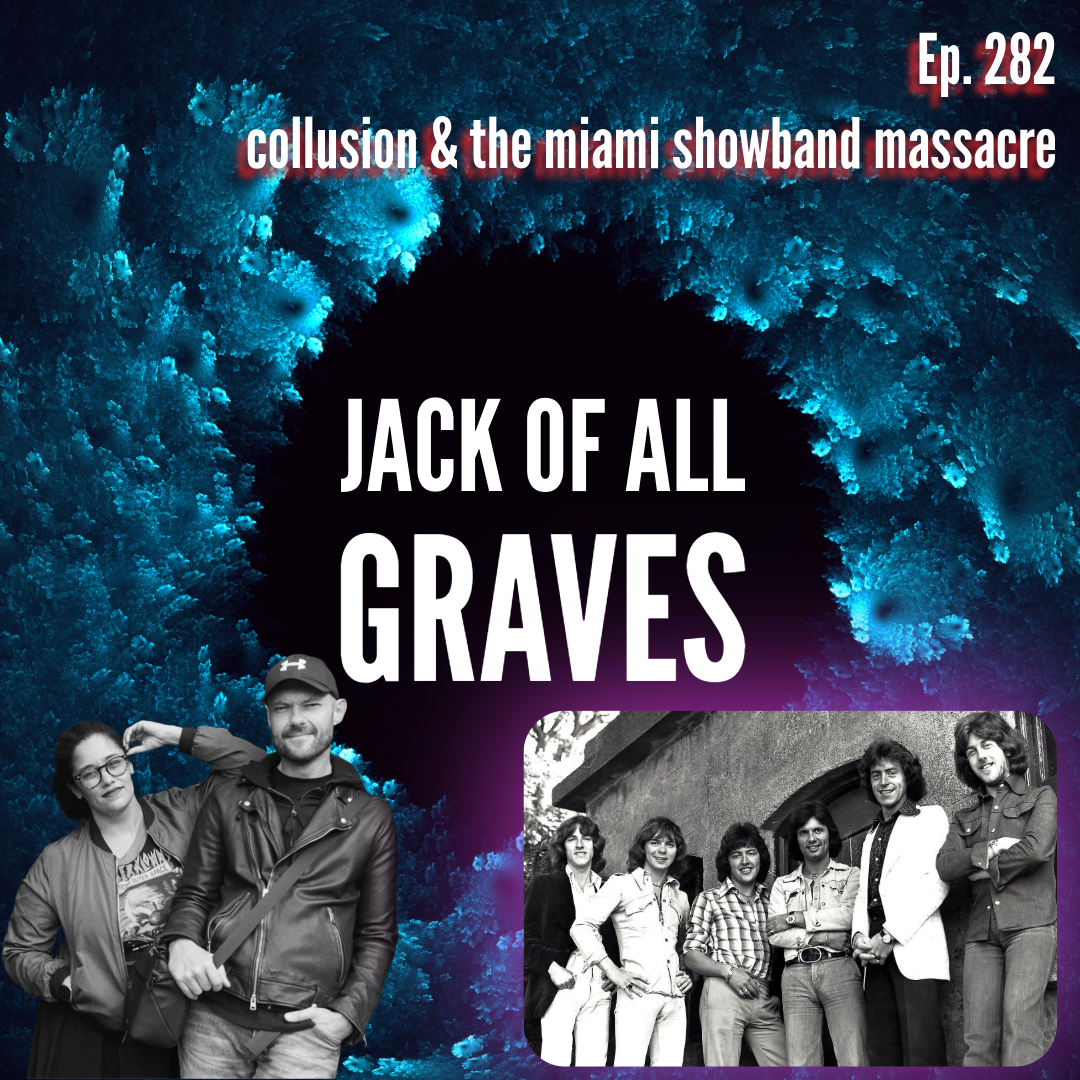
And one of the most popular of these groups was called the Miami Show Band.
They were considered the Irish Beatles, having seven different singles that topped the Irish charts.
Thousands of people would show up to their gigs, so many that thousands of people wouldn't be able to get in. They'd just be standing outside, you know, just screaming.
As the drummer would put it in a later documentary. Joining the Miami Show Band was like joining Westlife in the 90s. That's how popular they were. Yeah, it's crazy because, like, we don't hear anything about this, like, era of thing.
[00:22:05] Speaker B: No, I mean, look, history doesn't.
It's not part of the conversation anymore. The Miami Show Band.
[00:22:14] Speaker A: No, you'll see why.
[00:22:17] Speaker B: The Beatles, the Stones, the Beatles, the
[00:22:19] Speaker A: Miami, who are unfortunately, always a part of the conversation.
[00:22:24] Speaker B: Four more movies on the same days.
[00:22:28] Speaker A: On the same day, yeah. Fucking hell.
I listen, by the way, this is an aside, but I was just thinking last night that, you know, people always say, like, you know, the Beatles are the most important band ever and yada.
[00:22:42] Speaker B: Yeah, a lot of people say that.
[00:22:43] Speaker A: Which I think is bullshit in and of itself. But if we're going to say that, I think equally important in the history of music is the. The Swedish songwriter Max Martin, who entirely pivoted the entire genre of pop music in the 1990s to the point where you can see the point where Max Martin starts making pop music and everything shifts away from being 80s esque to the kind of pop music we recognize to this day.
So Max Martin is just as important as the Beatles. And you can fucking quote me.
[00:23:20] Speaker B: Fascinating.
There is an argument to be made that the trio of producers known as Stock, Aitken and Waterman are just as important over here.
[00:23:30] Speaker A: Oh, interesting.
[00:23:31] Speaker B: But that's another story, that's another episode.
[00:23:33] Speaker A: We'll come to that at another point.
Yeah, but maybe just like a conversation.
[00:23:38] Speaker B: It's grim, but not necessarily in the Joe Ag way.
[00:23:41] Speaker A: Grim.
Oh. Like in terms of their impact music. Gotcha.
I don't feel that way about Max Martin. I quite like where he moved things. But anyway, so we'll get many podcasts
[00:23:53] Speaker B: mentioning Stark, Aidan and Waterman in the same discussion as the trouble.
[00:23:58] Speaker A: Yeah, can you just tell me, like, who maybe would be associated with them?
[00:24:01] Speaker B: Like Kylie Minogue.
[00:24:03] Speaker A: Okay. Timmy Mallet just made some huge. I don't know who that is.
[00:24:06] Speaker B: Okay.
[00:24:08] Speaker A: Kylie Minogue, though.
Bops. Bops on. Bops on bops. That's for sure.
Okay.
Nope.
Sonia. So the Sonia.
[00:24:22] Speaker B: Yeah, yeah.
[00:24:23] Speaker A: Sonia, listen, you're just like saying things.
[00:24:25] Speaker B: I'm not. I'm really real. But I digress thoroughly.
[00:24:29] Speaker A: Sonia, come on.
So the Miami show band actually got so huge in 1975, their frontman, Fran O', Toole, was set to perform in Vegas and become the Irish David Cassidy. Basically, they were like, this guy is gonna blow the fuck up.
He never got the chance to strike out for solo success, though.
On July 30th of 1975, the band played the Castle Ballroom in Banbridge County Down.
It was by all accounts a normal show, nothing out of the ordinary. And they left the venue sometime after 2am with the road manager, Brian McGuire in their equipment van. The drummer, Ray Miller, leaving his in his own car to go visit family. And the rest of the band, Fran O', Toole, Des Lee, Brian McCoy, Steven Travers and Tony Garrity in a VW minibus.
At around 2.30am on July 31, not too long into their journey, they were pulled over at an army checkpoint.
Again, this would have been pretty normal at the time. Army checkpoints were everywhere. They didn't really bat an eye at being pulled over like this.
And DEZ Li even recalled that they were actually relieved, that it was sort of like a regular army checkpoint, and not one manned by the Ulster Defense Regiment, or udr, an infantry regiment of the army, which could be a much more harrowing and unpredictable experience.
Lee even said that often they'd be stopped in the van with a bottle of liquor, which they'd offer a sip to. A sip of to whatever soldier had stopped them. So these things were, like, so normal that it was just kind of like they'd be in the car getting drunk and be like, hey, want some? And they'd be like, yeah, sure, no big deal.
On this occasion, the soldiers told them to get out of the van and stand in a line facing a ditch at the roadside.
Annoying, but again, not necessarily unusual.
And at first, the whole situation, situation was pretty casual. They were, like, joking around with the soldiers and all that kind of stuff. It was, like, very friendly.
However, soon someone with an English accent joined the soldiers and started giving them orders. Their van would have to be searched.
DEZ asked the soldiers if he could grab his saxophone to show them that it wasn't a weapon.
He was granted permission and laid it on the side of the road.
As he did so, a massive explosion ripped through behind him.
It was the van and. And the band had been thrown across the ditch next to which they'd been standing. The ditch was now completely engulfed in flames.
It hadn't, in fact, been the military or the udr, at least not officially.
They'd been accosted by members of the Ulster Volunteer Force, the uvf, a paramilitary group.
At least four of the members of the UVF involved that night were indeed members of the udr, however, so they were actually members of the real military. They were also paramilitary terrorists.
What they'd intended to do was to plant a bomb under the driver's seat of the band's van, which would explode on a timer a little further down the road.
Something went wrong, however, as they were placing it and the bomb exploded as they were doing so, killing two of the UVF's members instantly as it threw the band across the ditch.
All of the band members survived that initial explosion, but the UVF had no intention of letting them survive the night and become witnesses to what had happened.
They would have to be killed.
So first, McCoy took a shot to the back with a Luger and was killed.
Next, Travers was hit with what's called a dum dum bullet. Have you ever heard of this?
[00:28:23] Speaker B: I have.
I think I've kind of grown up assuming that they were myth kind of grown ups.
[00:28:32] Speaker A: Yeah. A lot of people apparently think so. I saw a whole Reddit forum where someone was like, I always thought this was made up.
[00:28:37] Speaker B: Yeah. You know, you kind of stop believing that something as horrific.
[00:28:45] Speaker A: Right.
[00:28:45] Speaker B: Exist. Almost something designed for just no real purpose other than. Right. Other than that.
[00:28:54] Speaker A: I mean, there's claims on what its purposes are, and I'll get into that, but. Yeah. No, 100% with you on that. Unfortunately, they're not that uncommon in their use, and cops use them a fucking lot.
But a dum dum bullet, like you said, is fucking horrific.
A dum dum bullet is also called an expanding bullet.
When they impact their target, they expand in diameter up to twice their size.
This causes the bullet to slow down and transfer its energy into whatever it hit. So normally, if you're hit with a regular bullet, it will likely have so much kinetic energy that just goes straight through you. Right.
A dum dum bullet, when it hits you and begins expanding, then slows down because it transfers that energy into your body as opposed to into the bullet going through you.
So it expands. Rather than passing through this target, it expands inside of the target.
So from a law enforcement perspective, this can reduce the chance that a bystander gets hit by a stray bullet that went through someone at full speed.
From a hunting perspective, it can kill prey much more quickly.
From a humanity perspective, if this doesn't kill you, it will create an absolutely horrific injury that almost feels like an explosion inside of your body. It's like you got shot and then there's a second sort of explosion happening as this thing expands inside of you.
That's what happened to Travers. After being thrown by this explosion, he was then shot by this dum dum bullet that ripped apart his leg from the inside.
Garrity and o', Toole, seeing their wounded friend, attempted to drag him away from danger. But the UVF members caught them and riddled them with bullets from a sterling submachine gun.
O' Toole was shot 22 times and was so mangled that a doctor conducting the postmortem asked Desley if there had been a girl in the band.
All that could be discerned was his long hair, in part because they'd also gone ahead and shot his face up with the aforementioned dum dum bullets.
Expanding bullets to the face.
Just massive overkill.
Travers then played dead, lying next to the body of McCoy, the first man who'd been murdered by the Luger.
Dezli had been playing dead the whole time. He'd actually learned to slow his breathing from watching Vietnam movies.
Like, I guess that was a tactic he'd seen where they. You know, in order to fool the enemy, they would slow down their breathing so they couldn't tell that they were still alive. That's a wild thing to end up applying to your life at some point.
So the whole time that this was happening, he was lying on the ground listening to the murders of his friends and hoping that they wouldn't. That they wouldn't notice he was still alive.
He waited until he was sure the attackers had left and then went to get help.
As he fled, he said that there were just bits of bodies lying all over the place.
He was so on edge. When a couple picked him up to drive him to the police. He said that he had his hand on the door handle ready to jump out at any moment because he wasn't sure he could trust anyone.
Meanwhile, Travers said, quote, they all died. I spent about 45 minutes crawling around reassuring them that everything would be all right. We'd get back to the music. I remember whispering into Franz ear.
Just a horrible image, you know, this poor guy, leg shot to shit by this exploding bullet. And just, like, whispering to his dead friends that everything's going to be okay.
[00:32:36] Speaker B: Well, it's all horrible, isn't it?
[00:32:38] Speaker A: It's all horrible. Yeah. I didn't include it in here, but there's a lot of stuff that the remaining guys have said later on about, like, their mental health and stuff since then, and they're just, like, fucking destroyed. Like, one of the guys is so traumatized that he developed a syndrome that makes it so that he can't remember people's faces. And it's just like a sort of, like, kind of mask over everything to try to, like, you know, filter out the horrors of this, you know. Unfortunately, he still can remember everything that went on that night, but he has trouble remembering anyone that he meets, so. So just like, horrific levels of trauma from what they experienced that night.
And the massacre rocked Ireland, with thousands showing up for the funerals of the band members.
The uvf, for their part, accused the band of having been bomb traffickers and said that their killing was justifiable homicide.
And indeed, Desley thinks this had been their plan all along. They wanted to blow up the most popular band in Ireland and then claim that they were IRA weapons traffickers.
Needless to say, this did not hold up in court.
Lance Corporal Thomas Crozier and Sergeant Thomas McDowell of the UDR were both sentenced to life in the famous Mays Prison along with former soldier John Somerville.
Much like our boy Stone, who tried to blow up Stormont. They were later released as part of the Good Friday Agreement.
Just fucking bonkers to me.
Think that's one of the things that, like, in researching this whole thing, like, struck me the most, is just the like level of horrors people inflicted on others. And then they were just released when the Good Friday Agreement happened, like, Jesus Christ, that's wild.
But incidents like this one pointed to a bigger problem than just this one failed attempt at framing a popular band for IRA weapons trafficking. It became clear that that the British state was collaborating with loyalist paramilitaries. Everybody involved with this pretty much was a soldier or a former soldier. They were deeply connected to one another.
And the specific group associated with this and other government backed terrorist murders came to be known as the Glenn Anne Gang, which there's controversy about and I'll get to it. But as Mark Kernan put it in a counterpunch article, the gang can best be described as a covert Ulster loyalist counterinsurgency gang with links to the British army and MI5, the UK's domestic security and counterintelligence agency, whose members were made up of local soldiers, policemen and known terrorists who took part in extrajudice, extrajudicial killings, irregular warfare in the jargon in and around county arma in the 1970s.
So just a group of guys who were, you know, carrying out paramilitary actions and extrajudicial killings with kind of like a wink from the government, if not direct instruction from them.
And they were prolific murderers, killing some 120 people at minimum, mostly Catholics, although some were Protestants as well. This is the other thing that I think, like people kind of forget about when talking about like what was happening in the Troubles, that a lot of times it was like friendly fire on things like the IRA raiding Catholic homes and killing Catholics and Protestants killing Protestants and things like that too. Like there was really no one safe in this.
[00:36:13] Speaker B: Yes. And the thing about handcrafted ordinance is that it isn't necessarily accurate, Right?
[00:36:24] Speaker A: Yeah, that's absolutely true as well.
Yeah, very easy to sort of have collateral damage as a result of whatever the fuck you have put together in somebody's basement or things like that.
[00:36:37] Speaker B: But I mean, that's also kind of the point, isn't it?
It's terrorism after all.
[00:36:43] Speaker A: Right? Yeah, precisely. Like accuracy is not really the goal of terrorist activity. So, you know, if people kind of get caught up as a result, then it's like, well, that's the.
[00:36:57] Speaker B: Yeah, you know, that's the the opposite is assassination, isn't it?
[00:37:02] Speaker A: Right. Yeah, exactly. It's not a targeted hit. It is something that's meant to, you know, cause chaos and confusion and, you know, all of these kinds of things. So, you know. Yeah. A lot of people, in fact, like most people who were killed during the Troubles, had nothing to do.
[00:37:16] Speaker B: Yes.
[00:37:17] Speaker A: With what was actually going on. Most people were civilians.
So, yeah. At least 120 people killed by this group.
And this was all considered justified as retaliation for IRA actions.
The thing about the ira, though, is that they're not supported by the government. Famously, what we're looking at here is essentially the government oppressing a group, members of that group, then forming a resistance, a terrorist one, but a resistance, and then the government retaliating against that group for resisting.
Meanwhile, only the resisting group are considered the terrorists, despite the same tactics being deployed on both sides.
And let's say we think that's fine, right. You might think terrorists fighting terrorists. Who gives a. Everyone wins. Let them blow each other up.
[00:38:04] Speaker B: Why do not think that. But.
[00:38:06] Speaker A: Right. Yes. But let's say, for the sake of argument, there's plenty of people who would think that. Right. Like, if the. If the terrorists are blowing each other up, it. Who cares? Right. But as you said, that's not what was happening.
[00:38:19] Speaker B: I don't think anyone reasonable thinks that.
[00:38:23] Speaker A: Most people aren't reasonable, Mark.
But the Glenan gang largely killed civilians, not IRA members.
As Kernan explained, quote in Arma in the 1970s, many innocents died for the greater political good. At least the political good as perceived by elements within the British security state at the time. It was an ugly and cynical practice of counterinsurgency. Realpolitik played out under a very ugly fog of war. So just like you're saying it's like, it accomplishes the goal, Right. Even if these aren't really like the intended targets per se, you know, it serves a political good to kill these people.
A British counterinsurgency expert named General Frank Kitson was instrumental in setting up the Glennan gang and other pseudo gangs, as he called them, which were essentially counterinsurgency militias made up of local combatants loyal to Britain.
And this was not just a Northern Ireland thing. He deployed these first anywhere where people fought British colonial rule, including places like Kenya and Cyprus.
His methods included injuring, killing, and torturing as many civilians as possible, thought to be sympathetic to the cause of the insurgency.
It's demoralizing, basically. Create a group of horrific terrorists from the community who make civilian life a horror show and then weaken people's resolve to fight the actual power structure. Eventually, people just want the violence to stop.
They stop caring about the reasons that it started in the first place.
So Kitson deployed the same strategy in Northern Ireland and created the Military Reaction Force, which was a plainclothes murder squad of British soldiers which carried out drive by shootings and other murder murders of Catholics civilians.
As one member told the BBC in 2013, we were not there to act like an army unit. We were there to act like a terror group.
A report released by the Irish government in the early 2000s showed that the Dublin and Monahan bombings that had killed 33 people and injured over 300 had been carried out almost entirely by members of people who were assumed to be Glenan gang, who had recent relationships with the British Intelligence and the Northern Ireland Police, known then as the Royal Ulster Construction Constabulary, or ruc. At the time, their leader, Robin the Jackal Jackson, worked for the British Security Service and was under their protection as an assassin. He's suspected of having killed at least 50 people and orchestrated the attack on the Miami show band.
His fingerprints were found on the Luger that had killed Brian McCoy.
But somehow he was only charged with possession of a silencer and was acquitted rather than getting the life sentence that the others who were involved got.
[00:41:14] Speaker B: Much like expanding ammunition.
[00:41:18] Speaker A: Mm.
[00:41:21] Speaker B: I also am.
I don't really believe that silences exist either.
[00:41:28] Speaker A: That's an odd one.
[00:41:29] Speaker B: I can't. I can't work out the physics of them. I can't work out how they would work.
[00:41:35] Speaker A: You could have gotten one at the gun place that we went to and proved it to yourself.
[00:41:39] Speaker B: Oh, I could have, couldn't I? Really?
[00:41:40] Speaker A: Yeah. You could have seen it in action while we were there.
[00:41:44] Speaker B: I'd always just kind of made peace with myself that they were like a plot device or like a literary thing that didn't really exist, that served a narrative purpose.
[00:41:54] Speaker A: Yeah. I wouldn't be surprised if they don't, like, look like they do in movies where they, like, twist the little thing on the end or whatever and, like, it's a silencer now, but I don't know, I've never seen one. But they do exist because the combustion
[00:42:07] Speaker B: doesn't happen at the bit where you screw the silencer, where you put the silence on. It doesn't happen at the end of the barrel. It happens.
[00:42:14] Speaker A: Yeah.
[00:42:14] Speaker B: Like in the gun. So how does the silencer work?
[00:42:16] Speaker A: Well, I guess it doesn't happen in the gun or you'd explode, wouldn't you?
[00:42:20] Speaker B: Yeah, well, that's what the bang Is
[00:42:22] Speaker A: you don't want the. You don't want it to explode.
Right. But not inside the gun.
If it exploded in the gun, the gun would explode with a book.
[00:42:33] Speaker B: The pin strikes the bullet.
[00:42:36] Speaker A: Yeah.
[00:42:37] Speaker B: Causes the combustion in the gun.
[00:42:39] Speaker A: Right. It causes the.
Like. I don't know.
I'm not sure I know how it works, to be honest.
[00:42:46] Speaker B: See, exactly.
[00:42:48] Speaker A: I don't. I'm not. I'm not a gun guy, Mark.
[00:42:51] Speaker B: So silences exist.
[00:42:53] Speaker A: They do exist, yes.
It is a thing that exists and he apparently had one. And that is the only thing that he was charged for and he was acquitted of it, which is very suspicious.
This acquittal freed him up to continue carrying out these state sanctioned assassinations. His day job was delivering chickens and he'd often just do his murders as part of his route.
Deliver some chickens, murder a Catholic, go about his day.
I think that you basically did like that face in reverse of like, like the Drake meme or whatever the like pushing away and then. And like smiling. So it was like you're like, oh, he delivers chickens. You like smiled and like. And then he murdered Catholics and you're like, oh, no.
Oh no. Thank you.
Pass on that.
A British army whistleblower named Colin Wallace said, quote, everything people have whispered about Robin Jackson for years was perfectly true. He was a hired gun, a professional assassin. He was responsible for more deaths in the north than any other person I know. The Jackal killed people for a living. The state not only knew that he was doing it, its servants encouraged him to kill its political opponents and protected him.
For all this, though Jackson was something of a ghost, there are very few records of his life, only two known photos of him when he died of cancer in 1998. His funeral was private. It was almost as if this man, who was known to have carried out all of these extrajudicial murders, was intentionally kept from any paper trails that might indicate some form of collusion.
And indeed, that this was the case with much of what happened during the Troubles means that all of this is hard to prove in the traditional sense.
A police investigation known as Operation Denton could not find evidence that collusion had been directed at a political or strategic level and said that the Glenn Anne Gang was not a specific group, but sort of a catch all term for a larger network of loyalist paramilitary groups.
Many loyalist types have used this report as a gotcha, claiming it found the Glennan Gang fully didn't exist and there was no collusion at all.
This is absolutely false. The report found that there was plenty of what it called deplorable collusion between paramilitaries and agents of the state. It just couldn't say the full extent or that it had been. It had definitely been official strategy.
This is despite documents released in 2017 in which the UVF admitted to having been encouraged by MI5 to kill the Prime Minister of Ireland in 1987. MI5 had furnished them with all kinds of helpful details, like his itinerary, aerial photos of his home, and photos of a plane he regularly used.
The UVF also said that it had killed 17 men using information given to them by British intelligence.
So all of this to say this poor band, the Miami Show Band, could have been the Irish Beatles, were. The Irish Beatles were about to have their own Irish David Cassidy and instead were blown to smithereens by dum dum bullets that expanded inside of their faces, all for some conflict.
Their murderers later released due to an agreement that would then go on to release people who would continue terrorizing Ireland until the 2000s.
Just super fun.
Very safe. Now, though, despite everything that I have just said, Northern Ireland is a great place. You can walk around late at night.
They're just gonna find people drunkenly singing in the alleys. Oh, that's the worst you're gonna come across.
[00:46:32] Speaker B: Didn't enjoy that.
[00:46:34] Speaker A: You didn't want. You said you didn't want one. You said you want it unpleasant.
[00:46:37] Speaker B: Yeah. And I. And I got it. I mean, I.
I am super hesitant. What, What, What's. What's the old, often paraphrased, often misquoted saying it's better to be thought and informed than to open your mouth and remove all doubt.
[00:46:55] Speaker A: Right.
[00:46:57] Speaker B: I am always super hesitant to engage in conversations about topics that would leave me exposed and are still in people's living memories and are still unresolved in many minds.
And I, I, you know, it's. It's. It's one of those topics that isn't.
My voice has no fucking value in that discussion at all. So I'm just.
[00:47:26] Speaker A: I don't know.
I think that the thing about it, to me is that I think it is understanding what actually happened here and, like, the roots of the conflict.
And these, like, things like this collusion and whatnot are really instructive in understanding how colonialism works writ large. Right. Because this is so recent, we have something that we have, like, you know, maybe not perfect records of, but we have soldiers and whistleblowers like that that explain what happened. Right.
We have, like, lots of written documentation. We can look at Irish history and we can look at British colonial history in Ireland and like, see what started this. And it's, you know, like I said with that guy, it's like he, he deployed the same exact strategies in Africa and in Asia and in, you know, all these different places that he used in Ireland. And so even if like, you know, I think there's something to it, like you don't. Cyprus. Yeah, Cyprus was amongst. Malaysia was another place that he did this.
There is something important. Even if you don't necessarily get into like picking a side. Well, I mean, I think you kind of have to pick a side. But like, in terms of like the details of maybe something like this, did the Glenn Anne gang exist, blah, blah, blah. You don't have to pick a side in, in that. But I do think the playbook that is deployed here is really instructive for understanding the playbook of British colonialism elsewhere. And the rebranding of this as a religious conflict to avoid what actually occurred here as a political conflict. And the role of the British government is also instructive in understanding other such conflicts around the world.
[00:49:19] Speaker B: Yes, that makes a lot of sense. You'll know that I'm a fan of dark patterns. You'll know I'm a fan of history rhyming.
[00:49:26] Speaker A: Yes, exactly. Yeah. And I think there's a lot of that here.
Like I said, if you read that book Belfast Diary by John Conroy, who is an American journalist who ended up kind of living in and writing about Northern Ireland during the troubles.
It like, you see those, the way that things rhyme, right? Like this is happening pretty much, you know, concurrently with the American civil rights movement and the same sort of tactics are being deployed in both of those conflicts, you know, And I think another thing that I always find fascinating about that is like this then like Irish Americans are terrible and Irish Americans are often like very pro cop, very conservative, very anti immigrant, things like that.
And it's a total. It's because they don't know about any of this, right. They don't understand like what happened to their families that stayed in Ireland. You know, they don't understand what kind of oppression was really visited upon them in those places. They found, hey, we earned it here. We became white.
And like now everybody else has to be like, cool like us, you know, it's not that hard here.
[00:50:40] Speaker B: We became white, Is that what you just said?
[00:50:43] Speaker A: Yes, I've told you about this before this, you know, the Arizona orphan abduction, basically where Irish had been treated shitty in the United States as like third class citizens.
They became white by People realizing they didn't want these kids to be housed with Mexican families. And we pretty much accepted that ever since then.
And, yeah, these are the. These are the things that rhyme in our cultures. I think it's important to notice that.
[00:51:12] Speaker B: At what point does it start to become attributable to.
I'm going to use a term here.
Human nature.
[00:51:28] Speaker A: Ooh, I don't, like, hear me out,
[00:51:30] Speaker B: hear me out, hear me out, hear me out. Neither do I. Neither do I. Neither do I. Yeah, go ahead. But at what point do repeated patterns of behavior, both good and bad, start to indicate something below or underneath the conscious decisions?
[00:51:58] Speaker A: Well, here's what I don't.
[00:51:59] Speaker B: Patterns keep happening in different geographies and in different time periods. If the same playbook keeps playing out, obviously, I don't believe this to be the case.
[00:52:11] Speaker A: Right. And here's the thing. It's being carried out by the same people across those time periods and locations.
It's not being carried out by different groups. Oh, every group of people does this. They don't. The Brits always do this. The Dutch always do this, The Portuguese always do this. But everybody doesn't always do this. The Taino didn't do this. You know, like.
So that's why I would say it's not a human nature issue. It's. And I. But bringing that up, I think is absolutely such a good perspective. Look at this. Because that is kind of the thing people say, right? It's human nature. It's people of their time. It's, you know, yada, yada, Right? Like, instead of going, no, it's not. Yeah, it's British colonialism played out over centuries around the world. And that's why everything is fucked.
There you go.
[00:53:11] Speaker B: Thank you.
[00:53:12] Speaker A: Thank you.
[00:53:15] Speaker B: Let me quote directly from my notes, if I may.
[00:53:17] Speaker A: Yes, please do.
[00:53:19] Speaker B: Fucking look at these nerds. Oh, mise en scene.
[00:53:22] Speaker A: I don't think anyone has ever said mise en scene in such a horny way before.
[00:53:26] Speaker B: The way I whispered the word sex. Cannibal receipt.
[00:53:29] Speaker A: Worst comes to worst, Mark, I'm willing to guillotine you for science.
[00:53:33] Speaker B: Thank you. That's really, really sweet. It's cold outside, but my pancreas is talking to me. I'm fucking. I'm gonna leg it.
[00:53:39] Speaker A: You know how I feel about that,
[00:53:40] Speaker B: Mark, I think you feel great about it.
You can introduce this episode.
[00:53:47] Speaker A: Go ahead.
[00:53:48] Speaker B: I'm just going to say you can. I'm going to turn the reins over to you. I'm just going to. Oh, no, I'm just going to Stroke my head.
[00:53:55] Speaker A: Yeah. You've got a lot of head stroking going on right now. I'm somewhat concerned.
Yeah. As we all know, the. The head stroke is Mark's anxiety tick.
Sometimes just a thinking tick. It's more of just like a.
Like a intensity.
[00:54:13] Speaker B: Yeah.
I have. I.
Whether it's. I don't know, I can't. I have trouble with stillness, with kind of sitting still.
And I like this big old patch of skin at the top of my head. I like to manipulate it. I like to squeeze it.
[00:54:29] Speaker A: I have, like, scars on my head from getting cysts removed.
And I kind of. That's my like, little thing is if I'm just like, sitting, I'll just kind of like, rub it.
The scar where my.
[00:54:43] Speaker B: Well, if we're doing body horror, right.
[00:54:45] Speaker A: Well, I guess, yeah, that's kind of the theme, isn't it?
[00:54:47] Speaker B: If we're doing body horror this week, I'm gonna tell you about a plan I've got, right?
And before I go into this plan, let me tell you something to start.
[00:54:59] Speaker A: Yeah.
[00:55:00] Speaker B: The decision has already been made, Right?
[00:55:03] Speaker A: Yeah. This is my fault, by the way. I shouldn't have told you about my sister doing this.
[00:55:07] Speaker B: That's true.
So I am telling you this plan for information purposes only. It is not to open a dialogue. You have no influence. You have no authority here. Jackie Weaver, right?
So regular, regular fans of my eyelid will know it's got its own Instagram, Yeah. That I have a recovery blocked fucking oil gland issue in one of my eyelids and it keeps going cysty, right?
[00:55:37] Speaker A: Yeah.
[00:55:38] Speaker B: So I've been to private doctor twice now to have him. And I've. I've looked up the procedure. It's called incision and curettage, right?
And I've got. I've got another one, right, that the doctor missed last time I was there.
And both times that I've been to have this procedure done, I've been paying attention, right?
I've been paying attention to the steps that was taken.
And the first time I thought to myself, I reckon I could do this myself.
[00:56:10] Speaker A: Yeah, you would reckon that wouldn't.
[00:56:12] Speaker B: The second time I had it done, I thought, next time I'm going to do this myself.
And I've got the tools, right?
This last week I bought a pack of 10 disposable scalpels.
[00:56:30] Speaker A: Disposable scalpels.
[00:56:32] Speaker B: Disposable scalpels. I've got myself some gloves. I've got myself some sterile gloves. And do you know what else I've gotten?
[00:56:42] Speaker A: This is the coolest bit and what else you got?
[00:56:44] Speaker B: I've bought one of the clamps like dead ringers. I'm like Jeremy Irons and his pervert twin.
[00:56:52] Speaker A: Oh, no.
[00:56:53] Speaker B: Right.
[00:56:54] Speaker A: I don't like this one bit.
[00:56:55] Speaker B: I've got not on board clamp that they use to isolate the cyst and to invert the eyelid.
And I'm gonna fucking just do it.
[00:57:07] Speaker A: I'm not a fan.
[00:57:08] Speaker B: I'm gonna just fucking do it. The.
The second part of the procedure, the curettage, is the bit that I can't quite pull off because.
[00:57:15] Speaker A: Yeah. What's that mean?
[00:57:16] Speaker B: That means sorry, but they scoop it out.
[00:57:20] Speaker A: Oh, right. Okay.
[00:57:21] Speaker B: Yeah. Because what. What this isn't is like a.
Like a. Like a zit. That's not what it is. There's actual material in there that you've got to kind of go dig in.
[00:57:32] Speaker A: Is it like pussy or is it like. Is it a firm.
[00:57:36] Speaker B: It's oil.
[00:57:37] Speaker A: Right, okay. So it's like a. Almost like a sebaceous cyst type thing. You got like a sebum situation going on.
[00:57:43] Speaker B: That is exactly it. It's oil that has kind of formed like a granular, almost like a cell.
[00:57:54] Speaker A: Like you've got like a little pearl in your.
[00:57:57] Speaker B: That kind of. Yes, yes. And the second part of that procedure, the curettage, involves them just going in and scooping it out. Right. Now I cannot do that.
[00:58:07] Speaker A: Well then what's your. What's your plan once you get your scalpel in your eye? Yeah. I mean, no, but yeah, go ahead.
[00:58:15] Speaker B: So it's going to go like this.
[00:58:17] Speaker A: Mm.
[00:58:17] Speaker B: Clamp.
Pull down the eyelid. Invert the eyelid so the cyst is popping out. This I've rehearsed in the mirror. No problem.
Just give it a little slice with the scalpel. Then I'm gonna manipulate and squeeze.
[00:58:34] Speaker A: Right.
[00:58:35] Speaker B: And then what I'm gonna do is I'm gonna blast it with water from a hollowed out syringe. Blast it. I'm gonna blast it clean.
[00:58:44] Speaker A: You gonna use like, like the.
The water you get at the store, right? Not like from your sink.
[00:58:50] Speaker B: I'm gonna get distilled water. Yes.
[00:58:52] Speaker A: Yeah.
[00:58:53] Speaker B: Or maybe like boil some up. Do you know what I mean? Cooled boiled water.
[00:58:57] Speaker A: Just buy it. Buy the stuff that people put in their CPAPs.
[00:59:00] Speaker B: I'm not. I know. I'm just gonna spit in my hand.
[00:59:02] Speaker A: I Listen.
[00:59:03] Speaker B: You know what I mean?
[00:59:04] Speaker A: This is crazy. You cannot. You cannot make lines around this. This is fucking nuts, dude.
[00:59:10] Speaker B: I'm gonna just basically squirt it clean with Distilled water that I'll have a few syringes full to hand.
[00:59:18] Speaker A: Have you seen other people do this?
[00:59:20] Speaker B: Nope, but I've seen.
But I've seen a fucking doctor do it twice to me.
[00:59:26] Speaker A: But what makes you think the squirty water thing is gonna work?
[00:59:32] Speaker B: You are correct in that that's a little bit on the fringes of what.
[00:59:35] Speaker A: Yeah, that feels, but I think iffy.
[00:59:38] Speaker B: I'm pretty sure that after I cut it, most of the material will come out anyway.
I'm all but certain that the blasting it with water bit is just gonna be a formality to clean it off. I'm pretty sure that I can just cut and squeeze because the clamp you see has like a plate on the one side which isolates and pushes out the material so that it's easy to locate and cut.
[01:00:02] Speaker A: Uh huh.
[01:00:02] Speaker B: So I'm gonna do that, give it a little bit of a manipulation and hopefully it'll just pop out and then give it a squirt, take the clamp off, pressure patch a little bit of a bruise for a day or two.
Go about my day.
What do you think?
[01:00:20] Speaker A: Just not into it.
[01:00:22] Speaker B: If you're.
If you're really lucky, right.
[01:00:27] Speaker A: You're filming.
[01:00:28] Speaker B: If you're super lucky. I'm gonna put my fucking head cam on.
[01:00:31] Speaker A: Yeah, I should like set one on the sink or something. Yeah, I don't think you need more things.
[01:00:37] Speaker B: Oh, that's cool.
[01:00:38] Speaker A: You should avoid any more things on your person and maybe just like set it on a tripod and watch.
[01:00:45] Speaker B: I'm just thinking with the headphone you
[01:00:46] Speaker A: can show your doctor what you did.
[01:00:48] Speaker B: Yeah, for sure. I'm just thinking with the head camera, the angle in the mirror might be good. I don't know.
[01:00:54] Speaker A: Yeah, I'm gonna say nothing extra.
[01:00:57] Speaker B: Don't, don't overthink it. Don't over produce it.
[01:01:00] Speaker A: Don't overdo. Don't overproduce. You know, doesn't need a soundtrack. Can you just like, have like, Owen watch, you know, just in case?
[01:01:09] Speaker B: Absolutely not. He would.
[01:01:10] Speaker A: And then what are you gonna. What are you gonna say when you then have like the eye patch, like afterwards?
[01:01:16] Speaker B: The same as I said last time I had a procedure, only in the bathroom, only I did it myself.
[01:01:26] Speaker A: If Laura asks, are you gonna be like, I did this?
[01:01:29] Speaker B: Nope. Oh, yeah. Well, afterwards, obviously I'm not gonna be
[01:01:32] Speaker A: like, afterwards, you're gonna say you did this.
[01:01:34] Speaker B: Y.
Just don't come in. I'm not gonna do that, but I'll tell her about it afterwards. I'll just wait until they're all out.
[01:01:42] Speaker A: Uh huh.
[01:01:43] Speaker B: So anyway.
[01:01:43] Speaker A: Good Lord.
[01:01:44] Speaker B: I'm Okay.
[01:01:45] Speaker A: Well, that's happening. Yeah. When are you planning on doing. Is this like in incoming soon or. You gotta. It's gonna irritate you more before you get to that point.
[01:01:56] Speaker B: I've got all the stuff here ready and I'm not gonna plan a time, but I'll know it when it comes.
[01:02:06] Speaker A: I should. I should at least have you talk to my little sister who has done such fuckery before successfully.
Well, I mean, she can't see, so it's really hard to tell what success is.
[01:02:18] Speaker B: That's a great point.
[01:02:21] Speaker A: She doesn't have like an open wound in her eye, I can say that much.
But you know. Yeah, Maybe you should just consult on this.
[01:02:29] Speaker B: Maybe I will.
[01:02:32] Speaker A: But anyway, insult another lunatic on this.
[01:02:35] Speaker B: There's your introduction. Hope everyone's. Well, nobody else is in that position.
[01:02:40] Speaker A: Yeah. Hope nobody else is finding themselves in a place where they need to operate on their own bodies. I mean, you're not in a place where you need to do this. This is fully elected. A choice. Yeah, fully elective. Elective? Personal at home surgery.
[01:02:54] Speaker B: I don't like thinking of it like that. I prefer to think of it as maintenance.
[01:03:01] Speaker A: I don't.
I mean, you can. I just don't think that's appropriate to the situation.
[01:03:06] Speaker B: I do. It's maintenance.
[01:03:08] Speaker A: Maintenance is, you know, like exfoliating.
[01:03:12] Speaker B: What is this?
[01:03:14] Speaker A: Not that it's.
[01:03:16] Speaker B: From a certain perspective, nothing that is
[01:03:19] Speaker A: maintenance is something you call a procedure, I think.
[01:03:22] Speaker B: Fair enough. Listen, but like I said, this is a.
The decision's already been made.
[01:03:27] Speaker A: Yeah, I know. I have no influence on this. I've done my best over the past few weeks to try to dissuade you and now it is in the good Lord Keanu's hands.
[01:03:37] Speaker B: The record will reflect this.
[01:03:40] Speaker A: Yes.
Let no one here say Corrigan, you allowed this to happen.
[01:03:45] Speaker B: Nope. History will judge you.
[01:03:48] Speaker A: Well, yes.
Yeah, so there's that.
Listen, we got book club coming up this Saturday. We. It was supposed to be this past Saturday, but nobody finished the book.
So if you would like to get on board with the Only Good Indians by Stephen Graham Jones, you've still got till Saturday to get that book read so that we can all get in on that action.
[01:04:14] Speaker B: We'll talk books super quick. If I may. I just. I finished a banger. I finished a banger last night.
Once again from the transatlantic box of spooky thrills.
[01:04:28] Speaker A: Yeah, you're gonna get through this one like very Quickly.
[01:04:31] Speaker B: Oh, it doesn't seem to be.
I'm ripping through.
[01:04:34] Speaker A: You're not making a dent in it.
[01:04:35] Speaker B: No, there's still books for years. This one was called the Autumn Springs Retirement Home Massacre.
So nice if I'm just to be a hack for a moment, picture maybe Scream or picture a slasher.
But very graphic.
Just really empathetically written from the perspective of those in the autumn and winter years of their lives who find, you know, community and friendship and life in a retirement community until a fucking masked killer starts ripping through them one at a time.
[01:05:19] Speaker A: Okay.
[01:05:20] Speaker B: Really graphic, really elaborate ways. And it's a. It's. It's both cozy murder and it's a.
[01:05:27] Speaker A: Who done it?
[01:05:28] Speaker B: And it's a. It's a. You know, it's a cop thriller and it's a slasher and the. With the gimmick being that everyone's like 80.
[01:05:38] Speaker A: Nice. Okay.
[01:05:39] Speaker B: You know, great time. Yeah, great time.
[01:05:42] Speaker A: Do you remember who the author is?
[01:05:44] Speaker B: I have a name in my head and I think it's Philip Fracassi. Let me take a little look.
That's my name and I've got it right. Philip Fracassi.
Oh, Philip Philip Fracassi.
[01:05:57] Speaker A: I thought you said Flip. I was like, that's quite a. Flip
[01:06:01] Speaker B: is a great name, isn't it?
[01:06:02] Speaker A: Flip is a great name. That's not his name. It's Philip.
[01:06:05] Speaker B: Philip Picasso.
[01:06:06] Speaker A: Okay.
[01:06:06] Speaker B: Yes. The Autumn.
[01:06:07] Speaker A: And the title is what again?
[01:06:08] Speaker B: The Autumn Springs Retirement Home Massacre.
[01:06:12] Speaker A: Retirement Home Massacre.
[01:06:14] Speaker B: Lot of fun.
[01:06:14] Speaker A: Noted.
[01:06:16] Speaker B: If you, like me, are in your book era, Adam. It isn't just my book era, it's my fiction era. My horror fiction era. Cuz I recently had a. A non fiction era. I've read a few biographies.
[01:06:32] Speaker A: That's true.
[01:06:32] Speaker B: Yeah, A few biographies, A few crime, you know, like true crime type. True crime type stories. Yeah.
But yeah, just it's all horror fiction all the time and it's all mostly all been great.
[01:06:50] Speaker A: Yeah, I kind of. I go back and forth for sure. I read a lot of horror fiction, but normally like by the end of the year my little chart on Storygraph is like 5050 nonfiction and fiction.
[01:07:02] Speaker B: So what is Storygraph then?
[01:07:07] Speaker A: Oh, Storygraph.
[01:07:08] Speaker B: Did you enjoy that, Lois?
[01:07:10] Speaker A: And the faces that went along with it. What is storygraph is a real journey. Storygraph is like letterboxd. But for.
[01:07:19] Speaker B: I could have made that leap, couldn't I?
Could have worked that.
[01:07:22] Speaker A: But yeah. What kind of separates it from like something like Goodreads, aside from not being owned by Amazon, is that like it literally gives you charts and stuff like that for your reading. So it tells you like. Yeah. What percentage of fiction and non fiction, audiobooks, paper books, ebooks. It gives you like, you know, how many of this author have you read? And stuff like that. So kind of the appeal of it is that like you can like look at the stats of your reading beyond just like this is what you read, which I find fun.
[01:07:53] Speaker B: Yeah, it sounds like the kind of thing I would enjoy.
Maybe I'll take it up. Maybe I'll open a. What did you call it again?
[01:08:01] Speaker A: Storygraph.
[01:08:02] Speaker B: Storygraph account. After I ditch Facebook in January. Maybe I'll replace it with.
[01:08:07] Speaker A: There we go. Yeah, replace it with that.
[01:08:09] Speaker B: What I'm not gonna do is just throw it on the pile.
[01:08:14] Speaker A: Yeah. I am surprised that that's not a thing that you do already as you do like to track things.
[01:08:19] Speaker B: Ryan as his wreck. I'm sure it was storygraph that just. Oh, God, I love Ryan so much.
[01:08:29] Speaker A: She is wonderful.
[01:08:30] Speaker B: Oh my goodness, talk about the greatest.
[01:08:35] Speaker A: Yeah. But yeah, I love Ryan.
[01:08:36] Speaker B: I'm certain she's recommended Storygraph to me, but I'm not gonna. I'm not gonna add it. Add it to my socials. I'm gonna replace.
[01:08:42] Speaker A: Replace.
I got you. Yeah, I see that.
Let's see. Anything else people need to know? We. We are gonna. Let's play. You haven't even cracked your Hellraiser game yet.
[01:08:54] Speaker B: Haven't even fucking opened it.
[01:08:57] Speaker A: Yeah. So that's on the horizon.
[01:09:00] Speaker B: It is, it is. And I don't have any ambitions of finishing. I'm never gonna finish it before November. This November 19th.
[01:09:08] Speaker A: What's. Oh, I was like, what's November 19th? Oh, you're, you know Grand Theft Auto.
[01:09:14] Speaker B: Grand Theft Auto 6. Yes.
[01:09:17] Speaker A: Can't just. Okay, like, you've been so excited about this for years. Right.
Like, I love certain video. If they announced there's gonna be another death store, I'd be like super stoked on it or whatever.
But like, what is it about this that is just like shut everything down? All I want to do is play Grand Theft Auto.
[01:09:40] Speaker B: What a great question.
[01:09:45] Speaker A: I always wonder.
[01:09:46] Speaker B: A great question. Okay, so it's not. It. It. It's no one thing.
[01:09:55] Speaker A: Okay.
[01:09:56] Speaker B: And Grand Theft Auto has changed a lot and evolved a lot over the years while staying just like, you know, there are loads of different flavors of Evil Dead. There are still characteristics that let you know you're watching Evil Dead. Right?
[01:10:11] Speaker A: Right.
[01:10:12] Speaker B: Grand Theft Auto has evolved a lot, but there is still characteristics that let you know you're playing Grand Theft Auto.
Those being boundary pushing edgelord. Puerile humor.
[01:10:25] Speaker A: Yes, right, definitely.
[01:10:27] Speaker B: Those being excess in depictions of criminality.
Those being an unashamed refusal to self censor.
Those being absolutely cinematic, incredibly atmospheric art direction and visuals.
It always pushes the limits of whatever platform it's released on at the time.
Characters are for, for a game at least.
Beautifully drawn and well rounded stories that.
I'm talking as a Grand Theft Auto fan. Right. And to a, to. To a non fan they might think market's a bullshit fucking computer game. All right, fine. But much like, much like Red Dead 2 is seen as a real fucking watershed and a high point for narrative art in games.
So was Grand Theft Auto 5 and Grand Theft Auto 6. These things don't come along often. Right.
GTA 5 was something like 15 years ago. If not, if not thereabouts.
[01:11:48] Speaker A: Right.
[01:11:49] Speaker B: And it's, you know, I might not live to see another one.
[01:11:57] Speaker A: Not at the rate they're making them.
[01:11:58] Speaker B: No, exactly. Realistically then, you know, you've got the fact that I don't know the, the. The amount of man hours and development time and tech innovation and fucking world that these games cram in.
They are rewarding people. People are, you know, people are still finding environmental stories and clues and tricks and stuff in Red Dead to, you know, a decade after release.
[01:12:39] Speaker A: Sure.
[01:12:39] Speaker B: It's, it, it's. It's gonna be intensely rewarding and I cannot wait.
[01:12:45] Speaker A: Okay, fair enough.
[01:12:46] Speaker B: There you go.
[01:12:48] Speaker A: Not my bag. But I'm. I'm very curious about, you know, why.
[01:12:53] Speaker B: Yeah.
[01:12:54] Speaker A: This. Yeah. Has such a strong reaction from you.
[01:13:00] Speaker B: Yeah, it's interesting. I love, I loved five. I mean every, I think every system I've bought it on, I've bought since release I've done a playthrough of.
[01:13:11] Speaker A: Yeah.
[01:13:12] Speaker B: Just fantastic.
[01:13:14] Speaker A: Fair enough.
So yeah, we will do Hellraiser and you know, a little bit of it before you disappear into the GTA void.
[01:13:24] Speaker B: Uh huh.
You know, I'll come up for work, I'll come out to work and I'll still have to parent and I'll still have to eat.
[01:13:33] Speaker A: Yep.
[01:13:34] Speaker B: And I'll still have to exercise because that's what keeps me hanging on, you know.
[01:13:38] Speaker A: Right. It's important that you don't like bedrot
[01:13:41] Speaker B: with your gta, but Bucky or I might have to take a.
[01:13:47] Speaker A: A little. Little breather. Yeah. I will say, you know, you're at a good, you're at a good time parenting because while you have a lot of like fairing to do and whatnot, they are a little more self sufficient than they were when this game was originally supposed to come out.
[01:14:00] Speaker B: They are for sure. And I had to, I've had to have a, a kind of a frank conversation with owen about, about GTA 6 because he was, it was kind of on the fence about whether I was going to let him play it or not. Mm.
That all ended a couple of weeks back when a list of some of the content within the game leaked.
[01:14:25] Speaker A: Uh oh.
[01:14:26] Speaker B: Uh huh. I'm just trying to find the graphic,
[01:14:30] Speaker A: what exactly it was that you're like, oh no, my sweet child cannot play this game.
Because I remember being in like high school and you know, my friend Nick having. I'm guessing that must have been the first one.
And his mother being like absolutely appalled when she walked in and saw the content of that game.
[01:14:51] Speaker B: Yes.
[01:14:52] Speaker A: And that was High Schoolers. So I can't imagine that it's gotten more appropriate for children since then.
[01:14:59] Speaker B: Which like I said at the start, that unapologetic nature of GTA is one of the things I love about it in ways that other games have tried to emulate. Games like.
Oh, fucking, what was it called?
Hang on. Saints Row.
[01:15:20] Speaker A: I don't know what that is.
[01:15:21] Speaker B: Just a game that thought it was.
[01:15:24] Speaker A: Just tried to be gta.
[01:15:25] Speaker B: Yeah, yeah. And just doesn't quite fucking get it. You know, I cannot find this graphic. But, but I'll keep, I'll keep looking. Here we go. Is that it? Is that it? No, no, no.
[01:15:37] Speaker A: What, what was it like? Do you remember what it was of?
[01:15:40] Speaker B: Just a list of you know, like content warnings.
Much like you'd get on something like one of those Christian websites that tells you what movie movie commits. Yeah, yeah.
You're gonna be able to just like pull cocaine out your pocket and do bumps off your hand like in the middle of the streets.
[01:15:58] Speaker A: Yeah.
[01:15:59] Speaker B: Full frontal nudity, simulated sex, drug use, decapitation.
You can just, you know, and I'm like, I can't with a, with a clear conscience allow him to enjoy that.
Doubtless all his friends will be in school, you know, but I, I.
[01:16:15] Speaker A: Do you think that's true? Like, I feel like.
Really?
[01:16:18] Speaker B: Yes.
[01:16:19] Speaker A: I just don't feel like parents are that permissive anymore. Oh, like when we were kids. Yeah. But her parents really that permissive at this point to let their kids play like that?
[01:16:29] Speaker B: Yeah, I think you'd be surprised because I would be.
[01:16:31] Speaker A: Yeah.
[01:16:32] Speaker B: To, I think to a lot of parents it's just. Oh yeah, whatever. It's just a game, you know.
[01:16:40] Speaker A: Interesting.
[01:16:41] Speaker B: I mean I always, I always felt that age Ratings on games didn't. Don't really have the impact that they do on movies, because it's just a game, isn't it? There's no.
[01:16:51] Speaker A: I feel like it's. To me, it seems like the opposite. Right. And I feel like, in terms of, like, what you were talking about there, too, it's like, in a movie, you're, like, watching someone else do something. It's clear. It's no connection to you whatsoever as a, like, child sitting and, like, doing the simulated sex yourself, doing the bump of cocaine yourself. That feels like a different thing than like, a kid seeing sex on screen or seeing drugs on screen or whatever. Like, the act of you being the one deciding to do that and then engaging feels much more like. I don't know. Like, that would be a thing I would be more concerned about than the agency.
[01:17:29] Speaker B: The.
[01:17:30] Speaker A: Yeah, right.
[01:17:31] Speaker B: Active participation in the transgression for me.
My angle is that these are digital depictions of humans as opposed to photography, as opposed to.
[01:17:42] Speaker A: Right.
[01:17:43] Speaker B: Actual performers. Equally as. Equally as. As fictional, of course.
But I. I've always felt that them being pixels and polygons and textures adds. It's like a.
Like it's a cartoon. It's a playable cartoon.
[01:18:03] Speaker A: Yeah. I suppose Mo capped off people. Yeah. A little closer than an actual cartoon. I mean, I'm not, like. I'm not obviously, not talking you out of something, so this is not like a. I'm challenging your morals here. I'm just, you know, it's interesting to, like, think through, like, what makes us, like, make that distinction of being something more permissive about, like, a game.
[01:18:24] Speaker B: Yeah.
[01:18:25] Speaker A: Than a movie.
[01:18:27] Speaker B: Yeah. I mean, but on. On the other hand, I wouldn't allow him to sit down in front of a movie where people are shooting one another in the heads until their heads fall off and doing coke either.
[01:18:39] Speaker A: Oh, okay. Interesting.
[01:18:41] Speaker B: Yeah.
[01:18:41] Speaker A: I mean, not like.
Is there, like, a context, though, like.
[01:18:45] Speaker B: Right. Okay.
[01:18:46] Speaker A: Do you know what I mean?
[01:18:47] Speaker B: Not sure if I've put it in these terms before, but obviously, yeah. Me being who I am, I've got a more liberal attitude to what I will allow my kids to watch than Laura would have.
[01:18:57] Speaker A: Right, right. Of course. Yeah.
[01:18:59] Speaker B: And the way that I've always phrased it to her is that I would, obviously, as a parent and as somebody who loves his kids and has a pretty good handle on what is and isn't harrowing to watch, I would never subject the boys to something that I feel would harm them.
[01:19:17] Speaker A: That's. Okay. Yeah, that makes sense.
[01:19:19] Speaker B: Would prematurely force their horizons to broaden yeah. You know, but on the other hand, it's also good and fun and healthy to have a little bit of an edgy scare from time to time.
[01:19:32] Speaker A: Right. Yeah, I think that's. It's a totally different, like, angle that I think a lot of parents, historically, anyway, have come from of, like, it's not a moral issue here. It's, you know, thinking about your kids. Mental health.
[01:19:47] Speaker B: Yes.
[01:19:47] Speaker A: And being like, do I subject them to something that is, you know, too disturbing or is gonna stick with them in some way or, you know, introduce them to something that they're not ready for as opposed to, like, oh, I just don't want them to see sex and guns or, you know, things like that. Yeah. The reasoning is more about, like, actually thinking about, like, are they emotionally.
[01:20:08] Speaker B: Yeah.
[01:20:09] Speaker A: Intellectually prepared for the content?
[01:20:12] Speaker B: I think another. Another factor worth considering in my dialogue with Laura is that from her perspective, horror is a very broad term. And something like, she, you know, not so much now, but. But some years back, she would view something like, it's all right column.
[01:20:32] Speaker A: You know what I mean? Right. Yeah.
[01:20:35] Speaker B: Goosebumps.
[01:20:36] Speaker A: Everything is on the same level.
[01:20:37] Speaker B: Goosebumps is horror. Henry. Portrait of a Serial Killer is also horror.
[01:20:41] Speaker A: Right.
[01:20:41] Speaker B: Very harrowing stuff. All of it bad, nasty stuff.
[01:20:44] Speaker A: Right.
[01:20:45] Speaker B: And that simply isn't true.
[01:20:47] Speaker A: Yeah, absolutely.
[01:20:50] Speaker B: So, yeah, lots to navigate. Parenting is great.
You learn a lot and you make a right.
[01:20:55] Speaker A: It's like a constant.
[01:20:56] Speaker B: Yes.
[01:20:57] Speaker A: Constantly have to be thinking things through in that way. So, yeah, I just think that's interesting because, you know, a lot of times it's one of the things we talk about is that, like, obviously 80s 90s parents tended to, like, not give a shit what their kids were doing.
And so to hear like, oh, his friends will be playing GTA 6 is like, wait, really?
I thought no, people paid more attention to that stuff now.
[01:21:24] Speaker B: I suspect. I suspect parents will be buying it for their kids.
[01:21:30] Speaker A: Christmas.
Interesting.
[01:21:33] Speaker B: Yeah.
[01:21:33] Speaker A: That's all I'm saying.
[01:21:34] Speaker B: Yeah.
[01:21:35] Speaker A: Well, Marco, you want to talk about what we've watched of late?
[01:21:39] Speaker B: I do this. It feels like there's quite a bit to talk about here.
[01:21:42] Speaker A: Yeah, indeed. I think so. Got a few things.
Few things in here over the past week.
[01:21:48] Speaker B: Why do you want to kick off?
[01:21:50] Speaker A: Because, sure, I will happily kick off.
My sister and I, when you said that we could not jog yesterday, decided to go take in a picture.
And so we went to the films and saw Street Fighter yesterday.
Absolute delight.
Had such a blast at this movie. Honestly. Favorite moviegoing experience of the year.
Absolutely loved it.
[01:22:17] Speaker B: It's so interesting to me. Right this. Oh, God, this is super interesting to me because you're by no means.
I think. What. How did you put it? You're a Mortal Kombat girly. Is that what you said?
[01:22:27] Speaker A: Yeah, because you asked me. You were like. So are you like, particularly familiar with. I was like, no, I know the characters names. You know, I saw the movie when I was a kid, the original movie.
But that's like, that's it. I know no lore. I have like no connection to it.
[01:22:43] Speaker B: Is it not just like a chain of references?
Well, you don't know the movie. Yeah, yeah.
[01:22:49] Speaker A: I wouldn't know, to be honest with you. But it holds together without knowing anything about the story, to be honest with you. They do this cool thing where like, they basically give you the backstory in like a. In animated form.
So there's like this really beautiful.
Yeah, like, well, to understand who like your main character is Ryu and Ken. And it's like, okay, so like, who the fuck are Ryu and Ken?
And so it gives you like the setup in this really gorgeous animated sequence in the beginning, and then there's a few times throughout that it kind of revisits, like if they do any sort of flashback to the past, they use the animation to give you that flashback as opposed to, you know, the guys doing it.
And it's just like, it's super fun. It basically feels to me like if you made a 90s movie now.
And so like if you had the technology of 2026 and you made a 90s movie, this is what this is. Has very fun needle drops throughout, big graphics, fun fights, goofy characters and one liners. David dasmalchin Davis Douse Malchining. Like, everything about it is just. Just fun. The whole way through, we were just having so much fun. Just constantly laughing and, you know, feeling involved in what was going on. And that's like, involved involved, like, you know, where you're like investing in what's happening in this story.
I think the thing is, you know, like, when we were talking about Mortal Kombat, right, And I thought you didn't enjoy it because you gave it two stars and you're like, no, I enjoyed
[01:24:22] Speaker B: it, but it's Mortal Kombat.
[01:24:23] Speaker A: It's never gonna get more than that. And I think this is like one of the things that, like, what I value more in a movie than anything is like, having a good time, you know, and so that will override everything else is having a good time with it. So just because something isn't like. And I don't think this is. To be clear, this is not a bad movie. I'm not saying, like, oh, I'm overriding that. It's a bad movie. It's not a bad movie.
It's well acted, it's funny, it's got, you know, very good animation, things like that. So I'm not calling this a bad movie, but that is like my highest.
My highest stars are pretty much always going to go to the thing that I walk out of and I want to go back in.
Not necessarily the thing that, like, I'm like, oh, I want to sit with it, or whatever. Or like, that had the best cinematography I've ever seen. Or how many. That had a poignant point to make.
[01:25:21] Speaker B: You know, how many times in the past have I. Because I know it's. I know the answer, and it's millions.
How many times in the past have I responded to a letterbox score of yours by simply screenshotting a list of everybody else's star ratings?
[01:25:38] Speaker A: Yeah.
[01:25:38] Speaker B: And asking you one of these things is not like the others.
Except generally it's five, four and a half, five, four, four, five. Corrigan 1.
This is.
[01:25:50] Speaker A: And it's not like that generally. It's. There's like a few movies that are like that, but it's mostly. But because they're not, I'm gonna say it's all there. You're gonna say it's all the time. It's not. I like most things most people like, but it's usually things that I don't enjoy. Right. Like, I base my rating on whether I enjoyed it. If I sat through a movie and I was like, hated every minute of this, didn't like the characters, didn't like the writing. I don't care if, like, oh, the cinematography was great, though, or whatever. Like, so I hated it.
So, you know, if I have a good time, it's gonna get a good rating.
[01:26:27] Speaker B: I really, really, really object to that in the most good natured way possible.
But you can't. You will. You won't rate a film highly, even if it is objectively good.
[01:26:44] Speaker A: No, I will if I enjoy it.
[01:26:46] Speaker B: But that's the only metric by which you'll star a film. You'll rave them.
[01:26:52] Speaker A: No, but it's more likely to get five stars if I come out of it and I'm like, holy that. Like, I had a blast. You know, there's plenty of movies that I'm like, I've rated like four stars or whatever. And then I'm like, I never want to See that again.
But it did. Good stuff. You know, I'm not out here watching Schindler's List all the time, you know.
Yeah, right. My favorite movie is Stindler's List. Like, no, that's not. I never want to see the Green Mile again like that. Like just, you know, there's movies I think are good, but I don't want to interact with again.
[01:27:26] Speaker B: I'm certain it's a refrain that our listeners will have heard me say lots of times that I'll, I'll rate a movie highly if it's well put together and. Well, yeah.
[01:27:39] Speaker A: And that's where I don't, if I didn't try it necessarily, I don't see that it's good. That's where we diverge. Is that like, you'll give some. You'll be like, I hated that. I did not enjoy it, but I love the swing they took or whatever. And I will never do that.
That's. That's not my thing. I do not appreciate swings just for the sake of a swing.
[01:28:00] Speaker B: Yeah.
[01:28:00] Speaker A: I have no respect for the swing.
[01:28:03] Speaker B: I get that. And I, I do. I just.
[01:28:05] Speaker A: Yeah.
[01:28:07] Speaker B: The more I think of it, the more I can apply that to life as well. I, I just, I, I enjoy it when people look for the bit where things are a bit weird and they go to that bit. Even if it, even if it isn't particularly worth doing.
[01:28:22] Speaker A: Yeah.
[01:28:23] Speaker B: Like today, just today, China has launched a fucking probe to a Martian moon to grab a little bit of dust and come back. And it's gonna take fucking years, man.
And what's it going to achieve? Nothing, you know.
[01:28:44] Speaker A: Sure.
[01:28:44] Speaker B: But.
[01:28:44] Speaker A: Yeah.
[01:28:45] Speaker B: Yes. Five stars.
[01:28:46] Speaker A: But it's a swing. Five stars on this.
[01:28:48] Speaker B: You know, I was driving back from Birmingham a couple of weeks ago. Right.
And I'll just set the physical context here in Snow Hill in Birmingham. Just done by the train station or one of the train stations.
Familiar coming out of the multi story car park. And I'm joining the main road out of the. The city.
And there's like a bus shelter. Right. A bus stop. You know what I'm saying by that. You have bus shelters in the States?
[01:29:14] Speaker A: Yes. Yeah, I mean, we wouldn't. Yeah, we'd call it a bus stop, but. Yeah, I know what you mean. One with an overhang.
[01:29:19] Speaker B: That's exactly. And there's a geyser on that bus shelter. Right. Standing on it.
[01:29:25] Speaker A: Oh.
[01:29:25] Speaker B: And he's naked from the waist up.
[01:29:29] Speaker A: Okay.
[01:29:30] Speaker B: Right. He's wearing a pair of tracksuit bottoms
[01:29:31] Speaker A: and he's topless Was it warm?
[01:29:34] Speaker B: Yeah, it was. This was. This was like late summer. This was.
[01:29:36] Speaker A: I got concerned from him for him immediately.
[01:29:39] Speaker B: No, he starts September and he's dancing quite well, actually.
[01:29:45] Speaker A: Oh, okay.
[01:29:46] Speaker B: And he's addressing people as they walk past him below on the street.
And he's got a clear line of sight to where I am in the road. And he's actually making eye contact and waving at people in the cars as well.
[01:29:59] Speaker A: Does he have music or he's just dancing?
[01:30:00] Speaker B: No, he's just dancing. He's on his own.
[01:30:02] Speaker A: Okay.
[01:30:05] Speaker B: And I gotta give that five stars, right?
[01:30:11] Speaker A: Yeah.
[01:30:12] Speaker B: There's no value intrinsically in what he's doing. It's.
[01:30:16] Speaker A: It's art.
[01:30:17] Speaker B: It's. I dare say to the people he was, I'm gonna say, haranguing as they were walking past him. That might have been quite an unpleasant experience. Nobody's enjoying what he's doing. People are like, fucking, is he going to jump off? Am I going to have to call the fucking police?
But none of that. None of that happened while I was watching him. And I loved the fact that he was there.
[01:30:37] Speaker A: I'd be concerned for his safety. I don't trust those bus shelters. They're load bearing.
[01:30:42] Speaker B: He was all right. He knew what he was about. But that's all of which is to say, yeah, that's my. That's movie.
[01:30:48] Speaker A: Five stars for the game. Yeah, Yeah, I get it. This is. I think if this, like, were, you know, our biggest divergence in how we rate things, that's probably. Yeah, it. Yeah. Said I will. I will go hard for some big stupid movie just because it was fun and go very low because I didn't. I don't respect the swing and you're kind of find the opposite.
[01:31:10] Speaker B: Yeah, it would be a boring world, etc. Etc. Etc.
[01:31:15] Speaker A: Be a boring podcast.
[01:31:17] Speaker B: Well, wouldn't it?
[01:31:19] Speaker A: We just agreed on every single thing. God, can you imagine just nodding at each other this whole time? Yeah, yeah, yeah, I agree.
[01:31:33] Speaker B: I will speak of Buddy.
[01:31:35] Speaker A: Buddy.
[01:31:36] Speaker B: Yes, I will speak of Buddy. I will speak of Buddy in the warmest terms. Right?
Yeah, I will speak of Buddy. I don't know if you're aware of this listener.
You there, you know, you. Buddy know he of too many cooks. That's probably the best.
[01:31:55] Speaker A: Listen, before you get into this, just for frame of reference on this. I watched Buddy with Kyo and then afterwards it was like, it definitely makes sense that that's the Too Many Cooks guide. He was like, what's Too Many Cooks? I was like, what do you mean? What's Too many cooks?
Okay. So I pull up YouTube and he immediately was like, oh, you sing this all the time. I was like, yeah, you've never questioned that.
I'm always walking around the house singing. For 14 years I have been singing this song. You've never once gone, who is this? Yes, it is 14 years old and he's never gone, you know. Huh? What is that you're singing?
[01:32:35] Speaker B: But, but yeah, so the premise we have, you know, what if Bear in the big blue house. Yeah. What if Barney, what if the kids couldn't leave? Yeah.
And what if every episode they remembered the trauma visited upon them last time when your.
Your big furry muppet friend is an abusive, controlling narcissist kidnapping you away from your parents and trapping you in some fucking weird TV dimension where little fucking splinters of self awareness puncture the Jim Henson's fucking fuzzy felt creature workshop surroundings. And what if the real world was just a fucking fence away from your parents whose only memory of you was a void and a gap in their memories where you used to be kids. Oh, take the fucking genre I love and fuck it up and just rip it to shreds and glue it back together and serve it back to me and confuse me and unsettle me and do it with style and confidence and surprises and commitment. That's Buddy. That's a thrill. That's a fucking thrill right there.
[01:33:59] Speaker A: Someone made an interesting point that I hadn't really thought of about this movie, which is that it is like a very good picture of like the rich men who run the world right now.
[01:34:12] Speaker B: Wonderful.
[01:34:13] Speaker A: That demand that we love them no matter how much they.
[01:34:16] Speaker B: Stockholm syndrome, isn't it?
[01:34:18] Speaker A: Well, and like, you know, Stockholm syndrome obviously is like not real, right? But like, also the thing is like you pointed out that like, they get these like. Like they know they're being abused and that they don't love Buddy, but they have no way out of this. No matter like the viciousness with which he treats them, he still demands that he tell. They tell the him absolutely that they love him. Right? Which is just like, you know, your Elon's and your Trumps and all that kind of stuff that like this stuff they inflict upon us constantly and then demand that like, not only do we accept they're doing this, but also we have to like them.
[01:34:55] Speaker B: Yes.
[01:34:56] Speaker A: To. To placate the end of the day. Right? And I was like, that's actually, that's a really good point that I hadn't really like taken from this movie when watching it. But, yeah, he's, you know, constantly traumatizing and terrorizing these kids and then, you know, at the end of every episode, making them come together and hug him and sing about how much they love him and all of this stuff.
Yeah, I thought it kind of faltered a little bit in the middle. I would have liked to see a bit more of the, you know, Cristin Milioti storyline in that.
But, yeah, I think it was really clever and the kid actors were really good in this, which really sells a
[01:35:36] Speaker B: lot of this movie, which is always make or break, isn't it? Can you watch the kids for more than a few minutes at a time.
[01:35:44] Speaker A: Yeah.
[01:35:44] Speaker B: Without grinding your teeth. And I start stroking my bald head.
[01:35:48] Speaker A: Right.
Yeah. And I thought that they. They did a really good job of both playing the, like, kind of lobotomized children in the show and then, like, the cracks showing and beginning to, like, realize what's happening to them and breaking through into, like, developing their own personalities and rebellion and things like that.
Yeah, I thought it did a really good job with that.
[01:36:11] Speaker B: Not afraid to go to some quite uncomfortable places, as you hope, you know.
[01:36:16] Speaker A: Yeah.
[01:36:17] Speaker B: Kind of like, is this okay?
[01:36:20] Speaker A: Right.
[01:36:22] Speaker B: We're the magic of the.
[01:36:22] Speaker A: Did you let Owen say this? Exactly, Exactly.
[01:36:25] Speaker B: We're the mag. Magic really fucking happens where you, you know, you find out what a movie is made of, if it'll go there, if it'll take you there.
Just.
[01:36:32] Speaker A: Just a treaty was a. Yeah, was a good time.
[01:36:35] Speaker B: Just a treat.
[01:36:36] Speaker A: Enjoyed that one. And hey, revisit Too Many Cooks if
[01:36:39] Speaker B: you haven't in a minute, or if you have.
[01:36:42] Speaker A: Or if you have. You know, I'm just saying, if you've forgotten, you know, you should definitely give this another look.
[01:36:48] Speaker B: Looking at the fella's cv, he. He's responsible for a VHS segment, isn't he?
[01:36:55] Speaker A: Yeah, I did see that. Yep. People in things are like, oh, as long as what's his name?
[01:37:00] Speaker B: Let's find out.
[01:37:03] Speaker A: But, you know, they're like, oh, if he's involved, I'm in. And I'm like, too Many Cooks is literally the only thing that I've seen that he's done, aside from presumably the VHS segment.
[01:37:11] Speaker B: But his name is Casper Kelly.
[01:37:13] Speaker A: Casper Kelly. There you go.
Yeah. People apparently really like the stuff that he makes. So I don't know, maybe I need to look into the other stuff that he has made. I'm not rewatching a vhs, but
[01:37:24] Speaker B: let me tell you about somebody, right, who. I always know that. I know who you are, mate. And then I'LL always look you up and I'll always see your name and I'll always go, ah, fucking yeah, of course it is.
Why don't I say Topher Grace?
[01:37:39] Speaker A: Topher Grace, right.
[01:37:41] Speaker B: I will never remember your name when I'm looking at you, mate. It's almost like you've got some enchantment cast over you, like some kind of, you know, some kind of reality warping cloaking mechanism that I. You befuddle me when I look at you. But yet so funny when I see your name written down, I'm like, well, that's obviously Topher Grace, isn't it?
[01:38:00] Speaker A: Yeah, it's definitely Topher Grace. It's a pretty recognized top of Grace
[01:38:03] Speaker B: is in this film.
[01:38:04] Speaker A: It is Topher Grace is in this film. He's a little bit of an asshole in this movie, as he often is. He has, like a assholey presence, you know, face for it.
My mentor and my ma was one of his high school teachers.
[01:38:19] Speaker B: Is that so? What a fucking claim. What a claim to fame.
[01:38:22] Speaker A: Good little. Yeah, good little claim to fame. Taught Topher Grace in high school.
But anyway, yes, Buddy, I think is worth your. Worth your time. Although here's another thing.
You know, I feel like we're pretty knowledgeable about horror, you know, between the two of us.
[01:38:38] Speaker B: Well, yeah, between the two of us, we've seen a lot of it.
[01:38:42] Speaker A: We've seen a lot of horror and I think we, like, know things about it.
[01:38:46] Speaker B: I, again, much like I said earlier on in the cast, I. I don't enjoy that kind of language. Knowledgeable. It feels a bit po faced to me. I've seen a bunch of it and I can talk about it.
[01:38:58] Speaker A: You've seen a bunch of it. I'm just saying, like, you know, I think I'm familiar with genres of horror and things like that, you know, But I did not know that Buddy is like part of a genre of horror which is called mascot horror.
Did not know this. So people kept bringing this up in the, like, you know, this is a. This is actually one of the better entries into the mascot horror genre and whatnot. That's apparently what people call like, like puppet horror. Like this. Like this and Five Nights at Freddy's and like, stuff like that. They call it mascot horror.
So there you go. Glad you're surprised by this too.
[01:39:35] Speaker B: I was gonna go with fluff core.
[01:39:38] Speaker A: I like fluffcore. I'm a fan of that. I would prefer, because I don't. Yeah, mascot seems very specific. But I guess because it's like they're In. They're inside. Like a mascot.
Mascot there. Yeah. Big costumes as opposed to like small puppetry or whatever.
But yeah, that's a new term that I've learned. So glad to share it with you.
[01:40:01] Speaker B: I refute it.
[01:40:06] Speaker A: We'll see how long it sticks. We'll see if, you know, in five years people still are saying mascot, horror,
[01:40:11] Speaker B: or if they're calling it fluffcore, we'll fucking. Time will fucking tell on that one. I'll tell you something. We'll still be here, right?
[01:40:19] Speaker A: Yeah, we just need our listeners to start calling it fluffcore in the letterbox
[01:40:23] Speaker B: reviews and then see if that could you.
[01:40:25] Speaker A: If people start accepting it, just, you
[01:40:27] Speaker B: know, let us make a mark some way.
[01:40:30] Speaker A: Yeah, so this is. That's like my strategy for like making friends when I was in college was like to pretend I was friends with people already and then people accept it.
[01:40:44] Speaker B: I think that's a joke.
That's a fucking thing right there.
[01:40:48] Speaker A: Listen, it worked. That's how I made like all my friends. I just walk up and be like, jack, what are you doing today? And then it's like, you can't just be like, wait, who are you? Because now you're an asshole.
Oh, hey. And then your friends now.
[01:40:59] Speaker B: Strong technique.
[01:41:01] Speaker A: Yeah. So fake it till you make it. Including fluffcore.
[01:41:04] Speaker B: You can't do that with.
You can't do that with like, with partners.
[01:41:10] Speaker A: Can't you?
[01:41:11] Speaker B: No.
[01:41:12] Speaker A: Oh, okay.
[01:41:16] Speaker B: I will speak of onslaught. Unless you've got another. You want to jump in. I will speak of onslaught.
[01:41:19] Speaker A: I mean, I have more things, but. Speak of onslaught.
[01:41:21] Speaker B: I will speak of onslaught.
[01:41:22] Speaker A: I'm happy you finally watch. Watched it.
[01:41:24] Speaker B: Yes. As am I. Delighted. What we have here seemingly is a 40 year old film that was released this year.
[01:41:32] Speaker A: Okay.
[01:41:33] Speaker B: Isn't that interesting? What we have here is a film from the video shop 40 years ago that has somehow become displaced in time.
[01:41:45] Speaker A: Yes.
[01:41:46] Speaker B: And it's lost its original cast. Because this film should have like. This film should have Rutger Hauer in it.
[01:41:53] Speaker A: Yeah, for sure. Yeah, absolutely.
[01:41:56] Speaker B: It's managed to keep Michael Biehn in it.
[01:41:59] Speaker A: Mm. Yep.
[01:42:00] Speaker B: But Rutger Hauer should absolutely be in this fucking film. He should be Dan Stevens in this film. Should be Rutger Hauer.
[01:42:08] Speaker A: Absolutely.
[01:42:09] Speaker B: And otherwise it's remained perfectly intact.
[01:42:13] Speaker A: Yeah.
[01:42:14] Speaker B: From 1985.
[01:42:17] Speaker A: Yeah, 1,000%.
[01:42:19] Speaker B: And the music is identical to how it was on its original release.
And the pacing is identical. And let me tell you something else.
This is a film that was originally released in 1985 as opposed to a film which was made in 2026 and wore the fucking trappings of a movie from 40 years ago.
Yeah, there was that trend about 10, 15 years back, like, you know, Grind House, where. Yeah, what are you parodying here? Exactly? Because whatever you're doing, parody without love is mockery.
Right? I'll say that again. Parody has love in it.
If it's to be authentic and onslaught it, even it. It's. It's so loving and it is so affectionate and so authentic that it goes past imitation and parody and there's nothing Earth sats about it at all to the point where it literally is a video shop film from 1985 in every way.
And it's brilliant.
It's brilliant.
[01:43:37] Speaker A: Yes.
So glad you enjoyed it because. Yeah, I'm with you all the way.
[01:43:44] Speaker B: Action beat.
[01:43:44] Speaker A: This is the kind of movie I crave.
[01:43:47] Speaker B: Right at the end. I thought, well, if we'd add more lingering gore shots, if we'd seen some prosthetics, la la la la la. But nope, because you didn't get long lingering gore shots in this film, in this 18 rated film from 1985. It wouldn't have been authentic.
It really fucking nails it. It nails it just perfectly. Dolph Lundgren would have been. It was in this original.
[01:44:16] Speaker A: Yeah, for sure.
Probably Linda Hamilton.
Yeah, for sure.
Yep.
[01:44:26] Speaker B: Just transplant this entire cast with Linda Hamilton, Rooker Hauer and Dolph Lundgren and you'll see this film the way it was. The way it was originally released four years ago.
[01:44:37] Speaker A: Yeah, that's absolutely it.
And it's so much fun. I think, actually, depending.
I pulled my back today, so I may just lay in bed on my heating pad, but my sister and I were planning on watching it tonight. She hasn't seen it yet.
[01:44:51] Speaker B: BANGING actually,
[01:44:54] Speaker A: yes, agreed.
[01:44:56] Speaker B: It is, though I. The more I think about it. Fuck me, man. It's great.
[01:45:02] Speaker A: This brings me such pleasure.
Maybe I came out of that movie theater and I was just like, oh, my God, you have to see.
[01:45:11] Speaker B: Maybe Danny Glover is in it.
[01:45:13] Speaker A: Oh, for sure, you know, 1,000%. But also Reginald Vel Johnson in both versions.
[01:45:19] Speaker B: Fine. Yes, of course, Absolutely fine.
Just the, the setting of it as well, you know, is it. Is it kind of. Is it Texas? Is it El Paso? Is it the border, kind of indiscriminate border town? Yeah, you know, the. You've got a. A child in jeopardy, you know.
[01:45:41] Speaker A: Yep.
[01:45:42] Speaker B: You've got a sleazy. You've got a sleazy cop.
Oh, you've got a kind of A Germanic dom, coded kind of femme.
[01:45:55] Speaker A: Yeah.
[01:45:56] Speaker B: You know, big, bad, behind the scenes. You've got, you've got, you've got, you've got sleaze, you got violence, you got synth.
What. You know, you got, you got violence, you got muscle, you got jeopardy.
[01:46:11] Speaker A: And just the scariest guys, you know, the. Your villains in this are just terrifying death machines, which I love. I love the look of them and everything too. And just them lurking, you know, always just kind of standing impassively taking their victims.
[01:46:28] Speaker B: You're Adam Wingard. You're an interesting one.
I find that you can deliver. You can deliver this and deliver Godzilla as well. A kind of American Godzilla also, you know.
[01:46:42] Speaker A: Yeah.
[01:46:43] Speaker B: What, what thought ye of Godzilla vs Kong, the new empire?
[01:46:48] Speaker A: Which one is that?
[01:46:50] Speaker B: That's the one where they're inside the earth and there's a world inside the world and you've got fucking Mecha Godzilla, for fuck's sake.
[01:46:57] Speaker A: I feel like. Did we watch this together? I feel like I liked it.
[01:47:00] Speaker B: I loved it.
[01:47:01] Speaker A: Yeah. I think we made. Because was this like pandemic times might have been when this came out? Yeah. I want to say we watched it and I really enjoyed.
[01:47:13] Speaker B: Is always intriguing to me when someone can work at different scales. When someone can work at different levels of spectacle and magnitude.
[01:47:23] Speaker A: Right.
[01:47:24] Speaker B: You know what I'm saying?
[01:47:26] Speaker A: Manage to effectively. Well, that's the thing is it's like what you want people to do is like they make all this money making like the big giant blockbuster, but then they still make their weird little movies, you know, And I think he's. Yeah, he's good at that. That, you know, he likes making a movie like the guest. Like this is. And this is in the Guest universe too.
[01:47:44] Speaker B: I did hear that said. Yeah.
[01:47:46] Speaker A: And.
And I think that that's like, that's cool. It's like he, he made the guest, then he got a ton of money, made this big old Godzilla movie and then he was like, I would like to continue doing this.
Made another small, just fun as fuck movie.
[01:48:00] Speaker B: And listen, what we'll do is we'll get Dan Stevens in and we'll get him to do a silly little voice.
[01:48:07] Speaker A: Yeah. Right. Yeah. He won't be super sexy this time.
[01:48:11] Speaker B: Nope, nope. Quite the opposite. We will quite do a silly little Germanic accent.
[01:48:18] Speaker A: Yes.
[01:48:18] Speaker B: Because he. I think he enjoys that too. We'll give him a little treat.
[01:48:21] Speaker A: Oh, absolutely. Yeah.
[01:48:23] Speaker B: Was it cuckoo? That's the one, isn't it, where he does that again?
[01:48:26] Speaker A: Yeah, I love cuckoo. That's when I should watch this Halloween Season too.
[01:48:30] Speaker B: Jog adjacent. Also Onslaught.
Operation Paperclip, you know.
[01:48:36] Speaker A: Yeah, definitely just a great time.
[01:48:39] Speaker B: I. Yeah, I'd be breaking my own rules if I went back and added another star to it just, Just for the culture. But I feel like I. I feel like I. I feel like I sold it short.
[01:48:50] Speaker A: Yeah, I think you did. But next time you watch it, you can. Yeah, you can adjust because it's just so much fun.
So highly recommend Onslaught. And this is why, again, like, how you point out, like, oh, all these people gave these things good ratings and then you're the one star or whatever. But that's how I feel about Onslaught is it's like I'm like, this fucking ruled this. And everyone I know has given it really high stars, and then it's got like a 2.7 or whatever letterboxd.
[01:49:20] Speaker B: Maybe this isn't representative of reality. Right.
But what I feel.
[01:49:28] Speaker A: I feel.
[01:49:30] Speaker B: I feel your ratings lack nuance.
There we go.
I. I feel you rate just in extreme extremists.
[01:49:41] Speaker A: Well, I mean, I don't think you're wrong, per se.
Like, I. I don't think that's ne. Because like I said, I think I prioritize enjoying a film more than anything else.
And this is before I said to you that, like, you know, now they're like, oh, I didn't go to film school or whatever is like the refrain. Because, you know, you feel like I'm patronizing you or whatever, but I'm like, no, what I'm. I'm not patronizing you. What I'm saying is that there is a certain type of film that I've seen too many of, and therefore I don't appreciate them on any level because I didn't enjoy them then. And then I watched.
Yeah. At film school. I didn't want to. And I don't ever want to revisit that again.
[01:50:26] Speaker B: I know.
[01:50:26] Speaker A: And so I think that, like, I, I know it's a bit, you know, but also that, like, also with a little truth to. To it as well. But I think that's always the thing is I'm like, I don't think that going to film school gives anyone better opinions on things. Fewer people I respect less than people I went to school with.
What actually is the case is that I think going through and watching stuff for, like, the art of making film made me realize that what I appreciate more is not necessarily that, like, oh, you made it, but more of the, like, whether or not I, like, have a good experience. So let me ask that film,
[01:51:05] Speaker B: the the genre that you invoke film school as having ruined for you is filming the corner of a table core.
[01:51:13] Speaker A: Yeah, exactly. Yeah. Skina Marine Corps. Is it.
[01:51:17] Speaker B: Is it possible for that kind of movie to be good ever in your eyes? No, see, that's not.
[01:51:25] Speaker A: I can't think of a. Like, that's not. If that is possible.
Like, I can't. The per. Nobody's made that movie yet, I think is the thing. Like, theoretically, could that be a thing, but, like, also that. Like, what's that?
There's, like, one that's based on, like, the same school as the reformatory, essentially, that, like, came out a couple years ago that I. Half the audience left. So it wasn't just me, but, like, you know, it was the same thing, but it was, like, very skinnamarank. Ish. It was first person. Right. So they just, like, strapped a camera to somebody and they're interacting with everyone. And so as a result, there's, like, constant scenes where it's just like, looking at someone's shoe, looking at a table, like, things like that. And you're not actually, like, seeing what's happening.
And I find it tiresome. I just don't think that that's a thing that's ever gonna work for me.
[01:52:20] Speaker B: I love that, man.
I think seeing places and people and emotions and landscapes is played out.
Right. I think there's so much fertile ground in just static shots of just, like, a.
[01:52:44] Speaker A: Things.
[01:52:47] Speaker B: A cup. Oh, God.
[01:52:49] Speaker A: That's what photography is.
I like photos.
[01:52:52] Speaker B: Yeah, but. But you can maybe. Is that someone Talking maybe about 40 yards away, I don't know, through a
[01:52:59] Speaker A: crackly screen or toy?
[01:53:01] Speaker B: That's where the real work is.
[01:53:03] Speaker A: That's the magic right there. Yeah, that's. That's gonna be a tough sell for me.
But also this week, just to run through, I did some, like, standard spooky season things. Watched arachnophobia the other day, which is. Then as soon as I was. I was, like, in the middle of watching that, and Keo left. He's in Spain now. He was leaving in his Uber and was like, oh, look what the neighbors did. And they put, like, a giant spider on the, like, upper floor of their house. I was like, oh, no. Nope. No, no, no. Don't like that one bit.
So Arachnophobia, always good. Killer clowns from outer space.
Amazing.
[01:53:38] Speaker B: Always fun.
[01:53:39] Speaker A: A classic.
[01:53:40] Speaker B: Yeah.
[01:53:40] Speaker A: This is another movie that I think, you know, gets caught up in the.
I have a friend, Seth, who. He always says, like, he doesn't buy into the idea of movies that are so bad, they're good. Like, if they're so bad, they're good, they're good. I don't think that's true. I think there's movies that sometimes are so inept that they circle around to being fun again.
Killer Klowns from Outer Space gets wrapped up in this idea of so bad it's good and it's not. It's just a good movie.
[01:54:05] Speaker B: I'm so glad you went. I'm so glad you let you finish that sentence.
[01:54:10] Speaker A: You thought I was going the other way.
No, I'm saying Killer Clowns gets, like, mistaken for that.
But it's very intentional in what it's doing.
[01:54:22] Speaker B: Oh, completely. It's knowing as hell.
[01:54:25] Speaker A: Yeah, right. It knows what. It's a pastiche of. It knows what it's close to parodying
[01:54:30] Speaker B: Chuck Russell is the Blob than it is something like Ghoulies, for example.
[01:54:34] Speaker A: Yeah, exactly. Yeah.
So, you know, Killer Clowns From Outer Space is just such a fun time.
So we watched that. I rewatched Blair Witch Project probably for the first time since it came out.
[01:54:47] Speaker B: How was that experience?
[01:54:48] Speaker A: And I appreciated it more now than I did when I was a teenager because I think I was caught up in whether or not it was scary when I was a teenager, which I don't find it to be.
But I think the realism in that film is. It's like they play it so well, those three actors. It really feels like just three friends who are deeply frustrated with each other and are terrified because they're lost in the woods and. And like, that story plays really well at times. Obviously annoying, you know, a lot of screaming at each other and things like that. But it's just so well done.
[01:55:27] Speaker B: Yes.
[01:55:28] Speaker A: And just makes it even more frustrating that those poor actors, like, just received nothing for that.
And, you know, the. The studio made bajillions of dollars off of this film and in perpetuity, their likeness. When the only reason this movie works is because those three actors are so good.
[01:55:48] Speaker B: True.
[01:55:50] Speaker A: Watch the Sixth Sense also.
[01:55:53] Speaker B: You're going through some standards there. Going through some.
[01:55:56] Speaker A: Yeah, right. It's like, just like going back to some, like playing the hits. Yeah, basically.
[01:56:01] Speaker B: Yeah.
[01:56:02] Speaker A: Still great as well. And then I watched that Josh Hartnett boat core show below.
[01:56:07] Speaker B: All of it.
[01:56:09] Speaker A: Well, it's only six episodes and they're only like 40 minutes. It's not a long show at all. It's like an afternoon of watching stuff. Not very good, unfortunately.
[01:56:20] Speaker B: I'm glad I didn't commit to TV Club for that then.
[01:56:23] Speaker A: Yeah. No, wasn't. Wasn't worth your time. It was meh.
[01:56:28] Speaker B: And speaking of not worth your time.
[01:56:30] Speaker A: Yeah.
[01:56:31] Speaker B: And TV Club before, before we even say its name. Right.
I will talk to you about some years ago, Peter convinced me, he would have been 12, maybe 13 at the time.
He convinced me to sit down here in my home and watch a movie called Mufasa the Lion King. Right.
[01:57:01] Speaker A: Okay.
[01:57:02] Speaker B: This was Disney's quote unquote live action CG prequel.
[01:57:10] Speaker A: Yeah.
[01:57:10] Speaker B: To their live action CG prequel, reimagining of the Lion King. Right.
[01:57:14] Speaker A: I think I vaguely remember this existing. I didn't see it.
[01:57:17] Speaker B: There you go.
And I asked Peter before we put it on, Peter, why would you want to watch this film? Because when you watched the Lion King, did you leave it?
[01:57:31] Speaker A: Do you have questions?
[01:57:32] Speaker B: Did you think, ah, but you know, what about when he was a little cub and how did he meet that little bird? That's his friend in the Lion King. How did they, you know, and we watched this film together and it was terrible. Peter loved it. Right? Loved it, loved it. I hated it. And at one point, I don't know if you know how well you remember the Lion King, right?
[01:57:57] Speaker A: I think pretty well.
[01:57:59] Speaker B: So Rafiki. Yes. The elder, wise, Simeon, kind of tribal monkey boss. Right.
And he's. Yeah, he's got like a staff that
[01:58:13] Speaker A: he uses, isn't he, in the past.
[01:58:17] Speaker B: Beautiful. That's exactly the one.
And a recurring plot thread in Mufasa the Lion King, Right.
Is how Rafiki gets his magic stick. Right.
[01:58:33] Speaker A: Good Lord.
[01:58:35] Speaker B: And Pete, pull. Pulling on my sleeves. Look, dad, that's. That's how he got his magic stick.
And all I could take out to say was, do you honestly give a.
[01:58:50] Speaker A: Do you give a.
Why does that matter?
Who.
[01:58:54] Speaker B: Who asked for this?
Right.
[01:58:59] Speaker A: The investors.
[01:59:01] Speaker B: Which is a bit of a long winded.
[01:59:04] Speaker A: Yeah, I see where you're going with that.
[01:59:06] Speaker B: Do you see how I weaved that tale.
[01:59:09] Speaker A: Yeah.
[01:59:10] Speaker B: Into our brief condemnation of Crystal Lake?
[01:59:17] Speaker A: Yeah.
[01:59:17] Speaker B: Right.
All of that I've just said there applies directly to Crystal Lake. Firstly, no one asked for this.
[01:59:28] Speaker A: Right. Which can be like a cop out thing. Right? No one asked for anything. But in this case, you know, in cases like this, when you say no one asked for this, what really is at the root of this is the only people that ask for this are people who serve to make money off of this, not fans of this franchise.
[01:59:51] Speaker B: Nobody was like this.
[01:59:54] Speaker A: Right? Yeah. It's a copyright deal.
And yeah, nobody who like loves this franchise was like, this is the thing
[02:00:04] Speaker B: that I want There is no artistic reason for this. This show to exist. Right. It has. It has.
[02:00:12] Speaker A: At least not in the form that it is in.
[02:00:14] Speaker B: Yes, yes.
[02:00:17] Speaker A: Because I, you know, Bryan Fuller was supposed to make Crystal Lake, and I do kind of feel like, you know, whatever the fuck he was gonna do with it probably would have been a fun time. Yeah, yeah.
But what we got here,
[02:00:31] Speaker B: I. So early indications were interesting, if not outright positive. Right. Because what I wasn't expecting. Yeah, I. I was expecting if I were to say Bates Motel, when it's clearly it's the prequel of Norman and his mum, but it isn't. It doesn't take place in the 50s.
[02:00:47] Speaker A: Right.
[02:00:47] Speaker B: It takes place in modern day or whatever that was in the. The. In the noughties. I thought Crystal Lake would go there, but no, it is a very effective, loving recreation of the 1970s where Friday the 13th exists.
And very, very immersive.
Grainy costumes, cars, you know, technology, people. It feels super lived in and super authentic, and it feels like it's right in that world.
[02:01:20] Speaker A: Yeah.
[02:01:21] Speaker B: And that's kind of where the fun ends.
[02:01:27] Speaker A: Maybe that. In the blood bag. That was pretty good.
[02:01:29] Speaker B: The fun ends. And I will fess up, though. I got to episode two. The end of episode two, before tapping out.
[02:01:38] Speaker A: Yeah.
[02:01:38] Speaker B: Because firstly, I feel as though I know everything I want to know about that story of Pam and little Jason. Right, Right.
The counselors were having sex in a hut.
He drowned.
[02:01:53] Speaker A: Yep.
[02:01:54] Speaker B: His mother started taking revenge and killing kids.
[02:01:58] Speaker A: Yeah.
[02:01:58] Speaker B: And then Jason came back and took it from there.
[02:02:01] Speaker A: Check, check, check.
[02:02:02] Speaker B: We're up to date. We're off to the races.
[02:02:05] Speaker A: The big guy, he's back.
[02:02:07] Speaker B: The man behind the mask.
[02:02:09] Speaker A: Yeah, yeah.
[02:02:11] Speaker B: By episode two of camp. By episode two of Crystal Lake. Episode two, mind you. Right.
Not only do we not really care about Pamela Voorhees, not only do we know as much of the story as we need to know, even episode two is filler.
[02:02:30] Speaker A: Yeah. Complete filler.
[02:02:32] Speaker B: Filler.
She goes to a.
[02:02:35] Speaker A: No reason.
Like a self help guru guy.
Yeah. And the whole episode revolves around just this bad self help dude.
[02:02:45] Speaker B: Oh, man.
And all the while, the soundtrack is going.
[02:02:54] Speaker A: Yeah.
[02:02:54] Speaker B: And you're thinking, oh, cool.
[02:02:55] Speaker A: That was. Kia walked through the room while I was watching it and just started going, yeah.
[02:03:00] Speaker B: Oh, cool. We're gonna get Jason.
[02:03:01] Speaker A: Yeah, I know.
[02:03:02] Speaker B: No, you're gonna get his mum arguing in a parking lot with a. With a self help guru.
That's what you're gonna get for this entire hour.
[02:03:12] Speaker A: Yeah. And I read the synopsis to the next one and sent it to you. I was like, who cares?
It's making me feel despair to think about watching any more of this.
[02:03:22] Speaker B: And then based on the spoilers that you shared with me from Reddit. Yes, all this was gonna do was upset me.
[02:03:30] Speaker A: Yeah, right. It was actually fangoria. I sent you the. The article from Legit Spoilers.
[02:03:36] Speaker B: I'll tell you what, right? I've got a great idea for a movie, right? I've got a great idea for a movie. I'm gonna pitch this to you. You ever seen Groundhog Day?
Yep.
[02:03:45] Speaker A: Seen that? Yep.
[02:03:46] Speaker B: Great movie.
Why don't we tell the story of Bill Murray's mother, right?
And yeah, we'll just spend four or five episodes around. Don't we only show much. And then towards the end, she.
She falls in love with like a quantum theory boffin and she falls into one of his experiments and her offspring gets.
Gets time loop disorder.
[02:04:15] Speaker A: Yeah, sure, yeah, everybody would love that disorder.
[02:04:17] Speaker B: Everybody's asking for that, aren't they?
[02:04:18] Speaker A: A great idea. Yeah.
[02:04:20] Speaker B: How dare you. All right, it's Jason, right? All right, it's Jason. But let's put some respect on that big guy's name. He's one of the big three. He's probably number two, right? Yeah, right?
He's better than Michael. He's better than Chucky. He's no Freddy. He's better than Ghostface. Michael's. Jason's the number two guy, right?
He can't be stopped, can't be killed.
He always comes back.
That's. That's the gimmick.
[02:04:53] Speaker A: Yeah, right. Nothing further, your honor.
[02:04:56] Speaker B: And right now, he is changed to a rock at the bottom of Camp Crystal Lake just waiting to come back again.
[02:05:03] Speaker A: Yeah.
[02:05:04] Speaker B: Is that not enough you?
Is that not enough for you?
Is that not enough? You've got to try and explain that beautiful premise.
[02:05:14] Speaker A: Yeah, I don't need it.
Yeah. So I'm gonna say, not recommending Crystal Lake from either of us. Maybe some of you have enjoyed it more than we did, but it just felt like filler. And reading the episode synopses, I was like, yeah, this is just more filler. And then reading the spoilers for episode seven, where kind of you get the backstory, I was like, no, I mean spoilers.
[02:05:43] Speaker B: Which by the way, I called within the first 20 minutes.
[02:05:46] Speaker A: You did? Yeah.
[02:05:47] Speaker B: If they do this, very much did.
[02:05:50] Speaker A: Yeah. No, thank you.
[02:05:52] Speaker B: Fucking the hubris of some A24 funded wankers to turn up and go, I gotta take, man. I gotta take on this, man.
Jason, would you up?
[02:06:08] Speaker A: Yeah, agreed.
With his new machete that he receives in episode one.
[02:06:13] Speaker B: Yeah.
[02:06:14] Speaker A: Hey, Mom.
[02:06:15] Speaker B: No, you leave that machete, young man. You could harm someone with that. And we all go.
[02:06:23] Speaker A: We were going, oh, that little scamp.
[02:06:25] Speaker B: Wank off into a cup piece.
[02:06:27] Speaker A: Also, his head makeup I quite like.
[02:06:31] Speaker B: I grew to love little Jason.
[02:06:33] Speaker A: Well, yeah, you like. You like the kids with weird heads, but the makeup on that is really, really doing my head in.
[02:06:42] Speaker B: All right.
That's all I got to say this week.
[02:06:47] Speaker A: That's all we've got to say. Dear friends, thank you for coming along on this. This journey that has been all over the place as Joag tends to be, especially a Monday Joag, where I think we're especially in, you know, weird places in our heads. But we're so happy to have you here. We'll give you a nice little let's play soon. Book club. Coming.
[02:07:09] Speaker B: Snack around the World isn't dead either. We're still gonna keep up.
[02:07:11] Speaker A: Oh, yeah, Snack around the World we've got.
The name of that movie is escaping me right now.
Ghost.
I can't remember, but we will. Ghost in the Cell. Ghost.
[02:07:23] Speaker B: No.
[02:07:23] Speaker A: Yeah, Ghost in the Cell. That's the one. We'll get to that as well. You know, things to do. It's all. It's always a fun time at Joag, so we love you lots. And what else, Mark?
[02:07:33] Speaker B: Stay spooky.
[02:07:35] Speaker A: Do that.